Blog

  • Buy American to Have the Best of the Best

    Buy American to Have the Best of the Best

    American Manufacturing Is Rebounding

    While most of our global society knows that American craftsmen are unmatched by few groups in the world. The “glow” continues to wear off on the rush to have foreign workers make products cheaper than US craftsmen, since although cheaper to buy, many foreign products come with questionable quality.

    American manufacturing, long a staple of the US economy since World War II, has not played a critical role in the domestic economic health for the past three decades. But things appear to be changing (finally). Supported by consumers craving quality; the phrase “made in America/USA” is making a renaissance-like comeback.

    The growing resurgence of American manufacturing is long overdue. It appears that local manufacturing has impacted the growth of manufacturing in the nation. Smaller manufacturing companies have made a greater impact than huge multi-national mega corporations on the rebound of manufacturing. In past decades, the large steel conglomerates and the domestic auto industry led the way to the predominance of American manufacturing on the world stage.

    Now, it is smaller manufacturing organizations that are a major player in this domestic economic resurgence. While these companies are smaller, they are making the largest impact on the return of the mantra, “made in America with pride.”

    [bctt tweet=”Buy American to Have the Best of the Best” ]

    Local Manufacturing Companies Dominate

    The future of the “Buy Americanrenaissance may be fueled by local manufacturing firms. Many expert observers agree. While former industry giants of manufacturing, such as steel and shipbuilding (can you say, “rust belt”), continue to struggle, smaller local manufacturing companies now stretch from coast-to-coast in the US.

    For example, Edward Field, based in San Francisco, made the hard decision to produce products in America. Founded by an entrepreneur, Teddy Winthrop, Edward Field not only manufactures its products, but controls its distribution channels, selling directly to consumers.

    As founder and CEO Winthrop says, Edward Field, is “an American accessories company.” Formerly working with his brother at American Giant, Winthrop had input into American Giant’s original single product, “the best hoodie ever made.” Edward Field focused on making a quality phone wallet. Winthrop states, ”I wanted to keep track of my two most valuable items, my phone and my wallet. I combined both items because I felt it was easier to keep track of one item, instead of two.”

    Winthrop focused on manufacturing American made products and creating new jobs in the US. This was not boundless patriotism, but features sensibility. Logically, it made great sense to make these products locally, close to home.

    Many local manufacturing firms agree with the mission of Edward Field. Its CEO keeps it simple. By making our own products and direct selling to consumers, “we eliminate most of the distribution costs and large marketing budgets,” which typically are necessary with overseas manufacturing efforts.

    The Internet Allows Smaller Firms to Access Global Markets

    The ‘Net has made it easier to shop online and permits small local companies to operate as large multi-national companies formerly did. Even Internet marketing campaigns are more cost-effective than typical prime-time TV ads. Instead of mega cost 20 to 30 second TV ads, the 24/7/365 nature of the Internet can make money even while you’re sleeping.

    If you have a good American manufacturing idea, the only problem you face is keeping your facility active for one, two, or three shifts. Is it possible that local “American made” products will be the foundation of a strong American economy once again?

  • The Impact Of Buying American

    The Impact Of Buying American

    When this sentence reaches its’ natural conclusion, consider taking a moment to reflect upon the environment in which you currently find yourself. Whether it is your personal bedroom, workplace, or even on the road, the origin of many of the products around you is questionable at best. The reason for this uncertainty stems from the fact that the United States economy is heavily supported by the import of foreign goods and services that often do not require Country of Origin labels. While these goods and services can be of the highest quality they often don’t stack up to similar goods made here in America. You may be asking yourself why that is? The answer is multifaceted but this article will seek to explain the differences between American perceptions towards the quality associated with domestic vs. foreign goods.

    According to the Consumer Reports National Research Center, if Americans were afforded the opportunity to select between a product made in the United States and an identical product made in countries outside of the US, approximately 78 percent of Americans would purchase the product made in America. That is over 250 million people or 6 times the size of California. With that many Americans being in favor of buying American made products, one could safely assume that an America where a greater number of products were made domestically, would be more self-sufficient than it is today.

    The next question you might ask yourself would be how a “Buy American” approach might impact the domestic marketplace. Consider the fact that numerous polls indicate that approximately 60 percent of their respondents would happily pay an increased fee (roughly 10%) on goods manufactured in the United States. This is due, in part, to the overwhelming sense of patriotism associated with the “Buy American” mentality. American consumers are inspired by the fact that they have an opportunity to assist their countrymen, increase job opportunities, and support local business. The gains to our economy wouldn’t end there however, as a recent poll conducted by the Boston Consulting Group indicates that more than half of Chinese consumers would rather “Buy American” than buy Chinese. That speaks highly to the quality of an American made product.

    [bctt tweet=”The Impact Of Buying American” ]

    In addition to the obvious boost to the economy, “Buying American” will also help the rest of the world. It will decrease child labor in foreign countries that often provide subpar working conditions. Thus allowing for these children to grow up with less physical handicaps later in life. Additionally, it would send a message to foreign countries about the value Americans place on human lives, which would in turn cause other countries to reconsider how they treat their people if they would like our business back.

    As this article concludes, you are urged to continue to discover the origins of items in your environment. Investigate their tags, barcode labels, and more. Be curious about where they originated and be inquisitive as to whether there are American made alternatives. If there are not, do not beat yourself up. Know that “Buying American” is a gradual process that takes each of us working in tandem to achieve!

    If you like what you see and think
    this post would be of interest to someone,
    please share
    [apss_share]

  • Why Aren’t We Buying American?

    Why Aren’t We Buying American?

    Research conducted over the course of the past year or so has revealed a frustrating statistic: more people are paying much more attention to the price than any labeling indicating that a product is Made in America. For those of us who are trying to revive American manufacturing, this statistic is more infuriating than most. How are we going to be able to get the average person interested and actively engaged in manufacturing?

    Part of the problem, of course, is that the average person is too far removed from the process to feel like their individual contribution is actually assisting the American manufacturing industry. After all, they don’t interact on a daily basis with manufacturers. They don’t see their fellow Americans returning to manufacturing jobs. In fact, most Americans cannot tell you three facts about American Manufacturing period.

    So how do we fix this?

    Changing the face of manufacturing is the first way we’re going to bring the idea of American manufacturing home to people. To do this is going to take a lot of effort on everyone’s parts in order to educate people about what American manufacturing looks like.

    • Through targeted campaigns or ads: There are many organizations throughout the United States that are supporters of American manufacturing. They spend quite a bit of time and money getting the word out to their fellow manufacturers and lawmakers about manufacturing problems. If they regulated some of the funds spent on advertising to market to lay people on the modern face of manufacturing, people might be more apt to recognize the faces as their neighbors and friends, rather than strangers.
    • Education at the school-age level: We’ve touched upon this need in other articles but technical education in schools needs to become a priority as we move into more technical levels of manufacturing. It seems bizarre that something so fundamental is pushed aside in favor of more band lessons, drama lessons, and the like. Most four-year schools don’t even include a technical education component in their curriculum. One or two classes would not disrupt any pre-college coursework and it may encourage students to pursue avenues in manufacturing that will aid in the recovery of an industry.
    • Having representatives from local manufacturers put in public appearances: This one seems like a no-brainer but a lot of people fail to recognize American manufacturers because they aren’t a very visible part of our everyday lives. Manufacturing can be a very isolating business, with majority of work conducted on premise and many hands exchanging and moving from place to place before it gets to the consumer. By sending out representatives to public events in their home towns, they will become a familiar image in public minds.

    [bctt tweet=”Why Aren’t We Buying American?” ]

    Along with visibility, American manufacturing needs to create a demand for its product. Easier said than done, right? I’m not talking in economic terms. Since the last presidential election, large corporate companies like Toys-R-Us have reported no increase in the demand for American-Made products and that is not great incentive to switch to more American-Made manufacturers. So long as people believe that they are only one voice, they will fail to speak out in any significant way. The circulation of petitions, whether online or in-store, would allow for more companies to see that their customers demands, without it being too difficult on the customer to show their support.

    In addition, stores would do well to allow the selection via a click-survey on their website to further demonstrate the desire for American products. At least allowing their customers the option of making their wishes known would allow them to look more patriotic, something that many corporations strive for. In a recent poll, it showed that 3 out of 4 Americans believed; buying USA made merchandise is more patriotic. Furthermore, The BCG survey found that about two-thirds of U.S. shoppers said they were willing to pay a 10% to 60% premium for items ranging from appliances to baby food if they were made domestically.

    If you like what you see and think
    this post would be of interest to someone,
    please share
    [apss_share]

    The one thing that we, unfortunately, have very little control over is, of course, price. In tough economic times, it only makes sense that more people are looking toward the price of products more than branding. Fixing this problem is something that manufacturers have been worrying over since the 1990s when the decline in American manufacturing began its rapid descent. A lot of this can be handled with modifications of treaties via congressional encouragement, but trying to make congress make any impactful decision concerning economic impacts seems to be a difficult task.

    That being said, it is possible to more closely match competitor pricing through the ever-growing creative manufacturing products as well as increase visibility of the American made labeling system by enabling consumers to simply glance at a product and know it was manufactured right here in the USA. As new innovations and product labelling systems evolve, it is possible to counterbalance higher end-product pricing.

    The more American products that find themselves onto retail shelves, the more matters of price and labeling can go by the wayside. It’s a possible but it’s going to take time. Every contribution is pushing us toward a stronger American manufacturing industry. The question remains if those with the power to do so are going to help the American public understand and take action against the industry killers that are currently plaguing the current system.

    Do you have a suggestion or comment about our list? Let us know by commenting on our Facebook page.

  • A Good Year for Manufacturing

    A Good Year for Manufacturing

    We’re five months into 2017 and it seems like American manufacturing is having a fantastic year. According to CNN Money, the growth in the industry over the last eight months has reached a 54.8% on the ISM Manufacturing index, an indicator of industry health with scores exceeding 50% indicating growth. This figure puts industry health well above last year’s declination and seems to indicate that manufacturers are feeling good about the increased need of industry products.

    It’s no wonder they’re feeling positive. This year we’ve added 50,000 new jobs in the manufacturing industry and that number is expected to rise as we go into the latter part of 2017.

    Figuring out why the increase is jobs is simple: demand. Automation may allow manufacturers to use fewer workers to do certain tasks but the increased need for other manufacturing employees performing different tasks is growing at a steady rate. This means that encouraging our youth to engage in manufacturing via schooling is not the dead end that many had purported it to be in years previous.

    It’s important not to get too excited over this year’s gains just yet. April did see a slight dip in the ISM Manufacturing index in comparison to March’s numbers. Though, it is the opinion of this journalist that comparing statistical analysis month to month is a little like trying to determine weather patterns for an entire year based on a few days’ measurements.

    Last year America ended up losing 16,000 jobs thanks to damaging trade agreements like NAFTA as well as the continued automation of manufacturing processes with fewer and fewer qualified applicants able to fill open positions. The last is thanks largely to the lack of education in what exactly modern manufacturing looks like. This new presidency and congressional appointments have claimed to be dedicated to discouraging any damaging trade agreements to American manufacturers. Only time will tell if those campaign promises will be followed through.

    [bctt tweet=”A Good Year for Manufacturing” ]

    That being said, this year’s numbers do look very promising and might signal a turn in the tide of declining American manufacturing conducted on American soil. With new incentive programs being created via additional tax breaks for manufacturers who conduct business here in America, we might see a surge in new industry growth as we approach the latter half of the year.

    NAM, the National Association of Manufacturers, agrees. They note that manufacturers’ optimism are at a 20-year high, a good indicator that they are experiencing positivity as they move through 2017.

    NAM President and CEO Jay Timmons said at a press conference at the White House, “As the survey shows, manufacturers of all sizes are now less concerned about the business climate going forward because they are counting on President Trump to deliver results. Small manufacturers—more than 90 percent of our membership—are among the hardest hit by regulatory obstacles. Regulatory costs for small manufacturers with fewer than 50 employees total almost $35,000 per employee per year—money that could otherwise go to creating jobs. It’s encouraging to see an administration so focused on providing regulatory relief to spur manufacturing growth.”

    Business environment concerns have also reached a 20-year high as well, meaning that regulatory hurdles are no longer something that worry manufacturers to the degree it use to. This is most likely due to the promises of newly elected congressional figures to relax manufacturing regulations in order to increase productivity and allow for greater efforts to be put into actual production.

    While this may make most manufacturers feel better about their manufacturing bottom line, it does present some new challenges. For example, many less reputable companies may use these lax regulatory options as a way to lower costs and lower value of their product in order to capitalize on cheap production. This may effectively price-out many American manufacturers if there aren’t some modifications to these new regulations in place.

    If you like what you see and think
    this post would be of interest to someone,
    please share
    [apss_share]

    It becomes a balancing act between laxing regulations in order to not stall production and using regulations to keep less reputable manufacturers from capitalizing on loopholes. Despite the risks, manufacturers still remain hopeful that these new rules will allow them to make a larger impact on the world around them by increasing production and the ability to gain new customers through expansion.

    Manufacturing leaders have already met with Washington officials several times already to discuss the possible amendments, changes, or adaptations to certain laws in order to encourage manufacturing growth on native soil. The meetings, though kept secret to the public, seemed to be end on a positive note for the manufacturing industry. In press conferences held outside the White House grounds, offices from NAMA and other agencies reported positive conversations between the current presidency and the leading officials.

    So where is the positive growth coming from? It seems mainly from areas of technology manufacturing. Apple, one of the largest technology manufacturers in the world, has announced that they plan on creating a $1 billion dollar fund geared toward boosting advanced manufacturing in the USA. Tim Cook, Apple’s president, told CNBC’s Mad Money, “I’m proud to tell you that we’re creating an advanced manufacturing fund. By doing that, we can be the ripple in the pond because if we can create many manufacturing jobs around — those manufacturing jobs create more jobs around them, because you have a service industry that builds up around them.”

    In addition, promises for corporate tax cuts embolden industry leaders with the promise of more profit for increasing US production. Currently, the tax percentage on large corporations sit at 35%. How and what other adjustments to national budget must be made in order to accommodate lowering the overall taxes imposed on corporations remains to be seen. Some congressional members believe that adjustments, amendments, and cuts in the current Affordable Care Act will enable them to safely lower corporate taxes without too big of an impact on economics and budgetary hurdles that could endanger the promises of congressional members before they even begin changing the regulations.

    Overall, manufacturers remain uniquely positive in 2017. We’ll keep a close eye to see if there are better things to come for our American manufacturers. Until then, things look bright.

  • The New Face of American Manufacturing

    The New Face of American Manufacturing

    American manufacturing

    “American manufacturing is dying.” We’ve heard that line a million times in the media, in articles, in speeches, and in the social media posts of experts, laymen, and politicians alike. The perception in younger American minds is that manufacturing in America is a series of dirty and a dead-end jobs and that, more than trade deals and political spotlighting, is killing American manufacturing.

    Changing that perception is going to be an uphill battle, mainly due to other industries benefiting greatly from the continued decline of the manufacturing industry. However, getting the word out on the modern face of American manufacturing will enable the rebirth of American industry in a very profound way. To do this, introducing them to the modern manufacturers is the best place to start.

    For example, dirt and callouses aren’t a part of the 3D printing industry but the 3D printing industry is a growing field of American manufacturing. When they aren’t printing off fun puzzles for their kids to try, Mark Hammond and his brother, Gordon, of New York state, manufacture highly complex machine parts using industrial 3D printing technology.  It’s a new burgeoning manufacturing process that allows them to produce more products in less time than most of their overseas competitors.

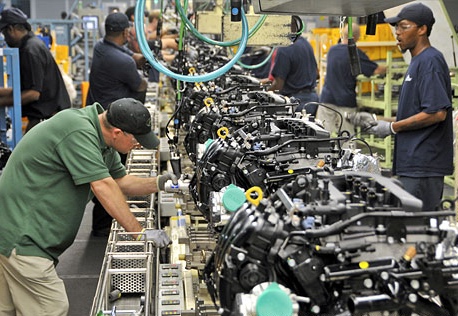
    Unlike the noisy manufacturing warehouses that are often a part of the manufacturing landscape, the inside of their manufacturing building according to their CNN interview is more akin to a “tech startup” than an actual manufacturing plant. The best part? Manufacturing is beginning to look a lot more like that and a lot less like the traditional manufacturing images most people have.

    [bctt tweet=”You won’t recognize the new face of American manufacturing. ” ]

    This is good news and bad news in a lot of ways. The good news is that the less physically demanding environment might appeal to the new generations who see sweat and toil as uncomfortable working conditions. The bad news is that because it has changed so much, many of the new generation are going to have a difficult time recognizing what they’re seeing, thus making combating negative stereotypes a difficult endeavor.

    “It’s a real problem,” Mark Hammond said when speaking about the lack of visibility to new graduates. “People don’t recognize us as American manufacturers and that is what we are.”

    It’s not just these new manufacturing industries that are having a hard time being recognized. Automotive giants, steel manufacturers, and chemical manufacturers are also having similar issues. Since technology is rapidly automating and being an integral part of the manufacturing process, a lot of the complex machinery has moved in that does not require constant human supervision, though it often requires a human touch. Unfortunately, this is again where invisibility is a real problem.

    If you like what you see and think
    this post would be of interest to someone,
    please share

    When researching career options students often overlook or disregard manufacturing jobs due to lack of recognition or lack of understanding what the job entails. This is where education on the topic of manufacturing would be a real service to the upcoming work force.

    “Hopefully things will change,” Hammond said. “People will start to recognize our efforts as real contributors to the American economy.”

    Have an idea of how we can further educate youth on American manufacturing processes? Let us know!


  • Top Five US Manufacturing Industries

    Top Five US Manufacturing Industries

    US manufacturing industries

    We love lists! Here are the top five of the US manufacturing industries per capita in the United States. Getting involved in them is a snap and we’ve included the degrees, certificates, and know-how you’ll need to seek employment in these booming industries!

    1. Petroleum: Natural gas, gasoline, oil, and a plethora of other petroleum manufactured items make up the bulk of this industry’s products. Jobs include work as a field technician, engineers, technology & safety management, customer service experts, and more. Salary ranges are from $50,000 to $150,000 annually, depending on which subfield you go into. If you’re interested in this field, degree options include BS in Petroleum Services, Mechanical Engineering, Electrical Engineering, Petroleum Production Technology, and Business with a focus in Manufacturing.
    2. Steel: Steel is one of the biggest products the US exports each year. Almost all other industries use steel and steel products in some aspect of their industry, whether it’s construction, shipbuilding, or shelving for DIYers at your local Big Box store. Jobs include work as steel millers, metallurgical engineers, mechanical engineers, computer programmers, and production specialists. Salary ranges are from $30,00 to $100,000 annually, depending on which subfield you go into. If you’re interested in this field, degree options include Metallurgical Engineering, Computer Science, and Steel Production Certificates.
    3. Automobiles: The automotive industry is a broad industry and the manufacturing aspect covers everything from design to engineering, a dream for automobile lovers! Jobs include work as designers, engineers, assemblymen, computer experts, and more. Salary ranges are from $60,00 to $80,000 annually, depending on which subfield you go into. If you’re interested in this field, degree options include Manufacturing Designs, Automotive Manufacturing Degrees, Automotive Technology, Computer Programming, and Robotics & Automotive Engineering.

    [bctt tweet=”Want to know what US manufacturing industries are HOT right now? ” ]

    1. Aerospace: The aerospace manufacturing industry deals mainly in all aspects of flying within the US. Designing, building, testing, selling, and maintaining aircraft, aircraft parts, missiles, rockets, or spacecraft are all included in the aerospace industry. This is a high technology industry so if you’re good with computers, you’ll have a definite edge. Jobs include work as Assemblymen, Technical Applications Worker, Engineers, Production Operators, Buyers/Planners, and Machine Operators. Salary ranges are from $60,000 to $120,000 annually, depending on which subfield you go into. If you’re interested in this field, degree options include Aerospace Manufacturing Technology, Aerospace Manufacturing, Engineering, Manufacturing Technology, Advanced Manufacturing Technologies, and Aerospace Design.
    If you like what you see and think
    this post would be of interest to someone,
    please share


    1. Telecommunications: If you’re interested in a career where public interaction and problem-solving is intrinsic in your job, this manufacturing giant might be the place for you. Opportunities include jobs in wired and wireless communications companies, engineering consulting or design firms, electronics components manufacturers, and government agencies.Salary ranges are from $50,000 to $110,000 annually, depending on which subfield you go into. If you’re interested in this field, degree options include Telecommunications Technology, Telecommunications Engineering, Software Engineering, and Manufacturing Design.

    Manufacturing is definitely a lucrative career for those who are willing to pursue it. The top five US manufacturing industries are searching for qualified individuals to fill manufacturing positions. If you’re thinking of a career change, definitely check one out today!

    Have another list or topic about manufacturing you’d like to see? Contact us at the Buy American Campaign’s website today.

  • The Statistics Game

    The Statistics Game

    american jobsWe’ve already touched on the idea that having more focused education in technical vocations and tailored degrees for manufacturing are the ways to save American jobs in the American manufacturing industry. Per the many employers of US manufacturing industries who say that finding American workers who are qualified for the positions is next to impossible, it’s hard to figure out why people are not going into the manufacturing industry at the same rate of their predecessors. Part of the reason for this wide gap between the need in manufacturing and the steady supply of qualified graduates is the effective marketing campaign that has been pushing vocational studies and bachelor degrees that lead to manufacturing professions into a less desirable category for degree-seeking individuals.

    Statistics to support the supposition that manufacturing professional degrees are needed are relatively hard to find since higher education, a multi-billion dollar industry in and off itself, has every incentive not to conduct or encourage any sort of polling process to find out how higher education stacks up to most vocational fields. They do, however, have many interesting infographics and graphs on how people with the broad term “bachelor’s degree” stacked up against people with “some college or associate degree.” Again, both of these terms are incredibly broad and would include every major field of study against college dropouts, associates degrees without a focus, as well as, those who hold degrees which are tailored to the manufacturing industry. Common sense will tell you that most college graduates have a higher rate of success in finding American jobs than those who have a high school degree and have not finished any other program of study.

    This logical assumption is somewhat misleading however, since these terms does not separate out those who are underemployed, employed in a field which was not their major field of study, for example you now need a bachelor’s degree to become management in most major retailers, and those who attained degrees which have no correlation between the job field industry and academic study, degrees such as philosophy, Latin studies, history, etc. Furthermore, since these statistics are essentially tailor-made to make bachelors degrees, regardless of field of study, more appealing to the masses due to lower unemployment rates, it’s no wonder that when a recession hits people flock to their local universities to seek degrees.

    In March, 2017, according to a Gallup poll, the underemployment rate for bachelor’s degree holding individuals was roughly 6.5%. This did not take into account the offset of the term “underemployed” due to the nearly astronomical amount of student debt incurred by bachelor’s degree holding individuals.

    Likewise, those holding associate’s degrees in vocational fields, technical fields, and other qualifying certificates for manufacturing employment were not separated out from the statistic concerning those in that degree range, making the number for that category at a 9.6%. Universities and colleges love using these types of statistical analysis to further their agenda: to increase enrollment rates in US manufacturing industries.

    [bctt tweet=”Ever wonder why statistics seem too good to be true? – American jobs” ]

    They put their comparisons onto billboards, in paid articles perpetuated in the media both online and on television, in large marketing campaigns that produce commercials, paid paper advertisements, school visits to high schools, and literature mailed directly to individual homes. All of these campaigns have the same message: enroll in our university or college and you will be successful in life.


    If you like what you see and think
    this post would be of interest to someone,
    please share


    To be frank, that is simply untrue.

    A bachelor’s degree in philosophy stacked up against a manufacturing certificate will show a higher payout and a lower debt for the certificate holder 99% of the time. A campaign for the re-education and rebranding of the US manufacturing industries is desperately needed if we are to encourage our young people into the manufacturing workforce. The question is always, who is going to pay for it?

    Until that complicated question finds a suitable answer, the first place starts at the most local level imaginable: with those young people in your life who are preparing to take the next step into adulthood. Educating them will at least start a conversation on the benefits of American manufacturing. If enough people have the conversation on a grassroots basis, it may lead to some interesting changes in the world of higher education where at least we can get some real answers when it comes to statistics regarding manufacturing employment.

  • What’s Up With “Made In America?”

    What’s Up With “Made In America?”

    Many political debates have revolved around whether products sold in the United States should be manufactured in the United States and whether or not imported products from other countries harm the US economy. Both history and current economic models show that in-country manufacturing creates jobs, boosts local economies, and enhances the lives of millions of Americans. So, what’s the debate really about?

    In recent years, the United States trade arrangements and tax laws have come under scrutiny as the proposed alteration of many of the tax laws and trade arrangements could result in a shift from the way the current domestic production and imported production is carried out.

    Lobbying efforts and consumer interest has been the driving force behind this shift toward positive association with American manufacturing. Businesses who host the majority of their manufacturing processes overseas have in turn panicked over the implications of increased manufacturing costs since it is almost impossible to pay the same rate to both skilled and unskilled US workers.  Protecting their interests becomes largely about convincing the politicians to push through laws that serve those interests.

    One of those proposed changes has to do with informing consumers of their products origins. Specifically, lobbying efforts are proposing that companies will no longer have to place country of origin on their merchandise, leaving the consumer to guess whether they’re assisting local economies or ones abroad.

    This is largely thought to be a failing measure by most due to the FTC’s (Federal Trade Commission) stance on the labeling of goods sold in the USA, AKA all goods have to display country of origin. However, this check is far from foolproof.

    The Federal Trade Commission’s policy is based more on the origin of the product content than on the final location of the manufacturers of the product, meaning “made in America” can actually mean “made in Taiwan” so long as the materials which the goods are manufactured with originate in the USA.

    This is something that directly contradicts what most American consumers have come to associate with the “made in America” product advertisement. Even though the policy itself has undergone periods of relative dormancy, the policy is now, and has been for several years, the subject of active and continued reinforcement efforts of the Federal Trade Commission.

    The Federal Trade Commission’s policy on defining the “made in America” label for products and goods sold within the United States falls within the Federal Trade Commission’s broad jurisdiction responsible for regulating deceptive advertising. The regulation of deceptive advertising applies to claims in advertising, labeling, and other claims regarding promotional materials. This extends to digital and other electronic formats.

    [bctt tweet=”What’s Up With “Made In America?”” ]

    Once the “made in America” claim is an objective claim, the Federal Trade Commission requires that the claim be supported and must be substantiated through truthful findings and evidence. The Federal Trade Commission’s policy on defining the “made in America” label encompasses two types of origin claims for products and goods sold within the United States. Those two types are qualified and unqualified origin claims.

    The Federal Trade Commission’s requirements for qualified origin claims for products and goods sold within the United States allow for substantial flexibility. This is beneficial for companies because it helps with marketing and branding of their product. If it is mildly deceptive, it’s thought to be well worth the potential risk since polls show that majority of people would prefer to buy Made in America products. For example, the manufacturer may state that the product or good is made in the United States with imported parts.

    This policy also allows the manufacturer the freedom to specify the country of origins if they choose to do so or not disclose it if they feel it would hinder their efforts to sell and make a profit off of the product they are distributing. Meaning, so long as the product’s origins is disclosed to the FTC, they may or may not, at their discretion, disclose that information to their consumers.

    Confused yet? The policy is extremely vague and parts have been tacked on over time to try and accommodate various problems that have come up in an effort to clarify. Unfortunately, this has made the policies ever more murky over time.

    The question becomes: how do consumers encourage companies to move or keep manufacturing processes in America?”

    Also, the Federal Trade Commission’s policy for qualified origin claims on goods and products within the United States doesn’t require the manufacturer to disclose the source country for specific parts or the percentage of foreign parts so long as the United States content or processing is significant.

    This is good news for manufacturing plants that may be based in the United States but have to outsource certain materials from other countries due to the limitations within the United States for such materials. This is one instance where the FTC’s policies aid rather than hinder the advancement of American manufacturers.

    Unqualified origin claims for goods or products sold within the United States are a lot more restrictive. The Federal Trade Commission views an unqualified claim of origin as all, or virtually all, of the good or product has been made in the United States.

    These products have no more than a negligible amount of foreign content. The restrictions go even further by stating that the manufacturer must meet three criteria before claiming “made in America” for their product: The last significant manufacturing process has been done in the United States, the product must have a high proportion of United States content in comparison to foreign content, and the product or good must not have foreign components that consumers would reasonably view as significant to the final product.

    This is where some manufacturers run into problems and where many Americans view products that have been labeled as made in a foreign country as having major sources of off-shore manufacturing involved in their process. This simply isn’t true for some manufacturers and it becomes increasingly difficult to really figure out which are truly American manufactured products and which are not.

    A common misconception is Americans tend to view items labeled as “made in America” as being good for the economy and supporting local manufacturing jobs when this label can be very misleading. Larger corporations tend to be able to find ways around the FTC’s labeling system that smaller manufacturers simply do not have the resources to subvert.

    The question becomes: how do consumers encourage companies to move or keep manufacturing processes in America?

    It is important to discuss the distinction between “made in America” and the regulations on American manufacturing companies. Just because there are different laws or regulations passed to limit manufacturing efforts abroad, doesn’t necessarily mean that people will see an increase in the “made in America” origin label. There is a lot more involved for a manufacturer to label their product or good as “made in America”.

    In an ideal world, it would be nice to see 100% of all products and goods sold in the United States appropriately labeled as “made in the USA”. Many of today’s goods that are labeled as “made in America”, however, are partially made in the USA and partially made overseas.

    If you like what you see and think
    this post would be of interest to someone,
    please share

    Defining the acceptable percentage for what is allowed to be foreign content and what needs to be genuinely made in the United States is where it becomes difficult to narrow down. Obviously, 0% is unacceptable, but what about something that is 40%? That percentage might be below 50% but suppose the company uses all the resources available to manufacture the product or good within the United States.

    They are still employing Americans through as much of the process as is possible and that might be the best they can do right now on some products. That doesn’t mean that their efforts should go unnoticed. Hopefully, their attempts will be supported and encouraged and lead to a future where that percentage is more closer to the ideal 100%.

    There is no short answer for how to encourage “Made in America” to 100% overall saturation in the American market. A few things will help though: clearer, easier to follow policies in government, tax breaks that encourage manufacturing to stay within in the US, and educating the general public in how to select American manufacturers from the pool of less-reputable companies masquerading as Made-in-the-USA.

  • American Workers: An Endangered Breed

    American Workers: An Endangered Breed

    American manufacturing

    American manufacturers in today’s economy are faced with the struggle to find workers skilled enough to complete the tasks needed to operate efficiently. Currently, one in ten openings for manufacturing positions requiring skilled workers will remain unfilled. This is because of a shortage in talent and a shortage of people with the qualifications to do the job.

    It is anticipated that between the years 2015 and 2025 there will be 3.5 million manufacturing positions that will need to be filled in the United States. The significance of this number could mean a lot of job potential for unemployed Americans and Americans coming of age during those years.

    The problem that American manufacturers currently face is the fact that of those 3.5 million manufacturing positions, it is estimated that 2 million of those jobs will be unfilled simply because the manufacturing company won’t be able to find qualified workers with the necessary skills in today’s technology-run industry.

    There is a large gap between the demand for qualified workers and people pursuing careers in American manufacturing processes. Unfortunately, ensuring that education and proper training is available to prospective workers is only a small part of the problem.

    There is an on-going stigma centered around manufacturing jobs here in America and that plays a large part in the youth’s decision to pursue education and training in other fields of work. This stigma stems from an outdated and mistaken point of view about the American manufacturing industry.

    With the struggles from the decline of the old standard of American manufacturing still being felt and the perception that investing the time and education into learning skills for manufacturing jobs will limit a person’s options should the company decide to outsource their work to off shore facilities, it is no wonder that there has been a widespread decline in people interested in pursuing careers within the American manufacturing industry.

    If you like what you see and think
    this post would be of interest to someone,
    please share

    Industry leaders here in the United States are working hard to help correct that stigma through education and advertisement. One of the ways they are tackling this problem is by focusing on the younger generation. In a recent survey conducted by Opinion Research Corporation that was commissioned by Proto Labs, they found that more than two-thirds of the people involved in the survey did not view American manufacturing jobs as a high tech career choice.

    Instead, the routines that people most commonly associate with American manufacturing jobs included working among machines, on assembly lines, non robotic technicians managing automated machines, and only a handful saw American manufacturing workers as software developers in front of computer screens.

    The reality is that the days of people working assembly lines has long since passed. Those jobs aren’t as plentiful as they once were, but there is a growing need for new kinds of manufacturing jobs.

    The rise in technology now requires skilled professionals who are able to keep up with the electronic and automated processes. The manufacturing industry needs workers who can trouble shoot these machines, complete complex computing tasks, operate these robots, and help in the development of these robots and automatic machines for future uses.

    There is such a strong demand for automation and useful equipment that often times the industry isn’t able to keep up. Many companies are relying on the brilliant minds of the people they’ve hired to think of new and inventive ways to handle the large workflow.

    Finding people trained in the areas companies need has become a nearly impossible task. Changing the perception of the people in general and youth entering the work force will help to fix this problem and hopefully open up more possibilities for the future of American manufacturing. Whether or not this education will prevent those 2 million job openings from remaining vacant remains to be seen.

    American manufacturing companies have already started trying to engage the younger generation. GE is currently working on targeting millennials and the rising generation that will graduate in the next few years. They have done this by creating its “digital industrial” ad series. This ad series stars millennials, Sarah and Owen, and offers an alternative to expensive college costs.

    GE has also launched a “Digital Industrial” filter for Snapchat. Snapchat is an app used by many millennials and the subtle targeting to the younger generation is not only a recruitment tool but also a rebranding effort to elevate the American manufacturing industry and the stigma around it.

    Other companies have gone a step further. Lincoln Electric has invested money in the new age gear associated with virtual reality. They’ve created a virtual world where the user is transported to a plant floor where they can try their hand at welding. They use this technology at their career fairs and it provides a unique opportunity to actually let prospective employees try out the work and see if it is a good fit for them. This in turn will lead to people seeking out more training in those areas and letting go of the stigma around them.

    People have started to move away from the idea that the only way to get ahead is through expensive and extensive years at college. The market is currently flooded with people who hold these degrees but we don’t have any workers able to do jobs in manufacturing positions. The result is a stressed economy with educated people unable to find jobs or a job that will cover the cost of their education and provide a roof over their head.

    [bctt tweet=”Is there a way to prevent the death of American manufacturing?” ]

    The American manufacturing industry is offering an alternative to this. They need jobs filled and they anticipate having more jobs in the coming years. By fighting back the stigma, they will be able to fill those jobs and help the American economy by giving back to the Americans in need of work. The stigma of uneducated employees working in manufacturing plants is also being fought. This is because it’s simply not true.

    With so much technology involved in the American manufacturing industry, these jobs are requiring a highly skilled workforce that excels in the industry of robotic equipment automation controls.

    They also need people skilled in software development. These manufacturing development jobs will require further education, but in the right areas. Those who want to put in the extra time and money to earning a four year college degree or higher need to be educated on which path to choose and by picking a path in software development they will have a steady stream of job opportunities in the coming years.

    Encouraging Americans toward manufacturing and the many jobs needed to create successful manufacturing environments still remains an uphill battle. Only through education and a reconstitution of how we anticipate and think about manufacturing can we prevent the rare breed of the American worker from becoming extinct.

  • The Decline & Rebirth of American Manufacturing

    The Decline & Rebirth of American Manufacturing

    American Quality Manufacturing

    With American quality manufacturing jobs moving overseas, the loss of industry has cost many Americans their livelihood and resulted in a sharp economic decline. The effects of that decline have been felt in recent times as American quality manufacturing has once again come into the lime light as Americans have begun to ask, “Where has American-made gone?”

    From 1998 to 2013, America lost 5.7 million factory and manufacturing jobs to overseas facilities and the outsourcing of materials, products, and goods needed for the manufacturing industry.

    Many supporters for keeping manufacturing overseas have stated that bringing the manufacturing jobs and process back to America would be a waste of time since robots and automation have replaced many of the jobs that were lost in the 1990’s.

    Their argument is valid and they do bring up a good point of how much the manufacturing industry has changed due to technology, but there are still positive aspects to bringing manufacturing companies back to America.

    In recent years, people have demanded more and more for products and goods made in America in an attempt to bring the manufacturing companies back to American soil. These demands are slowly being answered as more and more manufacturing companies are finding ways to bring their manufacturing processes back to the United States while still minimizing additional business costs.

    The companies that have already taken the plunge have shown that just because they are moving back to American soil doesn’t mean they have to have additional costs and raise their prices.

    Even those companies that have revolved around automation like Tesla have found a new way to create American jobs. They are doing this by coming back to American soil, opening up new manufacturing plants, and creating new jobs within the manufacturing industry. Automation and robots can only do so much and with the rise in technology there is a new need for operators and people who know how to perform maintenance on these instruments.

    As a direct result of the few companies who have already taken the plunge and come back to American soil, there has been a rise in the American economy. Manufacturing jobs still make up a good portion of the job industry in America. About 8.8 percent of total employment is made up of American manufacturing jobs and more are headed this way.

    Companies like Tesla are working to bring back their manufacturing jobs to hard working Americans. Tesla has already invested five billion dollars into its Gigafactory. Not only has the factory resulted in an influx of money being spent right here in America, but it is projected to offer ten thousand jobs when it is finished.

    The Gigafactory will be responsible for manufacturing lithium ion batteries. This is a plant where a lot of the production is automated and yet the decision to move their manufacturing plant back to their home soil has resulted in an increase in jobs.

    The estimation of ten thousand jobs does not even account for the additional jobs that were created in the process. By building a new plant facility, that means more jobs for contractors, builders, and construction workers. Outside of the plant, distributions centers here in America will be employed to move the finished products to buyers. The trickle down effect of this one company had undoubtedly had a positive effect on the American economy.

    Other companies have already made the move back to American soil. In 1991, the family-owned company, Bicycle Corporation of America moved the production of its bikes fully off shore. This cost many people their jobs and while it saved production value within the company, it had a negative impact on the local economy.

    Two years ago that same company decided to bring back a small portion of their production process back to America. The Bicycle Corporation of America moved from China to South Carolina and employed one hundred and fifteen people in their facility. This year they are projected to produce three hundred thousand bicycles in South Carolina, which is the same as they made back in 1991.

    The Bicycle Corporation of America does operate at a third fewer employees than it used to, but that didn’t mean that their decision to move back to America was wasted since their product gained value as a made-in-America product.

    They are bringing in more revenue into South Carolina and have continued to flourish and keep up with the low cost benefits that came with moving their productions off shore.

    When it comes to American quality manufacturing, the argument that bringing home companies won’t result in an boom in jobs like we saw in the 1990s due to automation and robots is true. However, it does make a difference and it does bring home an increase in overall economic stability and increased socioeconomic growth, even if it is not the same swell we saw during the 90s.

    We might not ever return the era of manufacturing we saw before off shoring became the standard, but we can see a new era, one that comes with new kinds of jobs. These jobs will also allow us to be an industry leader with the advancing technology used in the manufacturing industry.

    We don’t need to avoid the subject of American quality manufacturing. Nor do we need to have unrealistic expectations of what it could mean for bringing manufacturing back to the United States, but we can look to the future and embrace the change and find a new way to have our products made in America.

    American quality manufacturing might have perished but the rebirth of its productivity is in process and with the help of organizations like the Buy American Campaign, the American public will find itself making better, more well-informed decisions in regards to their product purchases.

    Do you have more examples of manufacturers bringing back American jobs? Contact us and tell us about it!