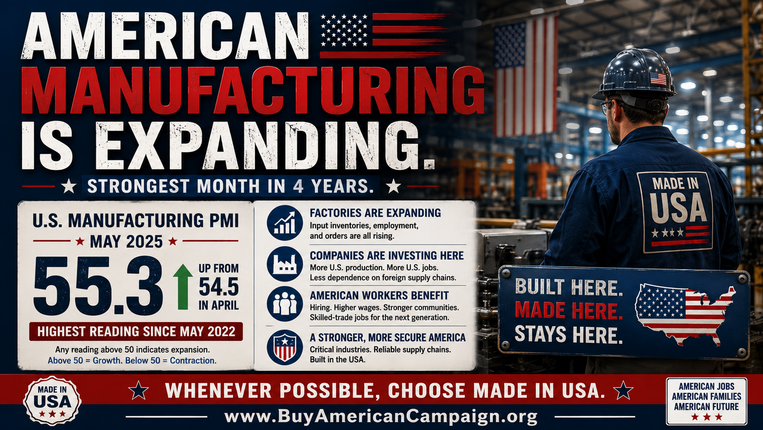
Tag: American Manufacturing

  • Most American Flags Are Imported. These Companies Still Make Them in the USA.

    Most American Flags Are Imported. These Companies Still Make Them in the USA.

    Most American flags are imported — these companies still make them in the USA

    The American flag flying over your front porch may have been made in China. Or Bangladesh. Or Vietnam.

    Millions of American flags sold in the United States each year are imported from overseas — assembled in factories thousands of miles from the country they represent. It’s one of the more ironic facts about modern American manufacturing: even the symbol of American industry is mostly produced somewhere else.

    But not all of them. A handful of American-made flag manufacturers — most family-owned, most dating back more than a century — still cut, sew, embroider, and finish their flags in U.S. mills. They’ve never moved production offshore. And on Flag Day this June 14, they’re worth knowing about.

    The Numbers Behind Imported Flags

    The U.S. Census Bureau tracks flag imports every year, and the totals are striking. The country imports tens of millions of dollars worth of American flags annually — the overwhelming majority coming from China. The exact number of flags is hard to pin down because they’re imported under multiple product codes that include other textile goods.

    What we do know: the share of American flags sold in the United States that are manufactured domestically has shrunk steadily over the past three decades. Cheap imports flood big-box retailers and online marketplaces. A nylon flag stitched in a Chinese factory can sell for half the price of one made in Pennsylvania.

    For shoppers who don’t know to look, the result is predictable. Most pick up the cheaper option, hang it on the porch, and never realize the stars and stripes were sewn by someone who’s never set foot in the United States.

    The FMAA — Certified Made in USA

    The Flag Manufacturers Association of America (FMAA) was founded in 2007 specifically to solve this problem. Their certification mark — a small “100% Made in USA” emblem on flag packaging — guarantees that every fiber, every stitch, and every component was produced and assembled in the United States.

    Look for the FMAA seal when buying a flag. It’s the simplest way to know you’re getting a genuinely American-made product instead of an imported one with American imagery on the label.

    The certification covers everything: the polyester or nylon fabric, the embroidered stars, the sewn stripes, the canvas headers, the brass grommets, even the finishing thread. If any single component comes from overseas, the flag doesn’t qualify.

    Browse American-Made Products

    The Companies Still Sewing Stars and Stripes

    Annin Flagmakers — Roseland, NJ — Founded 1847

    Annin Flagmakers is the oldest flag maker in the United States. Founded in 1847, the company has been sewing American flags continuously for nearly 180 years. Their work has been part of some of the most important moments in American history.

    Annin sewed the ceremonial flags for Abraham Lincoln’s funeral procession. The company produced the flags planted on the moon during the Apollo missions. Every modern presidential inauguration uses Annin flags. When Old Glory needs to fly at a moment of national consequence, it’s almost always an Annin.

    The company operates manufacturing facilities in Roseland, New Jersey and South Boston, Virginia. Every flag is FMAA-certified, and every product line — from their SolarGuard NYL-Glo nylon outdoor flags to their heavy-duty Tough-Tex polyester flags — is made entirely in the United States.

    Valley Forge Flag — Pennsylvania — Since 1882

    Valley Forge Flag has been in operation for five generations. Founded in 1882, the company is now one of the largest American-made flag manufacturers in the country.

    Their flagship product, the Koralex II, is a 2-ply spun polyester flag with sewn stripes and embroidered stars. It’s the flag flying over thousands of U.S. government buildings, public schools, and post offices nationwide. The Department of Veterans Affairs, the General Services Administration, and countless state and municipal governments specify Valley Forge flags in their purchasing contracts.

    Their Pennsylvania mill produces flags in every standard size, from desktop flags to the massive ceremonial flags that fly over stadiums and federal buildings on national holidays.

    Star Spangled Flags

    Star Spangled Flags makes 100% American-made flags with embroidered stars and sewn stripes. They use heavy-duty nylon designed for outdoor use, with reinforced canvas headers and brass grommets that resist weathering and corrosion.

    Every flag carries the FMAA certification. The company emphasizes craftsmanship — each star is individually embroidered, each stripe individually sewn — rather than mass production. The result is a flag that holds up to years of weather exposure without fading or fraying.

    Rushmore Rose USA

    Rushmore Rose USA makes spun polyester American flags built for heavy outdoor use. Their flags are 100 percent made in the USA, including the polyester fabric, the sewn stripes, and all hardware.

    The company markets itself directly on durability — “indestructible heavy duty” is in the product name of their bestselling flag. It’s the kind of flag that gets bought by veterans organizations, ranches, fire stations, and homeowners who want a flag that will outlast multiple seasons of wind and weather.

    KEYCA, Fine Line Flag, and Other FMAA-Certified Makers

    KEYCA produces nylon American flags with embroidered stars and sewn stripes. The company specializes in 3×5 foot residential and commercial flags, with all manufacturing done in the United States. Like the larger FMAA-certified makers, KEYCA uses American-sourced materials from start to finish — the nylon fabric, the embroidery thread, the brass grommets, the canvas heading.

    Fine Line Flag is another FMAA-certified maker, producing 210D heavy-duty nylon American flags and service-honor flags — Thin Red Line for firefighters, Thin Blue Line for law enforcement — all manufactured to the same standards. Their flagship 3×5 ft American flag uses reinforced stitching designed to survive sustained wind exposure.
    Join the Buy American Movement

    Why It Matters Beyond Flag Day

    There’s a simple economic case for buying an American-made flag: every flag stitched in Pennsylvania, New Jersey, or Virginia keeps a sewing-machine operator employed. The U.S. textile sector has been hit harder than almost any other American manufacturing industry over the past forty years. The companies still making flags here are some of the last holdouts in domestic textile production.

    But there’s also a symbolic case. The American flag represents American workers — the men and women who built the country, who maintain it, who keep it running. Flying a flag manufactured overseas inverts the meaning. Flying a flag made in the United States, by Americans, in American mills, reinforces it.

    This is what FMAA certification is really about. Not just the fabric. The integrity of the symbol itself.

    This Flag Day, Fly American

    Flag Day falls on Sunday, June 14, 2026. It’s not a federal holiday, but it’s the most direct opportunity on the calendar to think about what the flag represents — and who actually makes it.

    If you’re looking for a Made-in-USA flag this Flag Day, we’ve put together a guide featuring the companies above plus additional patriotic items from American manufacturers like Buck Knives, Lodge Cast Iron, Zippo, BenShot, and Pure Country Weavers. Every product is verified American-made, with vendor links that ship in time for delivery by June 14.

    Visit the Flag Day collection here: American-Made Flags for Flag Day

    Order by June 7 to ensure delivery in time for Flag Day on June 14, 2026.

    Whenever possible, choose Made in USA.

    If you like what you see and think this post would be of interest to someone, please share
  • The Last Pencil Maker Standing: How Musgrave Keeps “Pencil City, USA” Alive

    The Last Pencil Maker Standing: How Musgrave Keeps “Pencil City, USA” Alive

    Musgrave pencils made in Shelbyville Tennessee Pencil City USA

    In the 1950s, Tennessee Governor Buford Ellington gave the small town of Shelbyville a nickname that stuck: “Pencil City, U.S.A.”

    At the time, six major pencil manufacturers operated inside a town of fewer than 10,000 people. Tennessee’s red cedar was perfect for pencil making, and Shelbyville was the heart of the American pencil industry.

    Today, only one of those six remains.

    And it’s still going.

    A Family Business Since 1923

    The Musgrave Pencil Company has been making pencils in Shelbyville since 1923 — over 100 years.

    The company actually started even earlier, in 1916, as a lumber operation supplying cedar slats to pencil manufacturers in Germany. After World War I, the Musgrave family traded a load of slats for pencil-making machinery and decided to start making the pencils themselves.

    More than a century later, they’re still at it.

    Musgrave is now one of only three pencil manufacturers left in the entire United States.

    85 Workers, 80 Million Pencils a Year

    The Shelbyville factory employs 85 full-time workers and produces between 80 and 90 million pencils every year.

    Compare that to the 3.3 billion imported pencils flooding into the U.S. annually from India, Vietnam, Indonesia, Thailand, China, Mexico, and Brazil.

    The math looks brutal. But Musgrave President Scott Johnson says the company has carved out something the importers struggle to compete with: customization.

    “We are the world’s smallest billboard,” Johnson likes to say.

    Musgrave specializes in custom-printed pencils — the kind you see in hotels, museums, lumber yards, and yes, the White House gift shop. Their pencils sit in the Tennessee governor’s office. They’re sold to cruise lines, construction companies, and specialty retailers across the country.

    Browse American-Made Products

    How a Pencil Is Made in America

    The process starts with wood slats — primarily basswood and poplar, with some incense cedar mixed in.

    Each slat is run through a molding machine that cuts precision grooves to hold the graphite core. (And yes — despite the term “lead pencil,” there has never actually been lead in pencils. It’s graphite mixed with clay.)

    The two grooved slats are glued together with the graphite sandwiched in between, then shaped into the final pencil — round, hexagonal, carpenter-flat, or bridge.

    Then comes painting, custom printing, ferrule attachment for the eraser, quality control, and packaging.

    Every Musgrave pencil also goes through rigorous toxicological testing by the Pencil Makers of America to ensure the product is safe for kids and adults alike.

    The Carpenter Pencil, the No. 2, and a Songwriter’s Tool

    Musgrave’s biggest seller is the carpenter pencil — the flat, wide pencil you see in toolbelts on construction sites across the country. Johnson says Musgrave is by far the leading manufacturer of carpenter pencils in America.

    They also make the classic yellow No. 2 hexagon pencil — the one most of us remember from school days and SAT tests.

    And they make some unexpected things too: songwriter pencils with a softer core for marking sheet music, golf pencils (some with erasers, for the honest scorekeepers), artist pencils, and colored highlighters.

    Join the Buy American Movement

    The America 250 Pencil

    As America approaches its 250th anniversary, Musgrave was named the only pencil manufacturer with a licensed America 250 designation.

    It’s a fitting honor — a 100-year-old American manufacturer celebrating 250 years of America.

    “We are celebrating America 250, and that’s a win for us,” Johnson said.

    Why This Matters

    Most Americans probably never think about where their pencils come from.

    And that’s exactly the problem.

    For decades, products like pencils quietly moved overseas. Whole industries that once employed entire American towns disappeared one factory at a time.

    Shelbyville lost five of its six pencil manufacturers. But one stayed. One adapted. One found a niche the importers couldn’t easily copy. And one is still employing 85 people and producing tens of millions of American-made pencils every year.

    That story is repeated in towns all across America — companies hanging on, finding their lane, refusing to disappear.

    And every time someone chooses an American-made pencil instead of an imported one, that company gets to stay open one more day.

    Whenever possible, choose Made in USA.

    If you like what you see and think this post would be of interest to someone, please share
  • Siemens Says America’s Factory Revival Is Real — And AI May Be Accelerating It

    Siemens Says America’s Factory Revival Is Real — And AI May Be Accelerating It

    Siemens American factory revival AI manufacturing

    For years, Americans were told the factory era was over.

    Manufacturing would move overseas. Industrial jobs would disappear. America would become a service economy while other countries built the products the world depends on.

    But now something interesting is happening.

    According to Siemens, one of the largest industrial technology companies in the world, AI, infrastructure spending, and reshoring efforts are beginning to drive what could become a real American factory revival.

    That is a major shift in tone.

    Because for decades, the dominant narrative was that manufacturing decline was inevitable.

    Now even global industrial giants are openly talking about rebuilding American industrial capacity again.

    America May Be Entering a New Manufacturing Era

    The next generation of factories will not look exactly like the factories of the past.

    Modern manufacturing increasingly revolves around:

    • automation
    • robotics
    • AI systems
    • precision engineering
    • semiconductor infrastructure
    • energy systems
    • advanced logistics

    But they still require something critically important:

    Factories.

    Real physical production still matters.

    Even in the AI era.

    In fact, AI may actually increase the need for industrial infrastructure as companies race to build:

    • data centers
    • electrical systems
    • advanced chips
    • energy capacity
    • automation equipment
    • industrial machinery

    That means the countries capable of building and manufacturing at scale may hold enormous advantages in the years ahead.

    Browse American-Made Products

    The Outsourcing Era Changed America

    For decades, many companies chased the lowest possible labor costs around the world.

    Factories closed. Supply chains stretched across continents. Entire American towns lost their economic foundation.

    Some communities recovered. Many never fully did.

    Recent supply-chain disruptions exposed how dependent the United States had become on foreign production for critical goods and infrastructure.

    Now companies are rethinking those risks.

    And increasingly, reshoring is becoming part of the conversation again.

    Why This Matters Beyond Economics

    Manufacturing is not just about GDP numbers.

    Strong industrial capacity supports:

    • local businesses
    • skilled trades
    • middle-class wages
    • infrastructure growth
    • national resilience
    • long-term economic stability

    And psychologically, manufacturing still matters deeply to many Americans because it represents something larger:

    The ability of a country to build its own future.

    Join the Buy American Movement

    The Bigger Question

    The real question now is whether America fully commits to rebuilding industrial strength — or whether this current momentum fades once economic conditions change again.

    Because rebuilding manufacturing is not something that happens overnight.

    It takes:

    • investment
    • infrastructure
    • skilled workers
    • long-term policy support
    • consumers willing to support domestic production

    But after years of decline, one thing is becoming increasingly clear:

    The idea that America “doesn’t make things anymore” is starting to look less true than it did a decade ago.

    And some of the world’s biggest industrial companies are beginning to notice.

    Whenever possible, choose Made in USA.

    If you like what you see and think this post would be of interest to someone, please share
  • Eli Lilly Just Invested $4.5 Billion in Indiana — And It Signals Something Bigger About American Manufacturing

    Eli Lilly Just Invested $4.5 Billion in Indiana — And It Signals Something Bigger About American Manufacturing

    Eli Lilly opens first U.S. genetic medicine manufacturing facility in Lebanon, Indiana as part of $4.5 billion investment

    For years, Americans were told that the future of manufacturing belonged somewhere else.

    Factories would move overseas. Advanced production would happen abroad. America would shift toward services and technology while other countries handled industrial growth.

    But something very different is starting to happen.

    This week, Eli Lilly officially opened its first U.S. genetic medicine manufacturing facility in Lebanon, Indiana — part of a staggering $4.5 billion investment that is turning central Indiana into one of the company’s largest manufacturing hubs in the world.

    That number alone is massive.

    But the bigger story is what it represents.

    This is not a warehouse. It is not basic assembly work. This is next-generation pharmaceutical manufacturing tied directly to some of the most advanced medical technologies in the world.

    And it is happening in America.

    America Is Quietly Rebuilding Advanced Manufacturing

    For decades, many Americans associated manufacturing with smokestacks, steel mills, and assembly lines.

    But modern manufacturing increasingly looks different.

    Biotech. Robotics. Semiconductors. AI infrastructure. Precision medicine.

    The industries shaping the next several decades of the global economy will still require physical production, highly skilled labor, supply chains, factories, energy, logistics, and industrial capacity.

    In other words: manufacturing still matters enormously.

    Eli Lilly’s investment is a reminder that America is not just competing for yesterday’s industries anymore. It is competing for the industries that may define the future.

    Browse American-Made Products

    Why Indiana Matters

    One of the most interesting parts of this story is the location itself.

    Lebanon, Indiana is not Silicon Valley. It is not Manhattan. It is not a global finance center.

    It is a Midwestern American town becoming part of a major advanced-manufacturing expansion.

    That matters because manufacturing investment creates ripple effects far beyond the factory walls themselves.

    New suppliers move in. Construction expands. Local businesses grow. Infrastructure improves. Skilled jobs increase. Communities stabilize.

    For many towns across America, industrial investment is still one of the strongest long-term economic foundations available.

    America Learned Some Hard Lessons

    Recent years exposed just how risky it can be to rely too heavily on overseas pharmaceutical production and fragile global supply chains.

    Drug shortages. Shipping disruptions. National-security concerns. Foreign dependency for critical ingredients and manufacturing capacity.

    Those problems forced both companies and policymakers to rethink where important products are actually made.

    Now some of the largest corporations in the world are beginning to invest heavily in rebuilding domestic production capacity — especially in strategic industries tied to healthcare, technology, and infrastructure.

    Join the Buy American Movement

    The Bigger Question

    The real question now is whether this becomes a long-term trend or just a temporary shift.

    Will America continue rebuilding advanced industrial capacity over the next decade?

    Or will companies eventually return to chasing the absolute cheapest global production model once economic pressures change again?

    That answer will depend partly on consumers, partly on policy, and partly on whether the country still values the ability to build critical products at home.

    But one thing is becoming harder to deny:

    America is still capable of building the future.

    And increasingly, some of the world’s biggest companies are betting billions of dollars on that fact.

    Whenever possible, choose Made in USA.

    If you like what you see and think this post would be of interest to someone, please share
  • Trump Signs New “Buy American” Executive Order Targeting Federal Purchasing Waivers

    Trump Signs New “Buy American” Executive Order Targeting Federal Purchasing Waivers

    Trump signs new Buy American executive order strengthening federal purchasing rules

    The White House has announced a new executive order focused on strengthening enforcement of existing “Buy American” requirements across federal agencies.

    According to the administration, the order is intended to reduce the use of waivers that allow foreign-made products to be purchased for government projects and operations. Federal agencies are being directed to place greater emphasis on domestic sourcing, American factories, and U.S.-based supply chains when making purchasing decisions.

    The move places renewed national attention on a topic that has become increasingly important over the last several years: whether the United States should rely more heavily on domestic manufacturing for critical goods and infrastructure.

    For decades, the federal government has operated under Buy American laws in some form. However, critics have argued that loopholes and waiver systems often weakened those rules in practice, allowing imported products to continue entering government supply chains.

    Browse American-Made Products

    Supporters of stronger Buy American enforcement argue that federal spending should help support American workers, industrial capacity, and domestic production whenever possible. They also point to supply-chain vulnerabilities exposed during recent global disruptions as evidence that the U.S. needs stronger manufacturing resilience.

    Others caution that stricter domestic sourcing requirements can increase project costs or complicate procurement processes, especially in industries where global supply chains remain deeply integrated.

    Join the Buy American Movement

    Regardless of where people fall politically, the executive order highlights how manufacturing and supply-chain policy have become major national issues again after years of being treated as secondary economic concerns.

    The broader debate extends beyond government contracts alone. Questions about domestic production, industrial capacity, national resilience, and economic dependence on overseas manufacturing are increasingly shaping conversations across business, politics, and the economy.

    Whether this executive order leads to major long-term changes remains to be seen. But it clearly signals that Buy American policies are once again moving toward the center of national economic discussion.

    Whenever possible, choose Made in USA.

    If you like what you see and think this post would be of interest to someone, please share
  • When a Factory Closes, a Town Changes Forever

    When a Factory Closes, a Town Changes Forever

    When a factory closes, an American town changes forever — the human cost of losing manufacturing

    When a factory closes, most people count the jobs.

    300 jobs lost. 800 jobs lost. 2,000 jobs lost.

    The numbers make headlines for a few days, then the country moves on.

    But the real damage spreads much further than that.

    Because when a major factory disappears, it rarely affects only the workers inside the building. Entire communities begin to change around it.

    The local diner loses its breakfast crowd. The hardware store sees fewer customers. The auto shop gets quieter. Youth sports sponsorships disappear. Families move away looking for work. Downtown storefronts slowly empty out.

    And eventually, a town that once felt alive starts feeling like it’s fading.

    America Was Built Around Manufacturing Towns

    For generations, manufacturing jobs helped build stable middle-class communities across America.

    Not just in giant cities — but in small towns and working-class suburbs all over the country.

    Factories created more than paychecks.

    They created:

    • local pride
    • apprenticeship opportunities
    • community identity
    • long-term careers
    • economic stability for families

    Entire neighborhoods grew around mills, plants, machine shops, shipyards, and factories.

    Parents expected their kids could stay nearby, work hard, buy a home, and build a decent life in the same community.

    That stability mattered.

    Outsourcing Changed More Than the Economy

    Over time, many of those jobs moved overseas.

    Companies chased lower labor costs. Factories closed. Production shifted abroad.

    And while consumers often got cheaper products, many communities paid a price that never fully showed up in economic charts.

    Some towns recovered.

    Others never really did.

    You can still drive through parts of America today and immediately see the difference:

    • empty industrial buildings
    • abandoned parking lots
    • faded downtowns
    • neighborhoods that feel stuck in time

    People notice it even if they don’t talk about it directly.

    Browse American-Made Products

    Americans Are Not “Nostalgic” for Caring About This

    One of the strangest things about the outsourcing era is how often people were told not to care.

    If Americans worried about losing factories, they were called nostalgic. If they talked about rebuilding manufacturing, they were told globalization made it impossible. If they wanted stronger domestic production, they were accused of resisting progress.

    But communities are not irrational for wanting stability.

    Families are not irrational for wanting good-paying local jobs.

    And Americans are not irrational for wanting the country to still build things.

    Manufacturing Still Matters

    Not every job will return. Not every town can be rebuilt overnight.

    But manufacturing still matters enormously to the strength of a country.

    Strong industrial capacity supports:

    • local economies
    • supply-chain resilience
    • skilled trades
    • small businesses
    • middle-class wages
    • national security

    And maybe most importantly, it helps communities feel like they still have a future.

    Join the Buy American Movement

    The Bigger Question

    America now faces a choice.

    Do we continue treating manufacturing as something disposable?

    Or do we recognize that when factories disappear, we lose pieces of communities, local identity, and long-term stability along with them?

    Because once enough factories leave, it becomes very hard to rebuild the culture and ecosystem that supported them in the first place.

    And by the time the country realizes what was lost, entire towns may already be gone.

    Whenever possible, choose Made in USA.

    If you like what you see and think this post would be of interest to someone, please share
  • America’s Trade Deficit Just Hit Its Lowest Level Since 2009 — And That Might Signal Something Bigger

    America’s Trade Deficit Just Hit Its Lowest Level Since 2009 — And That Might Signal Something Bigger

    US trade deficit falls to its lowest level since 2009 — a 16-year milestone

    For decades, Americans were told the decline of domestic manufacturing was simply inevitable.

    Factories would move overseas. Imports would keep rising. America would become a service economy while other countries handled production.

    Now, for the first time in years, some of the numbers are starting to move in the opposite direction.

    The U.S. trade deficit has fallen to its lowest level since 2009 — a historic 16-year milestone that many economists did not expect to happen this quickly.

    Even more striking: the goods trade deficit with China has dropped dramatically compared to where it stood just a few years ago.

    And while this does not mean America’s manufacturing problems are suddenly solved, it may signal something much bigger beginning to shift underneath the surface of the economy.

    For Years, America Became Dependent on Imports

    For a long time, the American economy moved in one direction: more imports, more offshoring, and more dependence on foreign manufacturing.

    Entire industries hollowed out. Manufacturing towns struggled. Companies chased cheaper labor overseas while consumers got used to buying imported products for almost everything.

    Many experts argued this was simply the unavoidable future of globalization.

    But recent years have exposed the weaknesses in that model.

    Supply-chain disruptions, geopolitical tensions, shipping bottlenecks, and national security concerns forced both companies and governments to rethink how dependent America had become on overseas production.

    The Numbers Are Starting to Change

    The latest trade data suggests the economy may be entering a different phase.

    The overall U.S. trade deficit has now fallen to levels not seen since 2009, while the goods deficit with China has declined significantly compared to prior years.

    That does not mean America suddenly manufactures everything domestically again. Far from it.

    But it does suggest companies are diversifying supply chains, rebuilding domestic production in some sectors, and reducing at least part of the extreme dependence on foreign manufacturing that defined the last several decades.

    Browse American-Made Products

    Why This Matters Beyond Economics

    Trade deficits are often discussed in abstract economic terms, but the real-world impact is deeply personal for many communities.

    When manufacturing disappears, it is not just factories that vanish. Local suppliers disappear. Apprenticeship pipelines weaken. Small businesses suffer. Entire towns lose part of their economic identity.

    That is why so many Americans care about rebuilding manufacturing even if they never work in a factory themselves.

    Strong industrial capacity creates middle-class jobs, supports local economies, strengthens national resilience, and reduces dependence on unstable foreign supply chains.

    Maybe Americans Were Not Wrong After All

    One of the most interesting parts of this story is how sharply the national conversation has changed.

    For years, people who worried about outsourcing and manufacturing decline were often dismissed as nostalgic or unrealistic.

    Now many of the same corporations and policymakers who once championed global supply chains are suddenly talking about reshoring, industrial policy, domestic production, and supply-chain security.

    That shift did not happen by accident.

    Americans never fully stopped caring about domestic manufacturing. The economy simply reached a point where the consequences of losing too much industrial capacity became impossible to ignore.

    Join the Buy American Movement

    The Bigger Question

    The important question now is whether this trend continues.

    Will America genuinely rebuild more domestic manufacturing capacity over the next decade? Or will companies quietly return to old habits the moment overseas production becomes slightly cheaper again?

    No single economic report answers that question completely.

    But a 16-year low in the trade deficit is still a signal worth paying attention to.

    Because after decades of moving in one direction, America may finally be starting to turn back toward building more things at home again.

    Whenever possible, choose Made in USA.

    If you like what you see and think this post would be of interest to someone, please share
  • GM Just Committed $6 Billion to American Manufacturing — And That Says a Lot About Where the Economy Is Headed

    GM Just Committed $6 Billion to American Manufacturing — And That Says a Lot About Where the Economy Is Headed

    GM commits $6 billion to American manufacturing investment in U.S. plants

    For years, Americans were told manufacturing was fading away.

    The future would belong entirely to software, finance, and imported products. Industrial towns would slowly disappear while the country shifted toward a “post-manufacturing economy.”

    Now suddenly, one of America’s most iconic automakers is doing something that would have sounded almost old-fashioned a decade ago:

    General Motors is pouring roughly $6 billion into American manufacturing operations in a single year.

    That includes new investments across U.S. facilities, major plant upgrades, retooling efforts, and expanded domestic production capacity — particularly throughout the Midwest.

    And whether people realize it or not, this story says something much bigger about where the American economy may be heading next.

    America’s Industrial Giants Are Re-Thinking Manufacturing

    For decades, corporate America chased efficiency above everything else. Manufacturing moved wherever labor was cheapest. Supply chains stretched across the globe. Wall Street rewarded short-term savings over long-term industrial strength.

    Then reality hit.

    COVID exposed fragile supply chains. Geopolitical tensions raised concerns about dependence on foreign production. Consumers became more interested in buying American-made products. And suddenly companies started realizing that domestic manufacturing still matters.

    GM’s investment is one of the clearest examples yet that large American manufacturers are starting to think differently again.

    Not Just Electric Vehicles

    One of the more interesting details in GM’s strategy is that the company is not blindly abandoning traditional vehicle production while chasing electric vehicle headlines.

    In fact, some of the new spending is specifically tied to gas-powered vehicle retooling and continued domestic production as consumer demand shifts more slowly than many executives expected.

    That matters because it suggests something important:

    American manufacturing companies are starting to focus less on political narratives and more on building what customers actually want to buy.

    For many workers and manufacturing communities, that is probably welcome news.

    Browse American-Made Products

    The Midwest Still Matters

    There is also a symbolic side to this story.

    For generations, places like Michigan, Ohio, Indiana, and other parts of the industrial Midwest formed the backbone of American manufacturing power. Entire cities grew around automotive production.

    Then came decades of plant closures, outsourcing, automation shocks, and economic decline across many manufacturing regions.

    That is why major reinvestment stories matter psychologically as much as economically. They represent something Americans have not seen enough of for a long time: industrial confidence.

    Factories expanding instead of shrinking. Production lines growing instead of disappearing. Manufacturing companies betting on America instead of slowly leaving it behind.

    The Bigger Debate

    Of course, not everyone will agree on what this means.

    Some critics will argue that corporations only “rediscover” American manufacturing when subsidies, tariffs, or political pressure make it profitable. Others will point out that many companies spent decades offshoring jobs before suddenly talking about reshoring.

    Those criticisms are not entirely unfair.

    But at the same time, America cannot rebuild industrial strength without major manufacturers actually investing in domestic production again.

    And $6 billion is not symbolic pocket change.

    Join the Buy American Movement

    America Still Knows How to Build

    Stories like this matter because they challenge the idea that America’s manufacturing future is already over.

    The reality is far more complicated.

    The United States still has enormous industrial capacity, engineering talent, infrastructure, and manufacturing experience. The real question is whether the country has the long-term commitment to rebuild and expand it.

    GM’s latest investment suggests at least some major companies believe the answer may still be yes.

    Whenever possible, choose Made in USA.

    If you like what you see and think this post would be of interest to someone, please share
  • Nvidia Just Committed Billions to a 175-Year-Old American Manufacturer

    Nvidia Just Committed Billions to a 175-Year-Old American Manufacturer

    Nvidia partners with Corning on American-made optical infrastructure for AI

    When most people think about artificial intelligence, they picture software, chatbots, and Silicon Valley engineers.

    But here’s the reality almost nobody talks about: AI still depends on factories.

    This week, Nvidia announced a long-term partnership worth up to $3.2 billion with Corning Inc. — the 175-year-old American manufacturer best known for advanced specialty glass and industrial materials.

    The goal is to help build the optical infrastructure powering America’s exploding AI data-center industry.

    In other words: even the future of artificial intelligence still relies on American manufacturing.

    A Tech Giant Betting on an American Industrial Company

    Nvidia has become one of the most valuable companies in the world because of the AI boom. But what makes this story interesting is where some of that money is now flowing.

    Not into another trendy startup.

    Into Corning — a company founded in 1851 that has spent generations manufacturing advanced materials in America.

    That matters because it completely destroys the idea that manufacturing is somehow “old economy” and irrelevant to the future.

    The AI race is not just about software engineers anymore. It is also about factories, industrial capacity, materials science, optical systems, energy infrastructure, and supply chains.

    Browse American-Made Products

    The Future Still Needs American Factories

    For years, America treated manufacturing as something outdated — something the country could outsource while focusing only on finance, software, and services.

    Now suddenly everyone is realizing that advanced technology still depends on physical industrial capability.

    You cannot power massive AI systems without servers. You cannot run servers without optical infrastructure. And you cannot build that infrastructure without manufacturers capable of producing highly specialized components at scale.

    That is why this partnership matters far beyond Nvidia stock headlines.

    It is a reminder that industrial strength still matters — even in the most advanced sectors of the modern economy.

    America Is Quietly Relearning an Old Lesson

    There is also a larger lesson buried inside this story.

    For decades, many corporate leaders treated manufacturing as interchangeable. Build it wherever labor is cheapest. Ship it across the world. Focus only on quarterly margins.

    But supply-chain shocks, geopolitical tensions, and the AI infrastructure race are changing that mindset fast.

    Countries that cannot manufacture critical technologies eventually become dependent on countries that can.

    And that is exactly why stories like this are important.

    Join the Buy American Movement

    Corning Represents Something Bigger

    Corning is not just another supplier. It represents a part of the American industrial base that many people forgot still existed.

    This is a company that survived world wars, recessions, globalization waves, and technological revolutions while continuing to manufacture advanced products in the United States.

    Now one of the world’s biggest AI companies is depending on that manufacturing capability to help build the infrastructure behind the next technological revolution.

    That should tell Americans something important:

    The future will not belong only to countries that invent technology.

    It will belong to countries that can still build things.

    Whenever possible, choose Made in USA.

    If you like what you see and think this post would be of interest to someone, please share
  • Your Grandfather’s Toolbox vs. Yours — What Happened to American Quality?

    Your Grandfather’s Toolbox vs. Yours — What Happened to American Quality?

    Your grandfather's toolbox versus today's disposable imports — what happened to American quality

    Walk into your grandfather’s garage and you’ll probably still find tools that are older than you are.

    Heavy steel wrenches. Old Craftsman sockets. A scarred-up toolbox that has survived decades of work. Maybe an old Stanley tape measure with faded lettering or a drill that somehow still runs perfectly after 40 years.

    Most of it was made in America.

    Now walk through a modern big-box store.

    Plastic packaging. Disposable products. Cheap imports designed to be replaced instead of repaired. Tools that feel lighter, weaker, and somehow temporary before you even open the box.

    Somewhere along the way, America stopped building products to last — and most people barely noticed it happening.

    We Didn’t Just Lose Factories

    People often talk about manufacturing as if it’s only about economics.

    Jobs. Tariffs. Trade deficits. Supply chains.

    But something deeper disappeared too.

    America once had a culture of building things with pride. Products were expected to survive years of real use. Workers took pride in craftsmanship because their names, towns, and reputations were attached to what they made.

    When manufacturing left, some of that mindset left with it.

    The Era of Disposable Everything

    Today, many products are designed around replacement cycles instead of durability.

    Phones that can’t be repaired. Appliances that fail after a few years. Cheap tools that snap under pressure. Furniture made from particle board instead of solid wood.

    Consumers got trained to accept lower quality because the prices looked cheaper upfront.

    But was it actually cheaper?

    Your grandfather bought one toolbox that lasted 40 years.

    Modern consumers buy replacements over and over again.

    Browse American-Made Products

    “Made in USA” Used to Mean Something

    There was a time when “Made in USA” wasn’t just a patriotic slogan. It was shorthand for quality.

    American manufacturing earned that reputation through generations of workers who built products meant to survive real-world use.

    That reputation helped build some of the most trusted brands in the world.

    But over time, many companies realized they could keep the branding while quietly moving production elsewhere.

    The logos stayed the same.

    The commercials stayed the same.

    The factories disappeared.

    Americans Still Have a Choice

    The good news is that American manufacturing is not dead.

    There are still companies building high-quality products here. There are still workers who care deeply about craftsmanship. There are still factories producing tools, boots, cookware, furniture, knives, apparel, and industrial equipment that can last for decades.

    But those companies survive only if Americans actually support them.

    Every purchase sends a signal about the kind of economy we want to have.

    Disposable or durable.

    Imported or American-made.

    Short-term savings or long-term strength.

    Join the Buy American Movement

    Maybe It’s Time to Build Things That Last Again

    America built some of the strongest products and most respected industrial brands the world has ever seen.

    That capability did not disappear because American workers forgot how to build.

    It disappeared because the culture slowly stopped valuing durability, craftsmanship, and domestic production the way it once did.

    Maybe it’s time to change that.

    Whenever possible, choose Made in USA.

    If you like what you see and think this post would be of interest to someone, please share