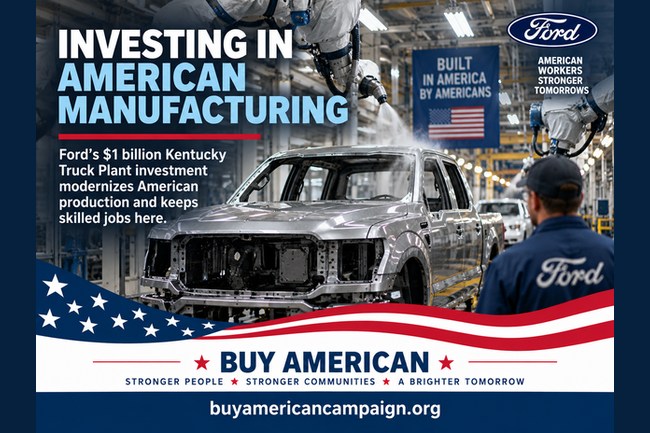
A billion-dollar investment does not always arrive with a new factory sign. Sometimes it means replacing a part of a working plant so that the people already building things there can keep competing. Ford’s planned Kentucky Truck Plant investment is that kind of story: a commitment to modernize American production rather than treat an established factory as yesterday’s asset.
According to Kentucky’s September 10 announcement, Ford plans a $1 billion replacement paint shop at its Louisville truck plant, with groundbreaking targeted before the end of 2026. The project is planned, not completed. But the decision raises an important question: how much attention do we give to keeping the factories we already have strong?
The Kentucky Truck Plant Investment Is About Staying Competitive
A factory is not a permanent achievement. Machines wear out, production methods change, and customers expect better products. Keeping a plant open for the long haul requires more than maintaining the roof and hoping the next model sells.
That makes reinvestment worth watching. A new operation creates a beginning; an upgrade to an existing operation can create another chapter. It places a bet on a workforce, a location, and the accumulated knowledge that makes an industrial community difficult to reproduce elsewhere.
The state describes Kentucky Truck Plant as Ford’s largest U.S. manufacturing plant. A project of this scale therefore belongs in the conversation about American industrial capacity, even though a paint shop is less likely to capture the public imagination than a completely new assembly line.
The Work Behind the Finish
Most buyers encounter a vehicle’s finish before they think about its factory. They notice the color, the appearance, and whether the product feels carefully made. The production system behind that first impression is largely invisible.
That invisibility can distort how we discuss manufacturing. We celebrate finished products while overlooking the processes that make consistent production possible. A competitive factory is a connected system, not simply a building where workers attach the final parts.
The announcement does not yet detail what the new paint shop will mean for production speed, energy use, or environmental performance. Those benefits should be judged once Ford releases specifications and the facility begins operating.
A Factory Holds More Than Equipment
Industrial experience is built through repeated work. People learn how to recognize a problem, diagnose a fault, train a colleague, and bring a process back within its requirements. Much of that knowledge lives in teams rather than instruction manuals.
When we talk about preserving manufacturing, that capability deserves a place beside the machinery. Losing a factory can scatter the people who understand its processes. Rebuilding the physical space later does not automatically bring their shared experience back.
Modernization offers a different direction: keep improving the productive base instead of allowing it to become obsolete. It is not a guarantee of permanent employment or commercial success. It is a concrete choice to invest in the conditions that make continued production possible.
Count the Commitment Honestly
Kentucky reports that Ford employs more than 11,500 people across the state. That figure should not be confused with new jobs created by this project; the announcement does not identify a separate job-creation total for the replacement paint shop.
Precision matters because manufacturing news can easily become a contest of oversized numbers. An announced investment, a construction start, a commissioned facility, and a job on the payroll are different milestones. Each deserves recognition on its own terms.
For this project, the next visible test is whether groundbreaking follows the stated timetable. After that come construction, installation, commissioning, and dependable operation. Supporting American manufacturing means welcoming commitments while continuing to check what actually gets built.
Look Beyond the Badge When Buying
Consumers have a part in sustaining productive investment, but it begins with asking the right question. A familiar American brand name is not a substitute for checking where a specific product is manufactured. Company ownership and factory location are related topics, not identical ones.
For a vehicle purchase, research the particular model and its assembly location rather than assuming every vehicle carrying the same badge has the same origin. For everyday purchases, apply the same discipline to the exact tool, appliance, garment, or household item.
No household has to buy a truck to support a manufacturing economy. The broader habit is to seek suitable American-made options, compare quality and value, and reward verified domestic production when it fits the need and budget.
Keep Building the Next Chapter Here
A new paint shop may not make a dramatic symbol for the national economy. Yet reinvestment in an established factory is part of the quiet work that keeps industrial communities relevant. American manufacturing needs new beginnings, but it also needs existing operations capable of earning their next chapter.
Ford’s billion-dollar plan is a commitment worth following, not a finished victory. The useful response is to watch the project progress, recognize the workers and capabilities behind it, and keep choosing products manufactured in America whenever practical.
Source: Kentucky Cabinet for Economic Development, September 10, 2026 announcement.
Whenever possible, choose Made in USA.
| If you like what you see and think this post would be of interest to someone, please share |