Category: Campaign

  • American Workers: An Endangered Breed

    American Workers: An Endangered Breed

    American manufacturing

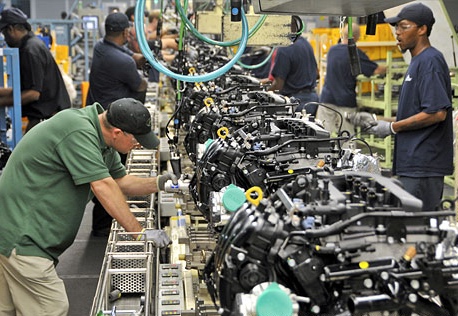
    American manufacturers in today’s economy are faced with the struggle to find workers skilled enough to complete the tasks needed to operate efficiently. Currently, one in ten openings for manufacturing positions requiring skilled workers will remain unfilled. This is because of a shortage in talent and a shortage of people with the qualifications to do the job.

    It is anticipated that between the years 2015 and 2025 there will be 3.5 million manufacturing positions that will need to be filled in the United States. The significance of this number could mean a lot of job potential for unemployed Americans and Americans coming of age during those years.

    The problem that American manufacturers currently face is the fact that of those 3.5 million manufacturing positions, it is estimated that 2 million of those jobs will be unfilled simply because the manufacturing company won’t be able to find qualified workers with the necessary skills in today’s technology-run industry.

    There is a large gap between the demand for qualified workers and people pursuing careers in American manufacturing processes. Unfortunately, ensuring that education and proper training is available to prospective workers is only a small part of the problem.

    There is an on-going stigma centered around manufacturing jobs here in America and that plays a large part in the youth’s decision to pursue education and training in other fields of work. This stigma stems from an outdated and mistaken point of view about the American manufacturing industry.

    With the struggles from the decline of the old standard of American manufacturing still being felt and the perception that investing the time and education into learning skills for manufacturing jobs will limit a person’s options should the company decide to outsource their work to off shore facilities, it is no wonder that there has been a widespread decline in people interested in pursuing careers within the American manufacturing industry.

    If you like what you see and think
    this post would be of interest to someone,
    please share

    Industry leaders here in the United States are working hard to help correct that stigma through education and advertisement. One of the ways they are tackling this problem is by focusing on the younger generation. In a recent survey conducted by Opinion Research Corporation that was commissioned by Proto Labs, they found that more than two-thirds of the people involved in the survey did not view American manufacturing jobs as a high tech career choice.

    Instead, the routines that people most commonly associate with American manufacturing jobs included working among machines, on assembly lines, non robotic technicians managing automated machines, and only a handful saw American manufacturing workers as software developers in front of computer screens.

    The reality is that the days of people working assembly lines has long since passed. Those jobs aren’t as plentiful as they once were, but there is a growing need for new kinds of manufacturing jobs.

    The rise in technology now requires skilled professionals who are able to keep up with the electronic and automated processes. The manufacturing industry needs workers who can trouble shoot these machines, complete complex computing tasks, operate these robots, and help in the development of these robots and automatic machines for future uses.

    There is such a strong demand for automation and useful equipment that often times the industry isn’t able to keep up. Many companies are relying on the brilliant minds of the people they’ve hired to think of new and inventive ways to handle the large workflow.

    Finding people trained in the areas companies need has become a nearly impossible task. Changing the perception of the people in general and youth entering the work force will help to fix this problem and hopefully open up more possibilities for the future of American manufacturing. Whether or not this education will prevent those 2 million job openings from remaining vacant remains to be seen.

    American manufacturing companies have already started trying to engage the younger generation. GE is currently working on targeting millennials and the rising generation that will graduate in the next few years. They have done this by creating its “digital industrial” ad series. This ad series stars millennials, Sarah and Owen, and offers an alternative to expensive college costs.

    GE has also launched a “Digital Industrial” filter for Snapchat. Snapchat is an app used by many millennials and the subtle targeting to the younger generation is not only a recruitment tool but also a rebranding effort to elevate the American manufacturing industry and the stigma around it.

    Other companies have gone a step further. Lincoln Electric has invested money in the new age gear associated with virtual reality. They’ve created a virtual world where the user is transported to a plant floor where they can try their hand at welding. They use this technology at their career fairs and it provides a unique opportunity to actually let prospective employees try out the work and see if it is a good fit for them. This in turn will lead to people seeking out more training in those areas and letting go of the stigma around them.

    People have started to move away from the idea that the only way to get ahead is through expensive and extensive years at college. The market is currently flooded with people who hold these degrees but we don’t have any workers able to do jobs in manufacturing positions. The result is a stressed economy with educated people unable to find jobs or a job that will cover the cost of their education and provide a roof over their head.

    [bctt tweet=”Is there a way to prevent the death of American manufacturing?” ]

    The American manufacturing industry is offering an alternative to this. They need jobs filled and they anticipate having more jobs in the coming years. By fighting back the stigma, they will be able to fill those jobs and help the American economy by giving back to the Americans in need of work. The stigma of uneducated employees working in manufacturing plants is also being fought. This is because it’s simply not true.

    With so much technology involved in the American manufacturing industry, these jobs are requiring a highly skilled workforce that excels in the industry of robotic equipment automation controls.

    They also need people skilled in software development. These manufacturing development jobs will require further education, but in the right areas. Those who want to put in the extra time and money to earning a four year college degree or higher need to be educated on which path to choose and by picking a path in software development they will have a steady stream of job opportunities in the coming years.

    Encouraging Americans toward manufacturing and the many jobs needed to create successful manufacturing environments still remains an uphill battle. Only through education and a reconstitution of how we anticipate and think about manufacturing can we prevent the rare breed of the American worker from becoming extinct.

  • The Decline & Rebirth of American Manufacturing

    The Decline & Rebirth of American Manufacturing

    American Quality Manufacturing

    With American quality manufacturing jobs moving overseas, the loss of industry has cost many Americans their livelihood and resulted in a sharp economic decline. The effects of that decline have been felt in recent times as American quality manufacturing has once again come into the lime light as Americans have begun to ask, “Where has American-made gone?”

    From 1998 to 2013, America lost 5.7 million factory and manufacturing jobs to overseas facilities and the outsourcing of materials, products, and goods needed for the manufacturing industry.

    Many supporters for keeping manufacturing overseas have stated that bringing the manufacturing jobs and process back to America would be a waste of time since robots and automation have replaced many of the jobs that were lost in the 1990’s.

    Their argument is valid and they do bring up a good point of how much the manufacturing industry has changed due to technology, but there are still positive aspects to bringing manufacturing companies back to America.

    In recent years, people have demanded more and more for products and goods made in America in an attempt to bring the manufacturing companies back to American soil. These demands are slowly being answered as more and more manufacturing companies are finding ways to bring their manufacturing processes back to the United States while still minimizing additional business costs.

    The companies that have already taken the plunge have shown that just because they are moving back to American soil doesn’t mean they have to have additional costs and raise their prices.

    Even those companies that have revolved around automation like Tesla have found a new way to create American jobs. They are doing this by coming back to American soil, opening up new manufacturing plants, and creating new jobs within the manufacturing industry. Automation and robots can only do so much and with the rise in technology there is a new need for operators and people who know how to perform maintenance on these instruments.

    As a direct result of the few companies who have already taken the plunge and come back to American soil, there has been a rise in the American economy. Manufacturing jobs still make up a good portion of the job industry in America. About 8.8 percent of total employment is made up of American manufacturing jobs and more are headed this way.

    Companies like Tesla are working to bring back their manufacturing jobs to hard working Americans. Tesla has already invested five billion dollars into its Gigafactory. Not only has the factory resulted in an influx of money being spent right here in America, but it is projected to offer ten thousand jobs when it is finished.

    The Gigafactory will be responsible for manufacturing lithium ion batteries. This is a plant where a lot of the production is automated and yet the decision to move their manufacturing plant back to their home soil has resulted in an increase in jobs.

    The estimation of ten thousand jobs does not even account for the additional jobs that were created in the process. By building a new plant facility, that means more jobs for contractors, builders, and construction workers. Outside of the plant, distributions centers here in America will be employed to move the finished products to buyers. The trickle down effect of this one company had undoubtedly had a positive effect on the American economy.

    Other companies have already made the move back to American soil. In 1991, the family-owned company, Bicycle Corporation of America moved the production of its bikes fully off shore. This cost many people their jobs and while it saved production value within the company, it had a negative impact on the local economy.

    Two years ago that same company decided to bring back a small portion of their production process back to America. The Bicycle Corporation of America moved from China to South Carolina and employed one hundred and fifteen people in their facility. This year they are projected to produce three hundred thousand bicycles in South Carolina, which is the same as they made back in 1991.

    The Bicycle Corporation of America does operate at a third fewer employees than it used to, but that didn’t mean that their decision to move back to America was wasted since their product gained value as a made-in-America product.

    They are bringing in more revenue into South Carolina and have continued to flourish and keep up with the low cost benefits that came with moving their productions off shore.

    When it comes to American quality manufacturing, the argument that bringing home companies won’t result in an boom in jobs like we saw in the 1990s due to automation and robots is true. However, it does make a difference and it does bring home an increase in overall economic stability and increased socioeconomic growth, even if it is not the same swell we saw during the 90s.

    We might not ever return the era of manufacturing we saw before off shoring became the standard, but we can see a new era, one that comes with new kinds of jobs. These jobs will also allow us to be an industry leader with the advancing technology used in the manufacturing industry.

    We don’t need to avoid the subject of American quality manufacturing. Nor do we need to have unrealistic expectations of what it could mean for bringing manufacturing back to the United States, but we can look to the future and embrace the change and find a new way to have our products made in America.

    American quality manufacturing might have perished but the rebirth of its productivity is in process and with the help of organizations like the Buy American Campaign, the American public will find itself making better, more well-informed decisions in regards to their product purchases.

    Do you have more examples of manufacturers bringing back American jobs? Contact us and tell us about it!

  • Trade imbalance with China has cost 131,000 jobs in N.C. since 2001

    Trade imbalance with China has cost 131,000 jobs in N.C. since 2001

    The loss of North Carolina jobs tied to the American trade imbalance with China may have peaked about a decade ago.

    However, the ripple effect continues to be felt in the state, particularly in the high-tech sector, according to a national study released last week.

    The Economic Policy Institute, a left-learning nonprofit research group, reported that North Carolina has lost 131,100 jobs, primarily in manufacturing, since 2001 because of trade policies deemed more favorable to China than the United States.

    About 95,100 of the job losses occurred between 2001 and 2008, primarily in furniture and textiles.

    For 2015-16, North Carolina has lost 10,500 jobs from the trade imbalance, the Washington-based institute determined.

    Mark Vitner, a senior economist with Wells Fargo Securities, said the disruption “unleashed by opening up trade with China was severely underestimated.”

    “We have been living with the impact in rural parts of North Carolina and Virginia for the past two decades. … Vast numbers of folks remain underemployed,” Vitner said.

    The report comes as President Donald Trump is considering raising tariffs on Chinese imports, a potential response that opponents worry could provoke a trade war.

    “The United States has a massive trade deficit with China,” said Robert Scott, the institute’s director of trade and manufacturing policy research.

    According to a January report from the U.S. Bureau of Economic Analysis, the U.S. trade deficit with China was a record $367 billion in 2015 — U.S. exports to China were valued at $116.2 billion, while imports from China were valued at a $483.9 billion.

    “The growth of that deficit almost entirely explains the failure of manufacturing employment to fully recover along with the rest of the economy,” Scott said. “And as other studies have suggested, the trade deficit has cost us millions of jobs since China entered the World Trade Organization in 2001.”

    North Carolina ranks sixth in terms of jobs lost because of the China trade imbalance and fifth highest in terms of percentage of lost jobs, at 3.12 percent, the institute said.

    California was No. 1 for the most jobs lost, at 589,100, while Oregon was first in lost jobs by percentage, at 3.82 percent.

    North Carolina’s 5th, 6th and 12th congressional districts have lost a combined 34,700 jobs, about 3.5 percent of the combined employment level within the three districts.

    The 5th District includes Forsyth County and is composed mostly of Northwest North Carolina counties.

    Source: http://www.greensboro.com

  • EPI: U.S.-China trade deficit cost 3.4 million jobs

    EPI: U.S.-China trade deficit cost 3.4 million jobs

    A recent Economic Policy Institute (EPI) report found that the nation lost 3.4 million jobs, mostly in manufacturing, between 2001 and 2015, as a result of a growing trade deficit with China that’s more than quadrupled since the country entered the World Trade Organization in 2001.

    Increasing from $102.3 billion in 2001 to $483.2 billion in 2015, the surging deficit has led to job losses in every state across the country, including Tennessee, which lost 69,500 jobs in that time, according to the report.

    A news release sent Tuesday from Scott Paul, president of the Alliance for American Manufacturing, pointed out that the manufacturing sector, one of Tennessee’s largest industries, has especially suffered from the deficit, with a total loss of 2.6 million jobs.
    “The bottom line is that our trade deficit with China costs jobs,” Paul said in the release. “A resurgence in American manufacturing is only possible if our trade relationship with Beijing changes dramatically.”

    Because the EPI largely attributes the growing deficit to China’s technological piracy, protectionist policies and currency manipulation, Paul explained that U.S. must go beyond mere lip service to establish new trade terms with stronger enforcements.

    “This report leaves no doubt that China’s trade practices will continue to impede a true jobs recovery unless our policies change,” Paul said.

    The report also found that Oregon had the highest percentage of employment lost (3.82 percent), with more than 65,000 jobs displaced, while California had the most total jobs lost — 589,100 or 3.59 percent.

    Tennessee, which ranked 16th in regards to jobs displaced as a share of total state employment, lost 2.5 percent of its jobs to China between 2001 and 2015, the report said.

    Source: http://www.thedailytimes.com/