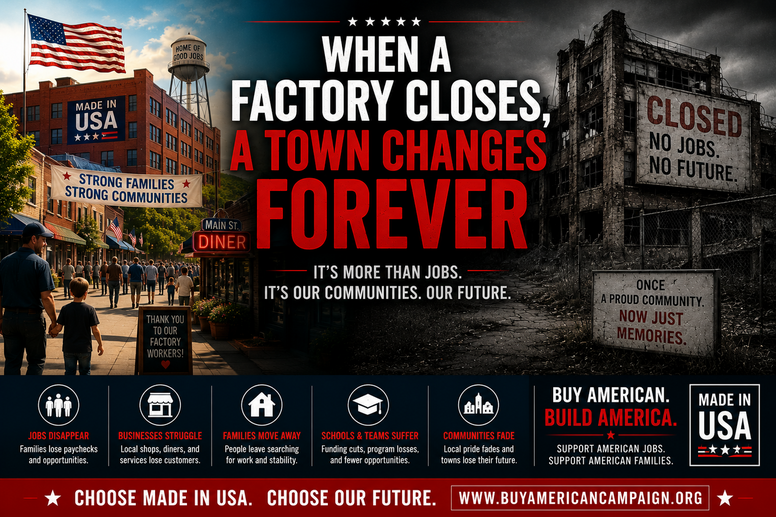
When a factory closes, most people count the jobs.
300 jobs lost. 800 jobs lost. 2,000 jobs lost.
The numbers make headlines for a few days, then the country moves on.
But the real damage spreads much further than that.
Because when a major factory disappears, it rarely affects only the workers inside the building. Entire communities begin to change around it.
The local diner loses its breakfast crowd. The hardware store sees fewer customers. The auto shop gets quieter. Youth sports sponsorships disappear. Families move away looking for work. Downtown storefronts slowly empty out.
And eventually, a town that once felt alive starts feeling like it’s fading.
America Was Built Around Manufacturing Towns
For generations, manufacturing jobs helped build stable middle-class communities across America.
Not just in giant cities — but in small towns and working-class suburbs all over the country.
Factories created more than paychecks.
They created:
- local pride
- apprenticeship opportunities
- community identity
- long-term careers
- economic stability for families
Entire neighborhoods grew around mills, plants, machine shops, shipyards, and factories.
Parents expected their kids could stay nearby, work hard, buy a home, and build a decent life in the same community.
That stability mattered.
Outsourcing Changed More Than the Economy
Over time, many of those jobs moved overseas.
Companies chased lower labor costs. Factories closed. Production shifted abroad.
And while consumers often got cheaper products, many communities paid a price that never fully showed up in economic charts.
Some towns recovered.
Others never really did.
You can still drive through parts of America today and immediately see the difference:
- empty industrial buildings
- abandoned parking lots
- faded downtowns
- neighborhoods that feel stuck in time
People notice it even if they don’t talk about it directly.

Americans Are Not “Nostalgic” for Caring About This
One of the strangest things about the outsourcing era is how often people were told not to care.
If Americans worried about losing factories, they were called nostalgic. If they talked about rebuilding manufacturing, they were told globalization made it impossible. If they wanted stronger domestic production, they were accused of resisting progress.
But communities are not irrational for wanting stability.
Families are not irrational for wanting good-paying local jobs.
And Americans are not irrational for wanting the country to still build things.
Manufacturing Still Matters
Not every job will return. Not every town can be rebuilt overnight.
But manufacturing still matters enormously to the strength of a country.
Strong industrial capacity supports:
- local economies
- supply-chain resilience
- skilled trades
- small businesses
- middle-class wages
- national security
And maybe most importantly, it helps communities feel like they still have a future.
The Bigger Question
America now faces a choice.
Do we continue treating manufacturing as something disposable?
Or do we recognize that when factories disappear, we lose pieces of communities, local identity, and long-term stability along with them?
Because once enough factories leave, it becomes very hard to rebuild the culture and ecosystem that supported them in the first place.
And by the time the country realizes what was lost, entire towns may already be gone.
Whenever possible, choose Made in USA.
| If you like what you see and think this post would be of interest to someone, please share |