Tag: American Workers

  • Nordic Ware: The American Company Behind Iconic Bakeware Made in the USA

    Nordic Ware: The American Company Behind Iconic Bakeware Made in the USA

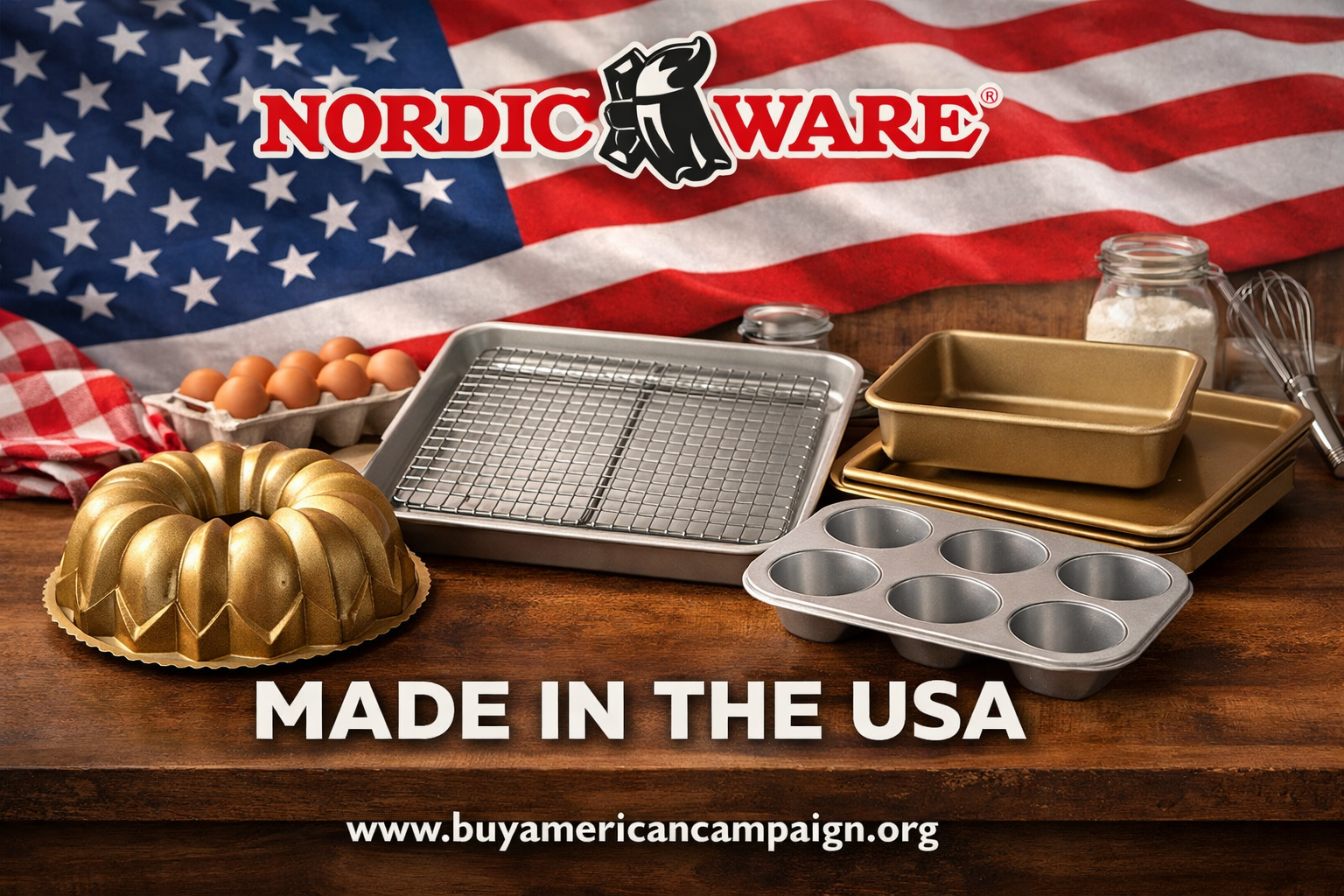
    American-made bakeware showcase

    If you’ve ever baked a cake in a Bundt pan, there’s a good chance you’ve already used a Nordic Ware product — even if you didn’t realize it.

    While many kitchen brands have moved production overseas, Nordic Ware is one of the few that still manufactures a significant portion of its products right here in the United States.

    🇺🇸 Is Nordic Ware Made in the USA?

    The short answer: many of their core products are still made in the USA — but not all.

    Nordic Ware manufactures a large percentage of its aluminum bakeware in Minnesota, including many of its most popular items. However, like most modern brands, some products are imported.

    That’s why it’s always important to check individual listings before you buy.

    Browse American-Made Products

    🏭 A Quick Look at the Company

    Nordic Ware was founded in 1946 and remains a family-owned company based in Minneapolis, Minnesota.

    They’re best known for creating the original Bundt pan — a product that became a staple in American kitchens and is still widely used today.

    Unlike many competitors, Nordic Ware has continued investing in U.S. manufacturing, producing many of its aluminum products domestically for decades.

    🍳 What Nordic Ware Makes

    Nordic Ware offers a wide range of kitchen products, including:

    • Bakeware (Bundt pans, sheet pans, muffin tins)
    • Cookware
    • Kitchen tools and accessories

    Their reputation is strongest in aluminum bakeware, which is where much of their U.S. production is focused.

    Join the Buy American Movement

    🔍 What’s Actually Made in the USA

    Many of Nordic Ware’s most popular items are still made domestically, including:

    • Cast aluminum Bundt pans
    • Natural aluminum baking sheets
    • Select specialty bakeware

    These products are manufactured in Minnesota and are known for durability, even heating, and long-term performance.

    That said, not every item in their catalog is made in the USA — so it’s always worth double-checking before purchasing.

    🛒 Popular Nordic Ware Products Made in the USA

    If you’re looking to support American manufacturing, here are a few well-known options to start with:

    • Classic Bundt Pan — the original design that made the brand famous
    • Natural Aluminum Baking Sheet — a staple for everyday baking
    • High-Sided Sheet Pans — ideal for roasting and baking

    👉 View Nordic Ware products on Amazon:
    https://amzn.to/4tA7cUR

    (Tip: check the product description to confirm country of origin before purchasing.)

    🇺🇸 Why It Matters

    When companies continue to manufacture in the United States, they’re supporting:

    • American jobs
    • Domestic supply chains
    • Higher production standards

    Nordic Ware is a good example of a company that has maintained a strong domestic presence while still competing in a global market.

    ✅ Final Takeaway

    Nordic Ware remains one of the few kitchen brands still producing a meaningful portion of its products in the United States.

    If you’re looking for reliable, American-made bakeware, it’s a brand worth paying attention to — just be sure to verify each product before you buy.

    Whenever possible, choose Made in USA.

    If you like what you see and think this post would be of interest to someone, please share
  • Made in America Loan Guarantee Expanded: SBA Boosts Support for U.S. Manufacturers

    Made in America Loan Guarantee Expanded: SBA Boosts Support for U.S. Manufacturers

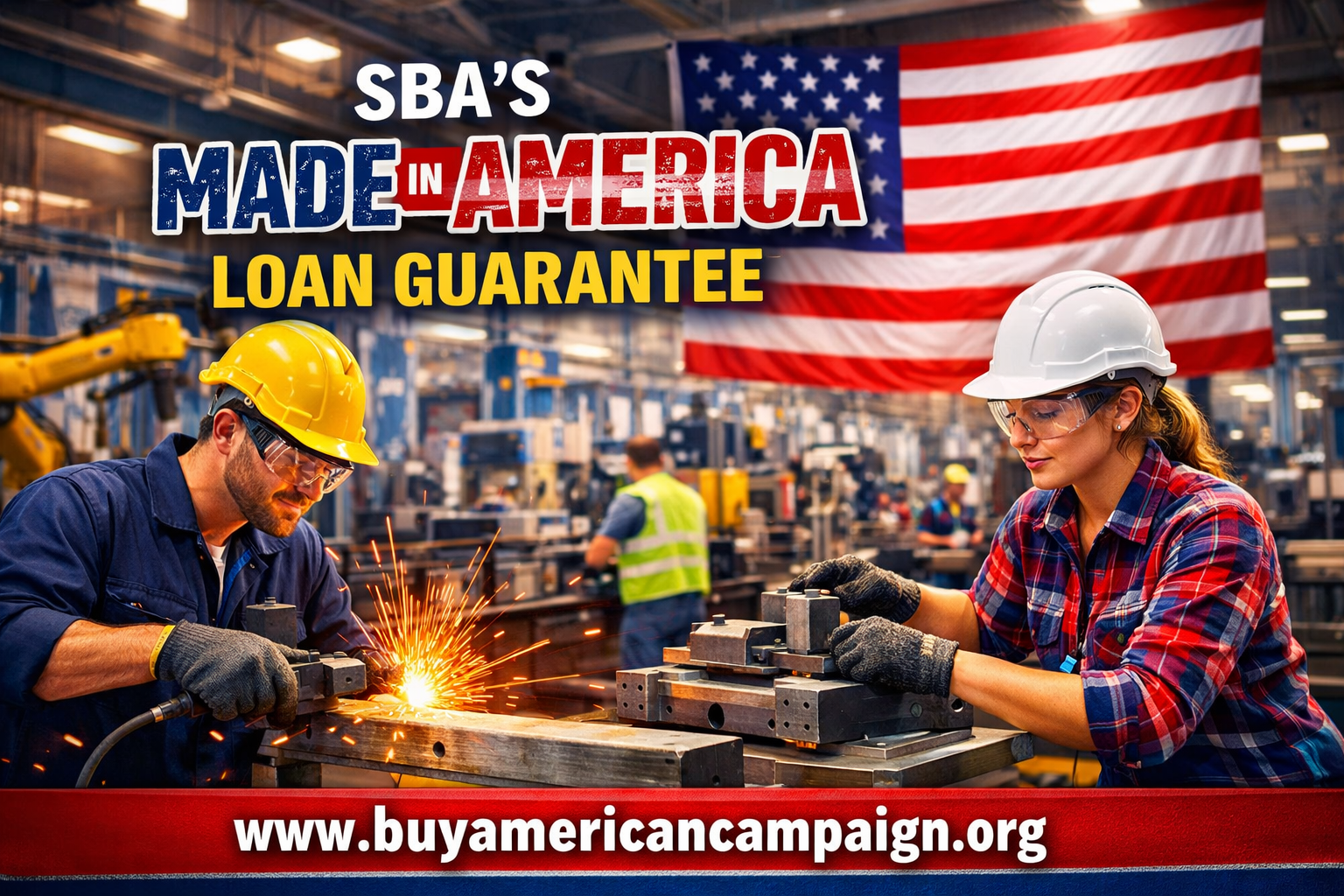
    SBA Made in America Loan Guarantee

    There’s a lot of talk these days about bringing production back home, strengthening supply chains, and rebuilding America’s industrial base. This latest SBA move gives that conversation some real substance. The Made in America loan guarantee program is getting a major expansion, opening the door for more U.S. manufacturers and food supply chain businesses to access the capital they need to grow, modernize, and compete.

    Starting May 1, manufacturers across NAICS Sectors 31-33 will become eligible for this expanded support. For small businesses trying to invest in new equipment, improve facilities, build inventory, reduce dependence on foreign adversaries, or even grow through acquisitions, this could be a meaningful opportunity. The SBA is also broadening eligibility under its International Trade Loan program to include more food supply chain businesses, including agriculture, production, and logistics.

    Why the Made in America Loan Guarantee Matters

    This matters because financing is often one of the biggest barriers standing between a small manufacturer and its next stage of growth. A company may want to buy more advanced machinery, automate part of its process, expand into a larger facility, or bring a supplier relationship back into the United States. But those kinds of moves require capital, and capital can be hard to secure when lenders view manufacturing as expensive, complex, or risky.

    That’s where this change becomes important. The SBA increased the government guaranty on these loans to 90%, compared to the standard 75% for regular 7(a) loans. That higher guaranty gives lenders more confidence to say yes. For small businesses, that can mean access to financing that might not have been available otherwise.

    And when more American manufacturers can get funded, that doesn’t just help individual companies. It helps local workers, local suppliers, and local communities. It also helps rebuild production capacity here at home instead of continuing to send that capacity overseas.

    A Big Deal for Small Manufacturers

    One of the most important details in this announcement is who it’s really aimed at: small businesses. According to the SBA, small businesses make up 98% of all manufacturers in America. That’s a huge number, and it tells the real story of American manufacturing. It’s not just giant factories and major corporations. It’s also thousands of smaller operations across the country making parts, components, food products, industrial goods, packaging, tools, and more.

    These businesses are often deeply tied to their communities. They hire locally. They create stable jobs. They support regional supply chains. And when they grow, the impact tends to ripple outward. That’s one reason this expansion could matter well beyond the balance sheets of individual companies.

    The timing is notable too. Weekly wages in manufacturing surged 5.1% in February, a sign that the sector remains economically important and competitive. Manufacturing jobs have long been associated with strong wages, skill development, and long-term career pathways. Supporting domestic manufacturers is not just about nostalgia or patriotic branding. It’s about backing an industry that still plays a critical role in national prosperity.

    Browse American-Made Products

    What the Funds Can Be Used For

    The practical side of this program expansion is what makes it especially interesting. Eligible businesses can use funds for a range of growth and resilience-focused purposes, including:

    • Upgrading equipment
    • Modernizing facilities
    • Diversifying supply chains away from foreign adversaries
    • Building inventory
    • Expanding operations through acquisitions

    That list covers a lot of the real-world challenges American manufacturers are facing right now. Many businesses know they need to improve efficiency or modernize production, but the upfront cost can be a major obstacle. Others want to reduce exposure to overseas suppliers and political instability but need working capital to make that transition possible. In both cases, better financing access can make action possible instead of leaving those plans stuck on paper.

    The inclusion of food supply chain businesses is also worth watching. Agriculture, food production, processing, transportation, and logistics all play a major role in domestic resilience. Expanding support in this area recognizes that a strong American supply chain is not just about factories. It includes the systems that move goods from producer to processor to warehouse to shelf.

    Domestic Sourcing Gets a Boost

    Another notable piece of this broader push is the SBA’s launch of the Make Onshoring Great Again Portal, which connects businesses with more than 1 million domestic suppliers. That may not get as much attention as the financing change, but it could be just as valuable over time.

    One of the biggest reasons companies rely on foreign suppliers is simple: finding qualified domestic alternatives can be difficult, slow, and fragmented. A resource that helps businesses identify American supplier options could reduce that friction. When paired with financing support, it creates a more complete strategy. Businesses may be able to both find domestic suppliers and secure the funding needed to shift operations toward them.

    The SBA also says it has cut more than $100 billion in red tape. Whether that figure is interpreted broadly or narrowly, the message is clear: the agency wants to present this as a pro-growth, pro-production effort designed to remove obstacles rather than add new ones.

    Join the Buy American Movement

    More Than Policy Talk

    SBA Administrator Kelly Loeffler summed up the administration’s message this way: “Industrial dominance is essential to our national security and strength. Small businesses make up 98% of all manufacturers in America. This Administration is transforming America into a nation of builders once again, as part of an industrial comeback that is being led by small businesses.”

    That language is strong, but the underlying point is hard to ignore. Manufacturing capacity matters. Supply chains matter. The ability to produce goods domestically matters. And small businesses are central to all of it.

    At Buy American Campaign, that’s why stories like this stand out. It’s easy to talk about buying American in theory. But if the country is serious about supporting American-made goods, it also has to support the businesses that make them possible. That means access to capital, stronger supplier networks, and policies that help domestic manufacturers scale instead of struggle.

    This expansion of the Made in America loan guarantee won’t solve every challenge facing U.S. manufacturing. But it does move in the right direction. It gives small businesses more tools to invest, adapt, and grow here at home. And that’s the kind of step that can help turn the idea of an American manufacturing comeback into something more real.

    When more businesses can build in America, source in America, and hire in America, the benefits extend far beyond one loan program. That’s good for workers, good for communities, and good for the long-term strength of the country.

    Whenever possible, choose Made in USA.

    If you like what you see and think this post would be of interest to someone, please share
  • Why “Buy American” Is Slowing Housing — And Why That’s Also an Opportunity

    Why “Buy American” Is Slowing Housing — And Why That’s Also an Opportunity

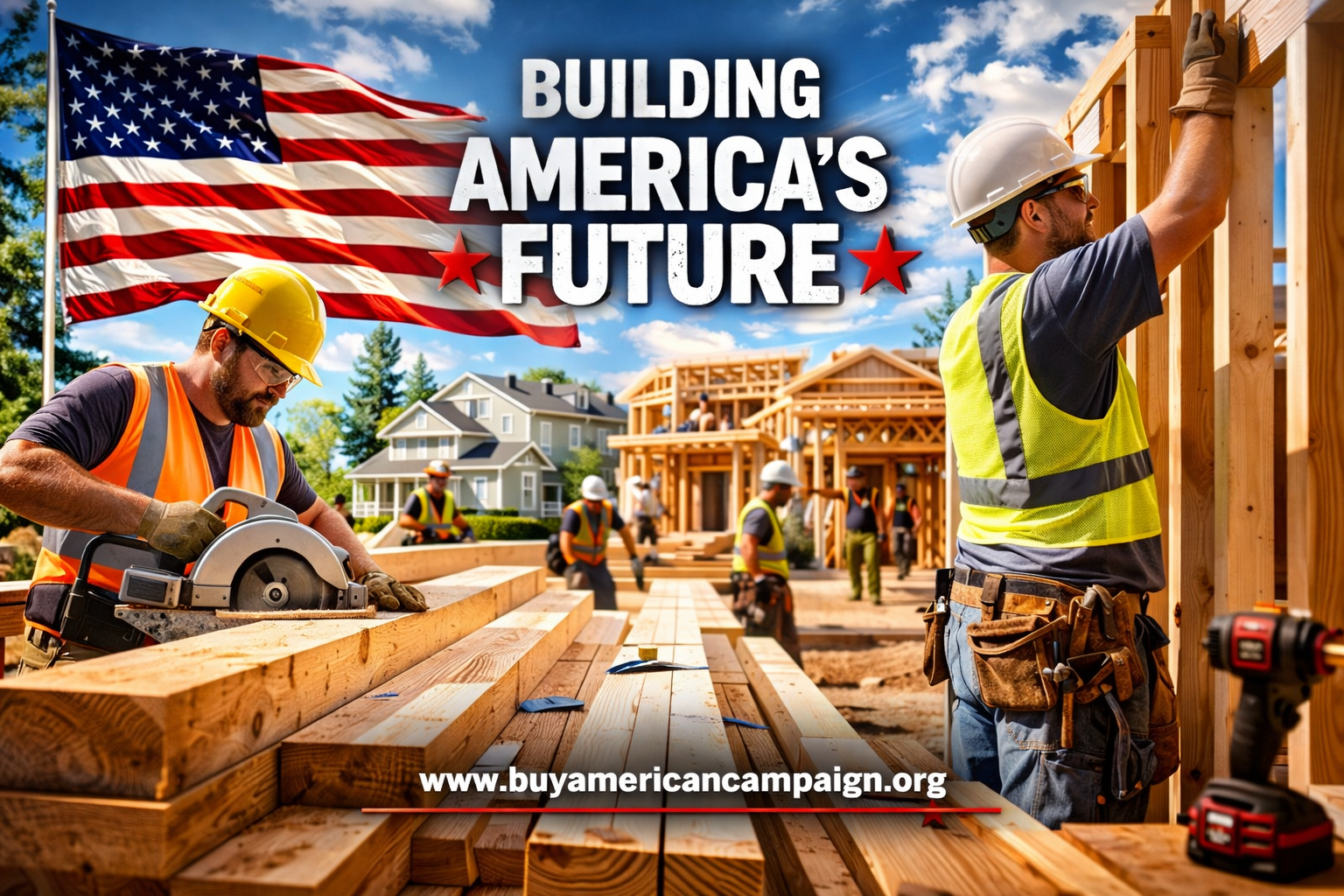
    Building Americas Future - American Construction Workers

    The idea behind the Build America Buy America Act (BABA) is simple: if taxpayer dollars are funding a construction project, the materials should be made in the United States. Signed into law in 2021, the policy was designed to strengthen domestic manufacturing, support American workers, and reduce dependence on foreign supply chains.

    In theory, it’s exactly what the Buy American movement has been pushing for. In practice, however, the rollout has exposed a much bigger problem — one that is now directly impacting affordable housing across the country.

    The Problem: We Don’t Make Enough

    Under BABA, nearly everything used in federally funded housing projects must be sourced domestically. That includes HVAC systems, lighting components, ceiling fans, door hinges, and dozens of other common building materials.

    The problem? Many of these materials simply aren’t manufactured in the United States — at least not at the scale needed. Decades of offshoring have left major gaps in domestic production capacity. And those gaps are now showing up in real ways.

    When a developer can’t source a required material domestically, they have to apply for a waiver through the U.S. Department of Housing and Urban Development (HUD). That waiver process is where things break down.

    A Waiver System That Can’t Keep Up

    HUD’s waiver process currently takes six months or longer to approve. For a housing project that’s already on a tight timeline and tighter budget, a six-month delay can be devastating.

    Making it worse, HUD staffing has been cut significantly, which means fewer people are processing a growing number of waiver applications. Only a handful of projects have been approved so far, while hundreds sit in the queue.

    The result is exactly what you’d expect: projects are delayed, costs are climbing — often by hundreds of thousands of dollars — and much-needed housing isn’t getting built. All during a national housing crisis where supply is already struggling to meet demand.

    Browse American-Made Products

    What Went Wrong

    The core issue is timing. The Buy American requirements were put in place before anyone fully assessed whether the U.S. manufacturing base could actually support them. The policy assumed production capacity that doesn’t yet exist.

    That’s not an argument against buying American. It’s an argument for better planning. You can’t mandate domestic sourcing without first building the domestic supply to match. And right now, we’re feeling the consequences of that gap.

    The Opportunity Hiding Inside the Problem

    Here’s the part of this story that often gets overlooked: this isn’t just a problem. It’s also a massive opportunity.

    The demand for American-made construction materials is clearly there — the federal government is literally requiring it. That means there’s a strong, guaranteed market for any manufacturer willing to step in and fill the gap.

    That means new factories. New production lines. New jobs. New supply chains built right here in the United States. The infrastructure spending is already committed — the question is whether American manufacturers will rise to meet it.

    Join the Buy American Movement

    Rebuilding Takes Time

    The challenge is that rebuilding domestic manufacturing capacity doesn’t happen overnight. It requires investment, planning, and coordination between policy and industry. Factories don’t appear in six months just because a law says materials need to be domestic.

    But if done correctly, the long-term benefits are enormous. More stable pricing. Faster construction timelines. A stronger domestic supply chain. And communities that actually get the housing they need, built with materials made by American workers.

    Why This Matters for the Buy American Movement

    This is where the Buy American conversation moves beyond consumer choice. It becomes part of a larger economic strategy.

    Supporting American-made goods helps create the demand needed to justify expanding production. And as that production grows, the system becomes more resilient. It’s a cycle — but someone has to start it.

    Right now, we’re in the growing pains phase. The pressures are real. But those pressures are also signals — showing exactly where domestic production needs to expand. Every delayed project, every waiver request, every cost overrun is pointing directly at the manufacturing gaps that need to be filled.

    The good news? The demand is already there. Now it’s a matter of building the supply to match. And for American manufacturers, that’s not just an opportunity — it’s a call to action.

    Whenever possible, choose Made in USA.

    If you like what you see and think this post would be of interest to someone, please share
  • From a Garage to 51,000 Square Feet: The Montana Knife Company Story

    From a Garage to 51,000 Square Feet: The Montana Knife Company Story

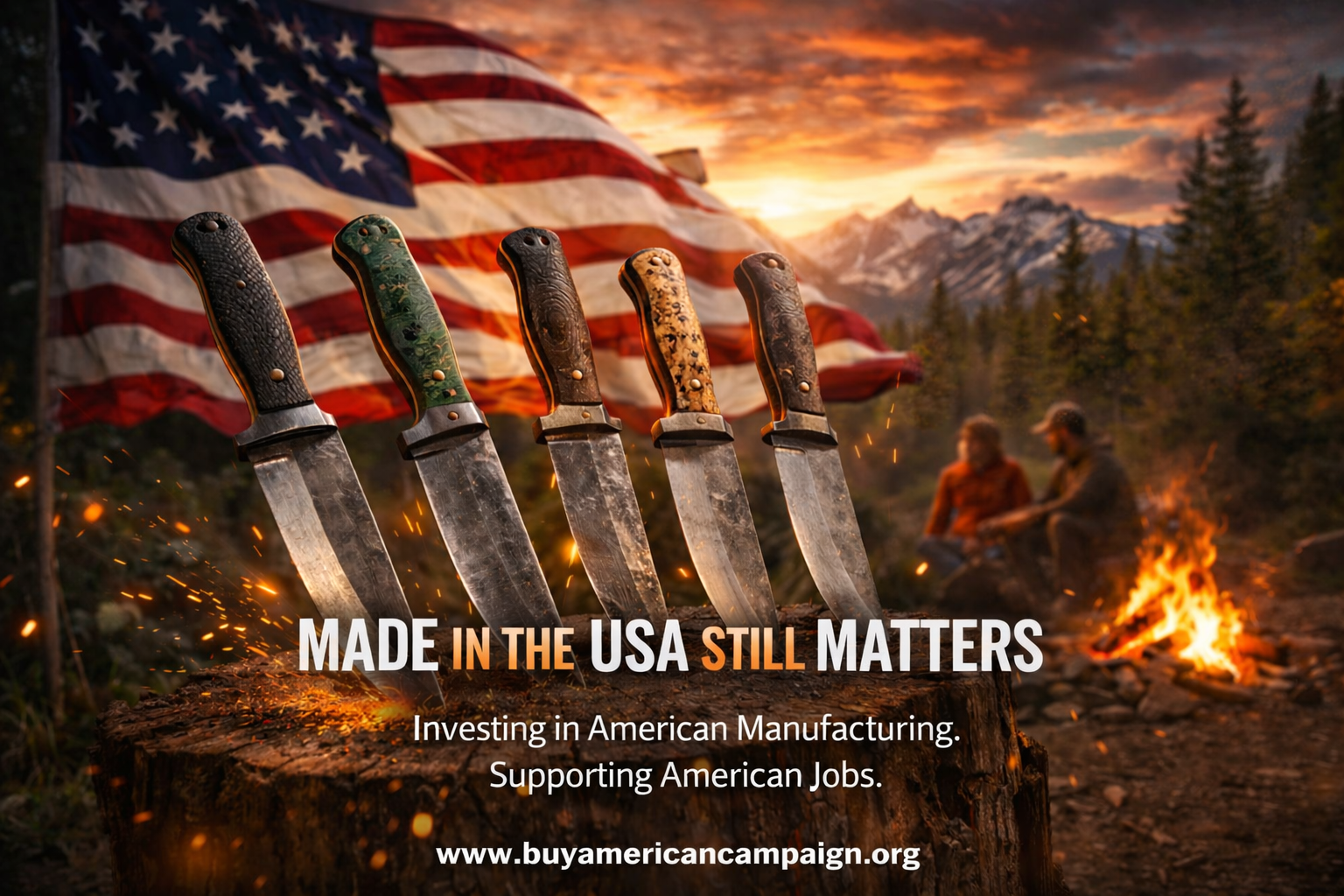
    Montana Knife Company - American Made Knives

    This is what rebuilding American manufacturing actually looks like. Not a headline. Not a policy. Not a talking point. A guy in a garage, turning into a company with over 100 employees.

    Montana Knife Company (MKC) was founded in 2020 by Josh Smith — a former lineman who didn’t set out to “disrupt an industry,” but to build something real. Something durable. Something American-made. Something better. And it started exactly where you’d expect — in his garage.

    Built From the Ground Up

    In 2020, there was no massive operation. No big facility. No corporate backing. Just skill, demand, and a willingness to do the work.

    Josh Smith began making knives by hand — focusing on quality, performance, and craftsmanship. The kind of knives people actually use. The kind that don’t get thrown away or replaced every year.

    Word spread quickly. Because when you build something that’s actually good, people notice. Demand grew. Orders piled up. And what started as a small operation began to outgrow the garage.

    Scaling Without Leaving America

    Here’s where the story gets interesting. Most companies, when they hit that kind of growth, look overseas. Cheaper labor. Faster scaling. Higher margins.

    MKC didn’t do that. They doubled down on American manufacturing.

    Today, the company operates out of a 51,000-square-foot facility in Missoula, Montana — a major step up from where it started. That facility represents a $19 million investment into U.S.-based production. And more importantly? It supports 105 American jobs.

    That’s not theory. That’s not policy. That’s real impact.

    Browse American-Made Products

    Phase Three of Growth

    This isn’t just growth — it’s intentional growth. MKC is now in its third phase of expansion. Phase one was a garage startup. Phase two was rapid demand and scaling. Phase three is a full-scale manufacturing operation.

    That progression matters. Because one of the biggest misconceptions about American manufacturing is that it can just “come back” overnight. It can’t. It has to be rebuilt — step by step, company by company, facility by facility. This is exactly what that process looks like.

    Why This Story Matters

    It’s easy to look at this and say, “It’s just a knife company.” But it’s not. It’s a blueprint.

    Right now, one of the biggest issues facing the U.S. economy is a lack of domestic production capacity. We rely heavily on other countries to make the things we use every day — from tools to materials to basic goods.

    MKC is doing the opposite. They’re proving that you can build products in the United States, scale production domestically, create jobs locally, and still meet demand. That combination is rare — and it’s exactly what needs to happen across other industries.

    Join the Buy American Movement

    Built to Last

    There’s another piece to this that matters. These aren’t disposable products. MKC focuses on heirloom-quality knives — tools designed to last for years, even decades. That mindset is a big part of what’s been missing in modern manufacturing.

    When you build things to last, you reduce waste, increase value, create stronger customer loyalty, and reinforce the idea that quality still matters. That’s a very different approach from mass production.

    The Bigger Picture

    This story isn’t about one company. It’s about what’s possible.

    A former lineman starts making knives in his garage in 2020. A few years later, that same operation turns into a 51,000 sq ft facility, a $19 million investment, and 105 employees.

    That’s how manufacturing comes back. Not all at once. Not from the top down. But from people who decide to build something — and keep building.

    Montana Knife Company didn’t wait for perfect conditions. They created momentum. And if more companies follow that path, this isn’t just a success story — it’s the beginning of something much bigger.

    Whenever possible, choose Made in USA.

    If you like what you see and think this post would be of interest to someone, please share