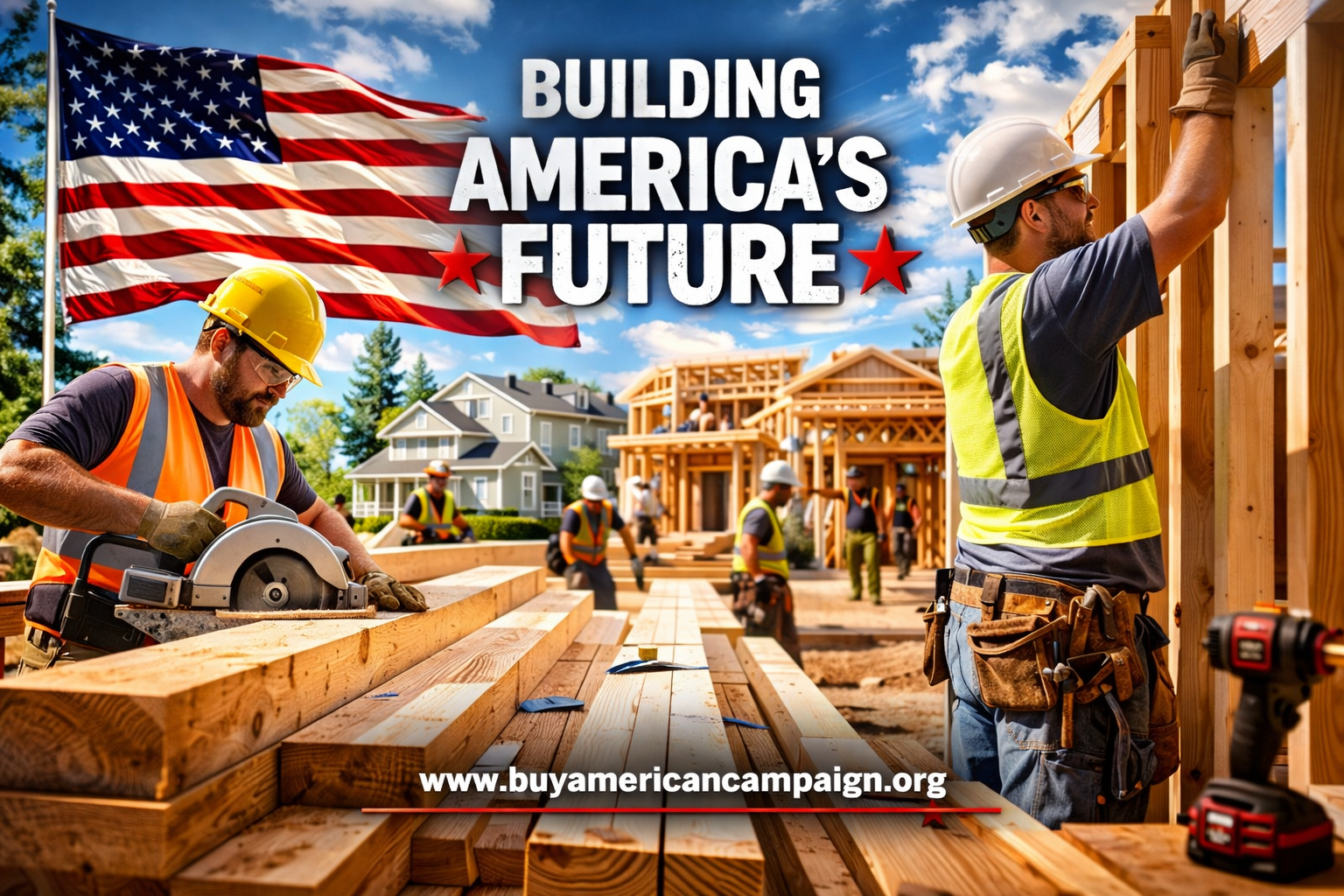
The idea behind the Build America Buy America Act (BABA) is simple: if taxpayer dollars are funding a construction project, the materials should be made in the United States. Signed into law in 2021, the policy was designed to strengthen domestic manufacturing, support American workers, and reduce dependence on foreign supply chains.
In theory, it’s exactly what the Buy American movement has been pushing for. In practice, however, the rollout has exposed a much bigger problem — one that is now directly impacting affordable housing across the country.
The Problem: We Don’t Make Enough
Under BABA, nearly everything used in federally funded housing projects must be sourced domestically. That includes HVAC systems, lighting components, ceiling fans, door hinges, and dozens of other common building materials.
The problem? Many of these materials simply aren’t manufactured in the United States — at least not at the scale needed. Decades of offshoring have left major gaps in domestic production capacity. And those gaps are now showing up in real ways.
When a developer can’t source a required material domestically, they have to apply for a waiver through the U.S. Department of Housing and Urban Development (HUD). That waiver process is where things break down.
A Waiver System That Can’t Keep Up
HUD’s waiver process currently takes six months or longer to approve. For a housing project that’s already on a tight timeline and tighter budget, a six-month delay can be devastating.
Making it worse, HUD staffing has been cut significantly, which means fewer people are processing a growing number of waiver applications. Only a handful of projects have been approved so far, while hundreds sit in the queue.
The result is exactly what you’d expect: projects are delayed, costs are climbing — often by hundreds of thousands of dollars — and much-needed housing isn’t getting built. All during a national housing crisis where supply is already struggling to meet demand.

What Went Wrong
The core issue is timing. The Buy American requirements were put in place before anyone fully assessed whether the U.S. manufacturing base could actually support them. The policy assumed production capacity that doesn’t yet exist.
That’s not an argument against buying American. It’s an argument for better planning. You can’t mandate domestic sourcing without first building the domestic supply to match. And right now, we’re feeling the consequences of that gap.
The Opportunity Hiding Inside the Problem
Here’s the part of this story that often gets overlooked: this isn’t just a problem. It’s also a massive opportunity.
The demand for American-made construction materials is clearly there — the federal government is literally requiring it. That means there’s a strong, guaranteed market for any manufacturer willing to step in and fill the gap.
That means new factories. New production lines. New jobs. New supply chains built right here in the United States. The infrastructure spending is already committed — the question is whether American manufacturers will rise to meet it.
Rebuilding Takes Time
The challenge is that rebuilding domestic manufacturing capacity doesn’t happen overnight. It requires investment, planning, and coordination between policy and industry. Factories don’t appear in six months just because a law says materials need to be domestic.
But if done correctly, the long-term benefits are enormous. More stable pricing. Faster construction timelines. A stronger domestic supply chain. And communities that actually get the housing they need, built with materials made by American workers.
Why This Matters for the Buy American Movement
This is where the Buy American conversation moves beyond consumer choice. It becomes part of a larger economic strategy.
Supporting American-made goods helps create the demand needed to justify expanding production. And as that production grows, the system becomes more resilient. It’s a cycle — but someone has to start it.
Right now, we’re in the growing pains phase. The pressures are real. But those pressures are also signals — showing exactly where domestic production needs to expand. Every delayed project, every waiver request, every cost overrun is pointing directly at the manufacturing gaps that need to be filled.
The good news? The demand is already there. Now it’s a matter of building the supply to match. And for American manufacturers, that’s not just an opportunity — it’s a call to action.
Whenever possible, choose Made in USA.
| If you like what you see and think this post would be of interest to someone, please share |