For years, Americans were told manufacturing was fading away.
The future would belong entirely to software, finance, and imported products. Industrial towns would slowly disappear while the country shifted toward a “post-manufacturing economy.”
Now suddenly, one of America’s most iconic automakers is doing something that would have sounded almost old-fashioned a decade ago:
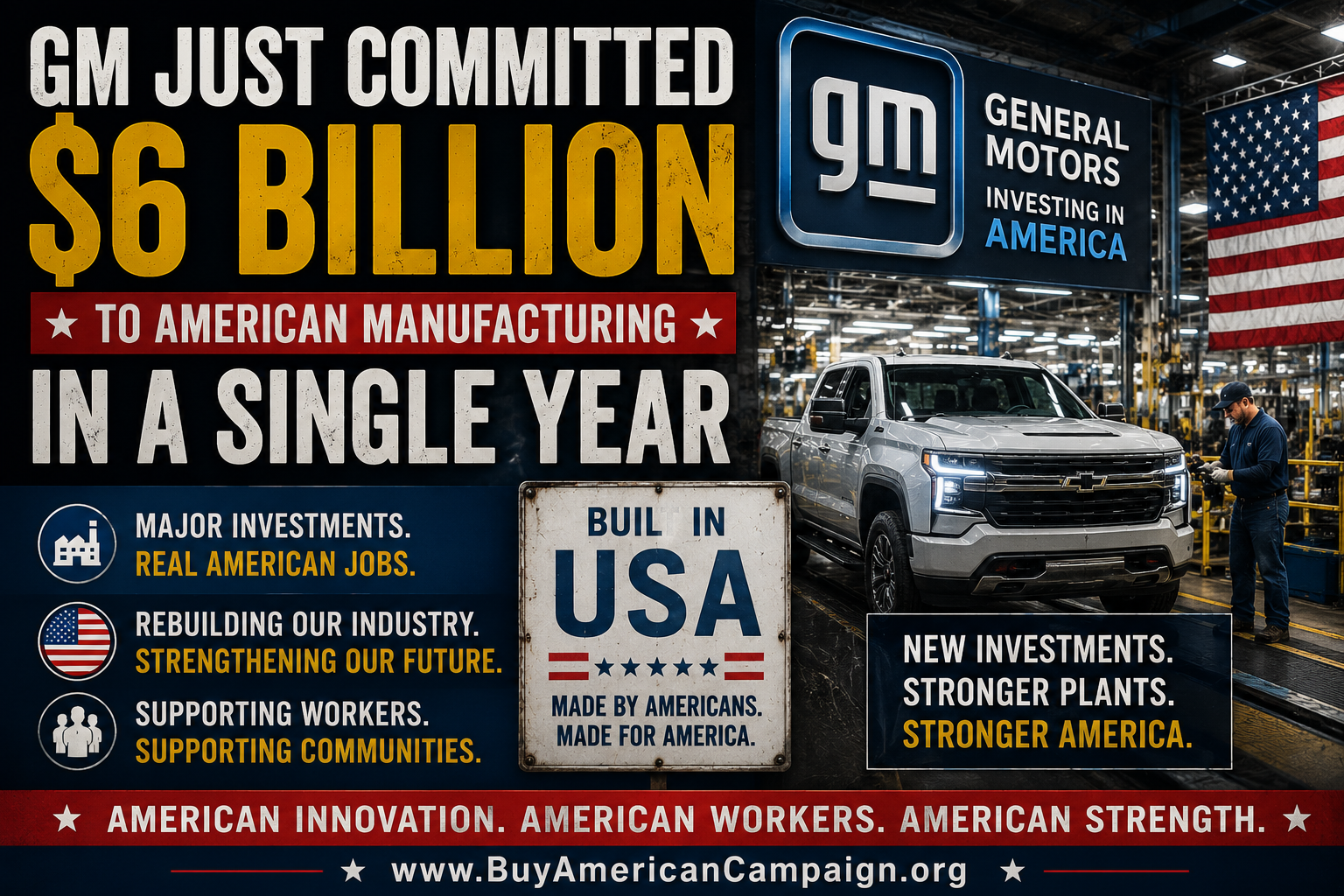
General Motors is pouring roughly $6 billion into American manufacturing operations in a single year.
That includes new investments across U.S. facilities, major plant upgrades, retooling efforts, and expanded domestic production capacity — particularly throughout the Midwest.
And whether people realize it or not, this story says something much bigger about where the American economy may be heading next.
America’s Industrial Giants Are Re-Thinking Manufacturing
For decades, corporate America chased efficiency above everything else. Manufacturing moved wherever labor was cheapest. Supply chains stretched across the globe. Wall Street rewarded short-term savings over long-term industrial strength.
Then reality hit.
COVID exposed fragile supply chains. Geopolitical tensions raised concerns about dependence on foreign production. Consumers became more interested in buying American-made products. And suddenly companies started realizing that domestic manufacturing still matters.
GM’s investment is one of the clearest examples yet that large American manufacturers are starting to think differently again.
Not Just Electric Vehicles
One of the more interesting details in GM’s strategy is that the company is not blindly abandoning traditional vehicle production while chasing electric vehicle headlines.
In fact, some of the new spending is specifically tied to gas-powered vehicle retooling and continued domestic production as consumer demand shifts more slowly than many executives expected.
That matters because it suggests something important:
American manufacturing companies are starting to focus less on political narratives and more on building what customers actually want to buy.
For many workers and manufacturing communities, that is probably welcome news.

The Midwest Still Matters
There is also a symbolic side to this story.
For generations, places like Michigan, Ohio, Indiana, and other parts of the industrial Midwest formed the backbone of American manufacturing power. Entire cities grew around automotive production.
Then came decades of plant closures, outsourcing, automation shocks, and economic decline across many manufacturing regions.
That is why major reinvestment stories matter psychologically as much as economically. They represent something Americans have not seen enough of for a long time: industrial confidence.
Factories expanding instead of shrinking. Production lines growing instead of disappearing. Manufacturing companies betting on America instead of slowly leaving it behind.
The Bigger Debate
Of course, not everyone will agree on what this means.
Some critics will argue that corporations only “rediscover” American manufacturing when subsidies, tariffs, or political pressure make it profitable. Others will point out that many companies spent decades offshoring jobs before suddenly talking about reshoring.
Those criticisms are not entirely unfair.
But at the same time, America cannot rebuild industrial strength without major manufacturers actually investing in domestic production again.
And $6 billion is not symbolic pocket change.
America Still Knows How to Build
Stories like this matter because they challenge the idea that America’s manufacturing future is already over.
The reality is far more complicated.
The United States still has enormous industrial capacity, engineering talent, infrastructure, and manufacturing experience. The real question is whether the country has the long-term commitment to rebuild and expand it.
GM’s latest investment suggests at least some major companies believe the answer may still be yes.
Whenever possible, choose Made in USA.
| If you like what you see and think this post would be of interest to someone, please share |