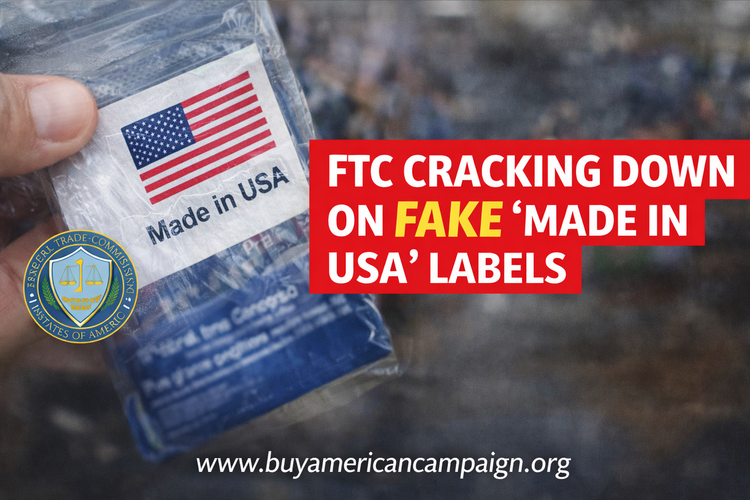
Every American who has ever flipped over a product looking for “Made in USA” has, at some point, wondered whether the label is actually true. On April 14, 2026, the Federal Trade Commission gave us our clearest answer yet: sometimes it isn’t — and the government is done looking the other way.
The FTC just announced a sweeping enforcement action against three companies accused of deceiving American consumers with false “Made in the USA” claims. One of them was selling American flags that were actually made in China. If that doesn’t sum up exactly why the Buy American Campaign exists, nothing does.
Three Companies, Three Violations, One Clear Message
The FTC’s sweep follows President Trump’s March executive order, “Ensuring Truthful Advertising of Products Claiming to be made in America.” The message from the government is simple: if you put “Made in USA” on your product, you’d better be able to prove it. Here are the three companies that couldn’t.
Case 1: The American Flag That Wasn’t American
Americana Liberty LLC and Three Nations LLC were selling patriotic flag display products and related merchandise marketed as “Made in the USA.” According to the FTC’s complaint, those flags — the ones consumers bought specifically to display their pride in American craftsmanship — were actually manufactured in China. The companies agreed to pay $167,740 in penalties and stop the false advertising.
Think about that for a second. Customers chose these products precisely because they wanted an American-made flag. They paid a premium for that claim. And they were lied to about the one thing that mattered most.
Case 2: TouchTunes Dartboards
TouchTunes Music Co., a New York-based company that sells electronic dartboards, advertised its products with “Made in the USA” claims that the FTC says were not substantiated. This case is notable because the consumer redress payment — $625,000 — is the largest ever under the FTC’s Made in USA Labeling Rule.
That number matters. It signals that the FTC isn’t just handing out wrist slaps anymore. Companies that cheat on Made in USA claims are now looking at real financial consequences, and the size of this settlement is a message to every other brand thinking about taking the same shortcut.
Case 3: Oak Street Bootmakers
Oak Street Manufacturing, which does business as Oak Street Bootmakers, allegedly claimed its boots, loafers, moccasins, and other footwear were “handcrafted 100%” in the United States. The FTC says the reality was different. Since May 2023, the complaint alleges, the company used a factory in the Dominican Republic to produce the top portion of certain footwear, with outsoles sourced from a factory in Brazil.
For a brand built on heritage and craftsmanship, that’s a particularly painful allegation. And for the customers who paid premium prices expecting 100% American-made boots, it’s the kind of betrayal that makes people stop trusting labels altogether.
Why This Crackdown Matters for Honest American Manufacturers
Here’s what gets lost in most coverage of cases like these: the real victims aren’t just consumers. The biggest losers are the honest American manufacturers who actually make their products here, pay American workers a real wage, source from American suppliers, and compete on a playing field that isn’t supposed to include cheaters.
When a competitor slaps “Made in USA” on a product they secretly imported, they undercut the legitimate American factory down the road. They pocket the patriotism premium without doing the work. Every enforcement action the FTC brings is a win for the companies doing it the right way — and a reason for consumers to keep rewarding those companies with their dollars.
How to Protect Yourself as a Shopper
The FTC’s rule is actually pretty clear. For a product to be labeled “Made in USA” without qualification, it has to be “all or virtually all” made in the United States. That means the final assembly happens here, and all significant parts, processing, and labor come from here too.
When you’re shopping, a few habits go a long way. Look for specific factory locations, not vague language. A brand that says “Built in Decatur, Alabama” or “Sewn in North Carolina” is telling you something verifiable. A brand that just says “American-designed” or “Proudly American” is leaving itself wiggle room. Check the Buy American Campaign product directory when you’re not sure — the companies listed there have been vetted.
The Bottom Line
This enforcement sweep is good news. It means the labels you’re trying to trust are finally being backed up by real consequences for the companies that abuse them. It means honest American manufacturers can compete without being undercut by imposters. And it means your purchase decisions — when you choose a product that’s genuinely Made in USA — carry more weight than ever.
Keep looking at those labels. Keep asking the questions. And when you find a company doing it right, reward them. That’s how this changes — one honest purchase at a time.
Whenever possible, choose Made in USA.
| If you like what you see and think this post would be of interest to someone, please share |