How to Find Tires Made in the USA
Buying tires made in the USA isn’t as straightforward as most people expect. Unlike tools or cookware, where a product is clearly labeled, tires are often manufactured in multiple countries — even within the same brand and model line. That means if you want to buy American-made tires, you need to know how to verify them yourself. This guide breaks it down in simple terms so you can shop confidently — and we’ll show you where to find tires from brands that manufacture right here in America.
Shop Tires Made in USA
These brands all operate manufacturing plants in the United States. While not every model is made domestically, these are your best starting points for finding American-made tires. Always confirm using the DOT code on the sidewall (we explain how below).
- Goodyear All-Season Tires — One of the largest tire manufacturers in the U.S., with plants in Ohio, Kansas, Virginia, and more. View Price & Availability →
- Cooper All-Season Tires — Now part of Goodyear, Cooper has a long history of U.S. manufacturing in Findlay, Ohio and Texarkana, Arkansas. View Price & Availability →
- Michelin All-Season Tires — Operates multiple plants across South Carolina and other U.S. locations. View Price & Availability →
- Bridgestone All-Season Tires — Major U.S. manufacturing presence in Tennessee, South Carolina, and other states. View Price & Availability →
These brands manufacture in the USA — always confirm the specific tire’s origin using the DOT code method explained below.
The Reality: Not All Tires From “American Brands” Are Made in the USA
Many well-known tire brands have deep American roots — but today, most operate globally. Companies like Goodyear, Michelin, and Bridgestone all manufacture tires in multiple countries. That means the same tire model may be made in the USA or made overseas, with no difference in the product listing. You cannot rely on brand name alone.
How to Tell Where a Tire is Made (DOT Code Explained)
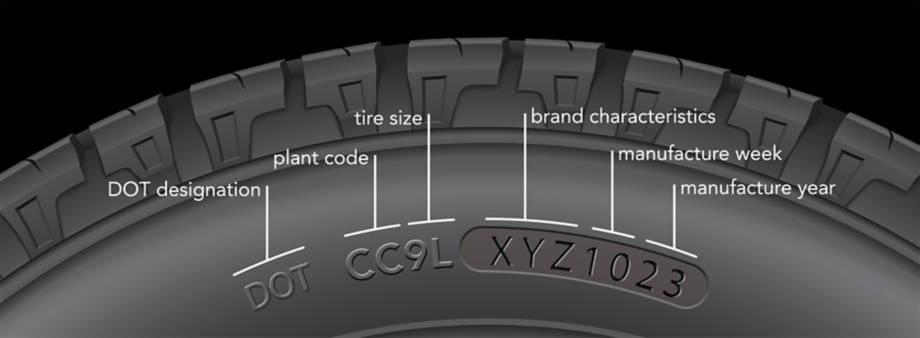
What to look for:
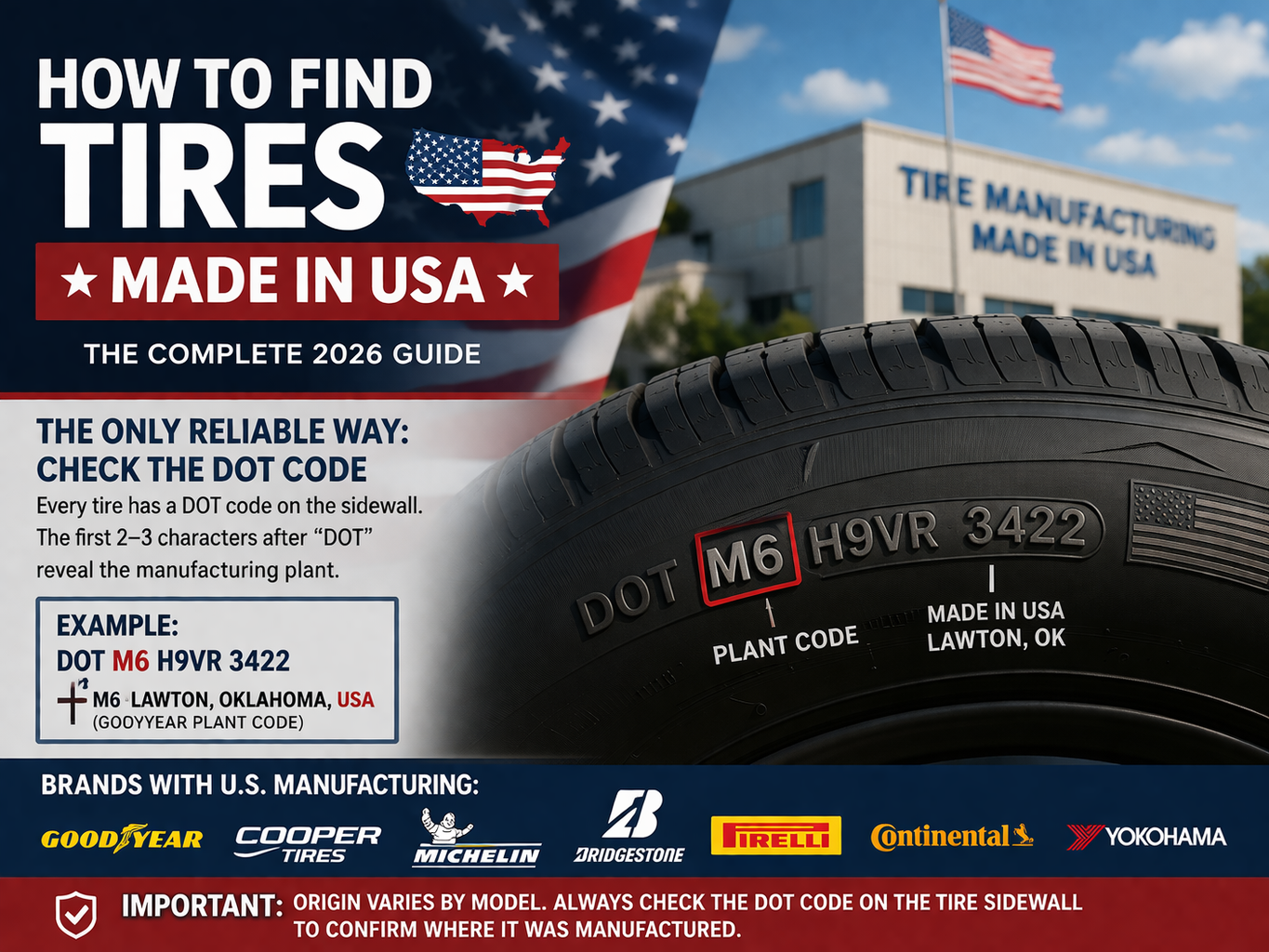
The DOT code begins with DOT followed by a series of characters. The first 2–3 characters after “DOT” are the plant code — this identifies exactly which factory made the tire.
Examples:
- DOT M6 → Made in Lawton, Oklahoma (Goodyear)
- DOT UP → Made in Findlay, Ohio (Cooper)
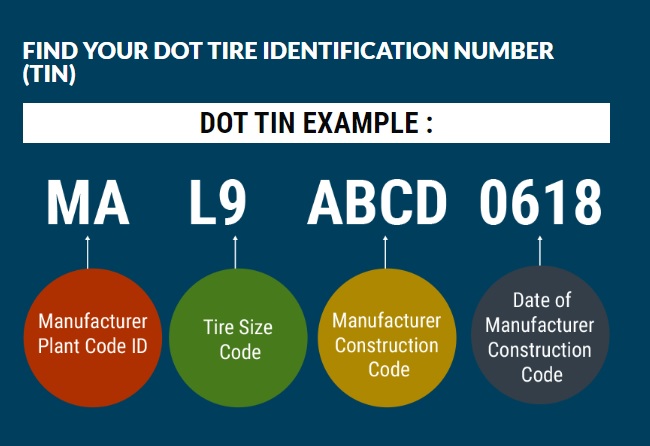 Important Update (2025+): New regulations are introducing 3-character plant codes, replacing older 2-character formats. Both formats may exist during the transition period, so check for either.
Tire Brands That Manufacture in the USA
While you must verify each tire individually, these companies all operate manufacturing facilities in the United States: American-headquartered companies:
- Goodyear Tire & Rubber Company — Headquartered in Akron, Ohio with multiple U.S. plants
- Cooper Tire & Rubber Company — Now owned by Goodyear, plants in Ohio and Arkansas
Global brands with U.S. plants:
- Michelin — Multiple plants in South Carolina
- Pirelli — Manufacturing in Georgia
- Continental AG — Plants in multiple U.S. states
- Bridgestone — Large presence in Tennessee and South Carolina
- Yokohama Rubber Company — Manufacturing in Mississippi
These brands produce many tires in the U.S. — but not all models are U.S.-made. Always check the DOT code.
Are All Goodyear Tires Made in the USA?
No — and this is one of the most common misconceptions. Goodyear is an American company headquartered in Akron, Ohio, and they operate several U.S. manufacturing plants. However, Goodyear also has factories in countries around the world, including China, Germany, Brazil, and others. That means when you buy a Goodyear tire, it could be made in the USA — or it could be made overseas. The only way to know for sure is to check the DOT code on the sidewall when the tire arrives. The same applies to Cooper (now owned by Goodyear) and every other major brand.

Best Tires Made in USA (Buyer Guide)
Here are popular tire categories from brands with U.S. manufacturing. Browse current options and pricing on Amazon:
- Best All-Season Tires (USA-Made Brands) — Great year-round performance for cars and SUVs. View Price & Availability →
- Best Truck Tires (USA-Made Brands) — Heavy-duty options from American plants for pickups and work trucks. View Price & Availability →
- Best SUV Tires (USA-Made Brands) — Reliable tread and handling for SUVs and crossovers. View Price & Availability →
- Best Performance Tires (USA-Made Brands) — High-grip options from brands with domestic production. View Price & Availability →
These brands manufacture in the USA — always confirm using the DOT code on the tire you receive.
How to Find USA-Made Tires on Amazon
You can browse tires online through retailers like Amazon — but here’s the key: online listings do NOT tell you where a specific tire was made.
Smart buying strategy:
- Choose a brand with U.S. manufacturing (see our list above)
- Order the tire
- Check the DOT code when it arrives
- Confirm origin before installation
Pro tip: When searching Amazon, search by brand name to browse current selections. This gives you more options and avoids dead links as inventory changes.
U.S. Tire Manufacturing: Brand Comparison
| Brand | Made in USA? | U.S. Plant Locations | Notes |
|---|---|---|---|
| Goodyear | Yes (some models) | Ohio, Kansas, Virginia, Oklahoma | Largest U.S.-based tire maker. Check DOT code. |
| Cooper | Yes (some models) | Ohio, Arkansas | Now owned by Goodyear. Strong U.S. heritage. |
| Michelin | Yes (some models) | South Carolina (multiple plants) | French HQ but major U.S. manufacturing. |
| Bridgestone | Yes (some models) | Tennessee, South Carolina | Japanese HQ. Large U.S. workforce. |
| Continental | Yes (some models) | Multiple U.S. states | German HQ with growing U.S. production. |
| Pirelli | Yes (some models) | Georgia | Italian HQ. U.S. plant in Rome, GA. |
| Yokohama | Yes (some models) | Mississippi | Japanese HQ. West Point, MS plant. |
Always check the DOT code — even trusted brands produce tires overseas.
Quick Tip: Look for “Made in USA” Markings
Some tires may also have “Made in USA” molded directly into the sidewall. But this is not always present — so the DOT code remains the most reliable method.
Are U.S.-Made Tires Better?
Most major manufacturers maintain consistent quality standards across all facilities. However, buying U.S.-made tires supports American manufacturing jobs, domestic supply chains, and local economies across the country. 
FAQ: Tires Made in USA
Q: How can I tell if a tire is made in the USA? Check the DOT code stamped on the sidewall. The first 2–3 characters after “DOT” identify the manufacturing plant. You can look up plant codes to confirm U.S. origin. Q: Are Goodyear tires made in America? Some are, some aren’t. Goodyear operates multiple U.S. plants but also manufactures overseas. The DOT code is the only way to confirm where a specific tire was made. Q: What is the DOT code on a tire? The DOT (Department of Transportation) code is a series of characters stamped on every tire’s sidewall. It identifies the manufacturing plant, tire size, and production date. The first 2–3 characters after “DOT” are the plant code. Q: Can I find out where a tire was made before buying it online? Unfortunately, no. Online retailers typically don’t list the manufacturing origin. You’ll need to check the DOT code when the tire arrives and before it’s installed. Q: Which tire brands have factories in the USA? Goodyear, Cooper, Michelin, Bridgestone, Continental, Pirelli, and Yokohama all operate manufacturing plants in the United States. However, not every model from these brands is made domestically. Q: Are USA-made tires higher quality? Major manufacturers maintain consistent quality standards across all their plants worldwide. The main benefit of buying U.S.-made tires is supporting American jobs and domestic manufacturing.
Final Takeaway
Brand alone does NOT determine where a tire is made. The DOT code is the only reliable way to verify origin.
Many major brands manufacture both in the U.S. and overseas — so if you want to be sure, check the sidewall before you buy.
Browse American-made products →
View American-made companies →
If you like what you see and think this post would be of interest to someone, please share