Tag: US Manufacturers

  • From a Garage to 51,000 Square Feet: The Montana Knife Company Story

    From a Garage to 51,000 Square Feet: The Montana Knife Company Story

    Montana Knife Company - American Made Knives

    This is what rebuilding American manufacturing actually looks like. Not a headline. Not a policy. Not a talking point. A guy in a garage, turning into a company with over 100 employees.

    Montana Knife Company (MKC) was founded in 2020 by Josh Smith — a former lineman who didn’t set out to “disrupt an industry,” but to build something real. Something durable. Something American-made. Something better. And it started exactly where you’d expect — in his garage.

    Built From the Ground Up

    In 2020, there was no massive operation. No big facility. No corporate backing. Just skill, demand, and a willingness to do the work.

    Josh Smith began making knives by hand — focusing on quality, performance, and craftsmanship. The kind of knives people actually use. The kind that don’t get thrown away or replaced every year.

    Word spread quickly. Because when you build something that’s actually good, people notice. Demand grew. Orders piled up. And what started as a small operation began to outgrow the garage.

    Scaling Without Leaving America

    Here’s where the story gets interesting. Most companies, when they hit that kind of growth, look overseas. Cheaper labor. Faster scaling. Higher margins.

    MKC didn’t do that. They doubled down on American manufacturing.

    Today, the company operates out of a 51,000-square-foot facility in Missoula, Montana — a major step up from where it started. That facility represents a $19 million investment into U.S.-based production. And more importantly? It supports 105 American jobs.

    That’s not theory. That’s not policy. That’s real impact.

    Browse American-Made Products

    Phase Three of Growth

    This isn’t just growth — it’s intentional growth. MKC is now in its third phase of expansion. Phase one was a garage startup. Phase two was rapid demand and scaling. Phase three is a full-scale manufacturing operation.

    That progression matters. Because one of the biggest misconceptions about American manufacturing is that it can just “come back” overnight. It can’t. It has to be rebuilt — step by step, company by company, facility by facility. This is exactly what that process looks like.

    Why This Story Matters

    It’s easy to look at this and say, “It’s just a knife company.” But it’s not. It’s a blueprint.

    Right now, one of the biggest issues facing the U.S. economy is a lack of domestic production capacity. We rely heavily on other countries to make the things we use every day — from tools to materials to basic goods.

    MKC is doing the opposite. They’re proving that you can build products in the United States, scale production domestically, create jobs locally, and still meet demand. That combination is rare — and it’s exactly what needs to happen across other industries.
    Join the Buy American Movement

    Built to Last

    There’s another piece to this that matters. These aren’t disposable products. MKC focuses on heirloom-quality knives — tools designed to last for years, even decades. That mindset is a big part of what’s been missing in modern manufacturing.

    When you build things to last, you reduce waste, increase value, create stronger customer loyalty, and reinforce the idea that quality still matters. That’s a very different approach from mass production.

    The Bigger Picture

    This story isn’t about one company. It’s about what’s possible.

    A former lineman starts making knives in his garage in 2020. A few years later, that same operation turns into a 51,000 sq ft facility, a $19 million investment, and 105 employees.

    That’s how manufacturing comes back. Not all at once. Not from the top down. But from people who decide to build something — and keep building.

    Montana Knife Company didn’t wait for perfect conditions. They created momentum. And if more companies follow that path, this isn’t just a success story — it’s the beginning of something much bigger.

    Whenever possible, choose Made in USA.

    If you like what you see and think this post would be of interest to someone, please share
  • Why Aren’t We Buying American?

    Why Aren’t We Buying American?

    Research conducted over the course of the past year or so has revealed a frustrating statistic: more people are paying much more attention to the price than any labeling indicating that a product is Made in America. For those of us who are trying to revive American manufacturing, this statistic is more infuriating than most. How are we going to be able to get the average person interested and actively engaged in manufacturing?

    Part of the problem, of course, is that the average person is too far removed from the process to feel like their individual contribution is actually assisting the American manufacturing industry. After all, they don’t interact on a daily basis with manufacturers. They don’t see their fellow Americans returning to manufacturing jobs. In fact, most Americans cannot tell you three facts about American Manufacturing period.

    So how do we fix this?

    Changing the face of manufacturing is the first way we’re going to bring the idea of American manufacturing home to people. To do this is going to take a lot of effort on everyone’s parts in order to educate people about what American manufacturing looks like.

    • Through targeted campaigns or ads: There are many organizations throughout the United States that are supporters of American manufacturing. They spend quite a bit of time and money getting the word out to their fellow manufacturers and lawmakers about manufacturing problems. If they regulated some of the funds spent on advertising to market to lay people on the modern face of manufacturing, people might be more apt to recognize the faces as their neighbors and friends, rather than strangers.
    • Education at the school-age level: We’ve touched upon this need in other articles but technical education in schools needs to become a priority as we move into more technical levels of manufacturing. It seems bizarre that something so fundamental is pushed aside in favor of more band lessons, drama lessons, and the like. Most four-year schools don’t even include a technical education component in their curriculum. One or two classes would not disrupt any pre-college coursework and it may encourage students to pursue avenues in manufacturing that will aid in the recovery of an industry.
    • Having representatives from local manufacturers put in public appearances: This one seems like a no-brainer but a lot of people fail to recognize American manufacturers because they aren’t a very visible part of our everyday lives. Manufacturing can be a very isolating business, with majority of work conducted on premise and many hands exchanging and moving from place to place before it gets to the consumer. By sending out representatives to public events in their home towns, they will become a familiar image in public minds.

    [bctt tweet=”Why Aren’t We Buying American?” ]

    Along with visibility, American manufacturing needs to create a demand for its product. Easier said than done, right? I’m not talking in economic terms. Since the last presidential election, large corporate companies like Toys-R-Us have reported no increase in the demand for American-Made products and that is not great incentive to switch to more American-Made manufacturers. So long as people believe that they are only one voice, they will fail to speak out in any significant way. The circulation of petitions, whether online or in-store, would allow for more companies to see that their customers demands, without it being too difficult on the customer to show their support.

    In addition, stores would do well to allow the selection via a click-survey on their website to further demonstrate the desire for American products. At least allowing their customers the option of making their wishes known would allow them to look more patriotic, something that many corporations strive for. In a recent poll, it showed that 3 out of 4 Americans believed; buying USA made merchandise is more patriotic. Furthermore, The BCG survey found that about two-thirds of U.S. shoppers said they were willing to pay a 10% to 60% premium for items ranging from appliances to baby food if they were made domestically.

    If you like what you see and think
    this post would be of interest to someone,
    please share
    [apss_share]

    The one thing that we, unfortunately, have very little control over is, of course, price. In tough economic times, it only makes sense that more people are looking toward the price of products more than branding. Fixing this problem is something that manufacturers have been worrying over since the 1990s when the decline in American manufacturing began its rapid descent. A lot of this can be handled with modifications of treaties via congressional encouragement, but trying to make congress make any impactful decision concerning economic impacts seems to be a difficult task.
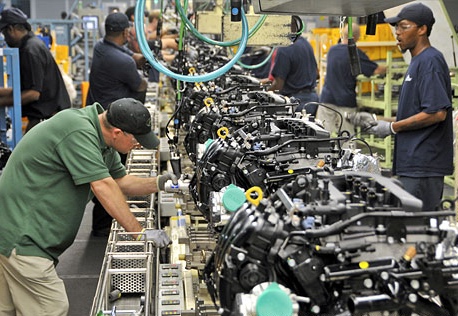
    That being said, it is possible to more closely match competitor pricing through the ever-growing creative manufacturing products as well as increase visibility of the American made labeling system by enabling consumers to simply glance at a product and know it was manufactured right here in the USA. As new innovations and product labelling systems evolve, it is possible to counterbalance higher end-product pricing.

    The more American products that find themselves onto retail shelves, the more matters of price and labeling can go by the wayside. It’s a possible but it’s going to take time. Every contribution is pushing us toward a stronger American manufacturing industry. The question remains if those with the power to do so are going to help the American public understand and take action against the industry killers that are currently plaguing the current system.

    Do you have a suggestion or comment about our list? Let us know by commenting on our Facebook page.

  • A Good Year for Manufacturing

    A Good Year for Manufacturing

    We’re five months into 2017 and it seems like American manufacturing is having a fantastic year. According to CNN Money, the growth in the industry over the last eight months has reached a 54.8% on the ISM Manufacturing index, an indicator of industry health with scores exceeding 50% indicating growth. This figure puts industry health well above last year’s declination and seems to indicate that manufacturers are feeling good about the increased need of industry products.

    It’s no wonder they’re feeling positive. This year we’ve added 50,000 new jobs in the manufacturing industry and that number is expected to rise as we go into the latter part of 2017.

    Figuring out why the increase is jobs is simple: demand. Automation may allow manufacturers to use fewer workers to do certain tasks but the increased need for other manufacturing employees performing different tasks is growing at a steady rate. This means that encouraging our youth to engage in manufacturing via schooling is not the dead end that many had purported it to be in years previous.

    It’s important not to get too excited over this year’s gains just yet. April did see a slight dip in the ISM Manufacturing index in comparison to March’s numbers. Though, it is the opinion of this journalist that comparing statistical analysis month to month is a little like trying to determine weather patterns for an entire year based on a few days’ measurements.

    Last year America ended up losing 16,000 jobs thanks to damaging trade agreements like NAFTA as well as the continued automation of manufacturing processes with fewer and fewer qualified applicants able to fill open positions. The last is thanks largely to the lack of education in what exactly modern manufacturing looks like. This new presidency and congressional appointments have claimed to be dedicated to discouraging any damaging trade agreements to American manufacturers. Only time will tell if those campaign promises will be followed through.

    [bctt tweet=”A Good Year for Manufacturing” ]

    That being said, this year’s numbers do look very promising and might signal a turn in the tide of declining American manufacturing conducted on American soil. With new incentive programs being created via additional tax breaks for manufacturers who conduct business here in America, we might see a surge in new industry growth as we approach the latter half of the year.

    NAM, the National Association of Manufacturers, agrees. They note that manufacturers’ optimism are at a 20-year high, a good indicator that they are experiencing positivity as they move through 2017.

    NAM President and CEO Jay Timmons said at a press conference at the White House, “As the survey shows, manufacturers of all sizes are now less concerned about the business climate going forward because they are counting on President Trump to deliver results. Small manufacturers—more than 90 percent of our membership—are among the hardest hit by regulatory obstacles. Regulatory costs for small manufacturers with fewer than 50 employees total almost $35,000 per employee per year—money that could otherwise go to creating jobs. It’s encouraging to see an administration so focused on providing regulatory relief to spur manufacturing growth.”

    Business environment concerns have also reached a 20-year high as well, meaning that regulatory hurdles are no longer something that worry manufacturers to the degree it use to. This is most likely due to the promises of newly elected congressional figures to relax manufacturing regulations in order to increase productivity and allow for greater efforts to be put into actual production.

    While this may make most manufacturers feel better about their manufacturing bottom line, it does present some new challenges. For example, many less reputable companies may use these lax regulatory options as a way to lower costs and lower value of their product in order to capitalize on cheap production. This may effectively price-out many American manufacturers if there aren’t some modifications to these new regulations in place.

    If you like what you see and think
    this post would be of interest to someone,
    please share
    [apss_share]

    It becomes a balancing act between laxing regulations in order to not stall production and using regulations to keep less reputable manufacturers from capitalizing on loopholes. Despite the risks, manufacturers still remain hopeful that these new rules will allow them to make a larger impact on the world around them by increasing production and the ability to gain new customers through expansion.

    Manufacturing leaders have already met with Washington officials several times already to discuss the possible amendments, changes, or adaptations to certain laws in order to encourage manufacturing growth on native soil. The meetings, though kept secret to the public, seemed to be end on a positive note for the manufacturing industry. In press conferences held outside the White House grounds, offices from NAMA and other agencies reported positive conversations between the current presidency and the leading officials.

    So where is the positive growth coming from? It seems mainly from areas of technology manufacturing. Apple, one of the largest technology manufacturers in the world, has announced that they plan on creating a $1 billion dollar fund geared toward boosting advanced manufacturing in the USA. Tim Cook, Apple’s president, told CNBC’s Mad Money, “I’m proud to tell you that we’re creating an advanced manufacturing fund. By doing that, we can be the ripple in the pond because if we can create many manufacturing jobs around — those manufacturing jobs create more jobs around them, because you have a service industry that builds up around them.”

    In addition, promises for corporate tax cuts embolden industry leaders with the promise of more profit for increasing US production. Currently, the tax percentage on large corporations sit at 35%. How and what other adjustments to national budget must be made in order to accommodate lowering the overall taxes imposed on corporations remains to be seen. Some congressional members believe that adjustments, amendments, and cuts in the current Affordable Care Act will enable them to safely lower corporate taxes without too big of an impact on economics and budgetary hurdles that could endanger the promises of congressional members before they even begin changing the regulations.

    Overall, manufacturers remain uniquely positive in 2017. We’ll keep a close eye to see if there are better things to come for our American manufacturers. Until then, things look bright.

  • Top Five US Manufacturing Industries

    Top Five US Manufacturing Industries

    US manufacturing industries

    We love lists! Here are the top five of the US manufacturing industries per capita in the United States. Getting involved in them is a snap and we’ve included the degrees, certificates, and know-how you’ll need to seek employment in these booming industries!

    1. Petroleum: Natural gas, gasoline, oil, and a plethora of other petroleum manufactured items make up the bulk of this industry’s products. Jobs include work as a field technician, engineers, technology & safety management, customer service experts, and more. Salary ranges are from $50,000 to $150,000 annually, depending on which subfield you go into. If you’re interested in this field, degree options include BS in Petroleum Services, Mechanical Engineering, Electrical Engineering, Petroleum Production Technology, and Business with a focus in Manufacturing.
    2. Steel: Steel is one of the biggest products the US exports each year. Almost all other industries use steel and steel products in some aspect of their industry, whether it’s construction, shipbuilding, or shelving for DIYers at your local Big Box store. Jobs include work as steel millers, metallurgical engineers, mechanical engineers, computer programmers, and production specialists. Salary ranges are from $30,00 to $100,000 annually, depending on which subfield you go into. If you’re interested in this field, degree options include Metallurgical Engineering, Computer Science, and Steel Production Certificates.
    3. Automobiles: The automotive industry is a broad industry and the manufacturing aspect covers everything from design to engineering, a dream for automobile lovers! Jobs include work as designers, engineers, assemblymen, computer experts, and more. Salary ranges are from $60,00 to $80,000 annually, depending on which subfield you go into. If you’re interested in this field, degree options include Manufacturing Designs, Automotive Manufacturing Degrees, Automotive Technology, Computer Programming, and Robotics & Automotive Engineering.

    [bctt tweet=”Want to know what US manufacturing industries are HOT right now? ” ]

    1. Aerospace: The aerospace manufacturing industry deals mainly in all aspects of flying within the US. Designing, building, testing, selling, and maintaining aircraft, aircraft parts, missiles, rockets, or spacecraft are all included in the aerospace industry. This is a high technology industry so if you’re good with computers, you’ll have a definite edge. Jobs include work as Assemblymen, Technical Applications Worker, Engineers, Production Operators, Buyers/Planners, and Machine Operators. Salary ranges are from $60,000 to $120,000 annually, depending on which subfield you go into. If you’re interested in this field, degree options include Aerospace Manufacturing Technology, Aerospace Manufacturing, Engineering, Manufacturing Technology, Advanced Manufacturing Technologies, and Aerospace Design.
    If you like what you see and think
    this post would be of interest to someone,
    please share


    1. Telecommunications: If you’re interested in a career where public interaction and problem-solving is intrinsic in your job, this manufacturing giant might be the place for you. Opportunities include jobs in wired and wireless communications companies, engineering consulting or design firms, electronics components manufacturers, and government agencies.Salary ranges are from $50,000 to $110,000 annually, depending on which subfield you go into. If you’re interested in this field, degree options include Telecommunications Technology, Telecommunications Engineering, Software Engineering, and Manufacturing Design.

    Manufacturing is definitely a lucrative career for those who are willing to pursue it. The top five US manufacturing industries are searching for qualified individuals to fill manufacturing positions. If you’re thinking of a career change, definitely check one out today!

    Have another list or topic about manufacturing you’d like to see? Contact us at the Buy American Campaign’s website today.