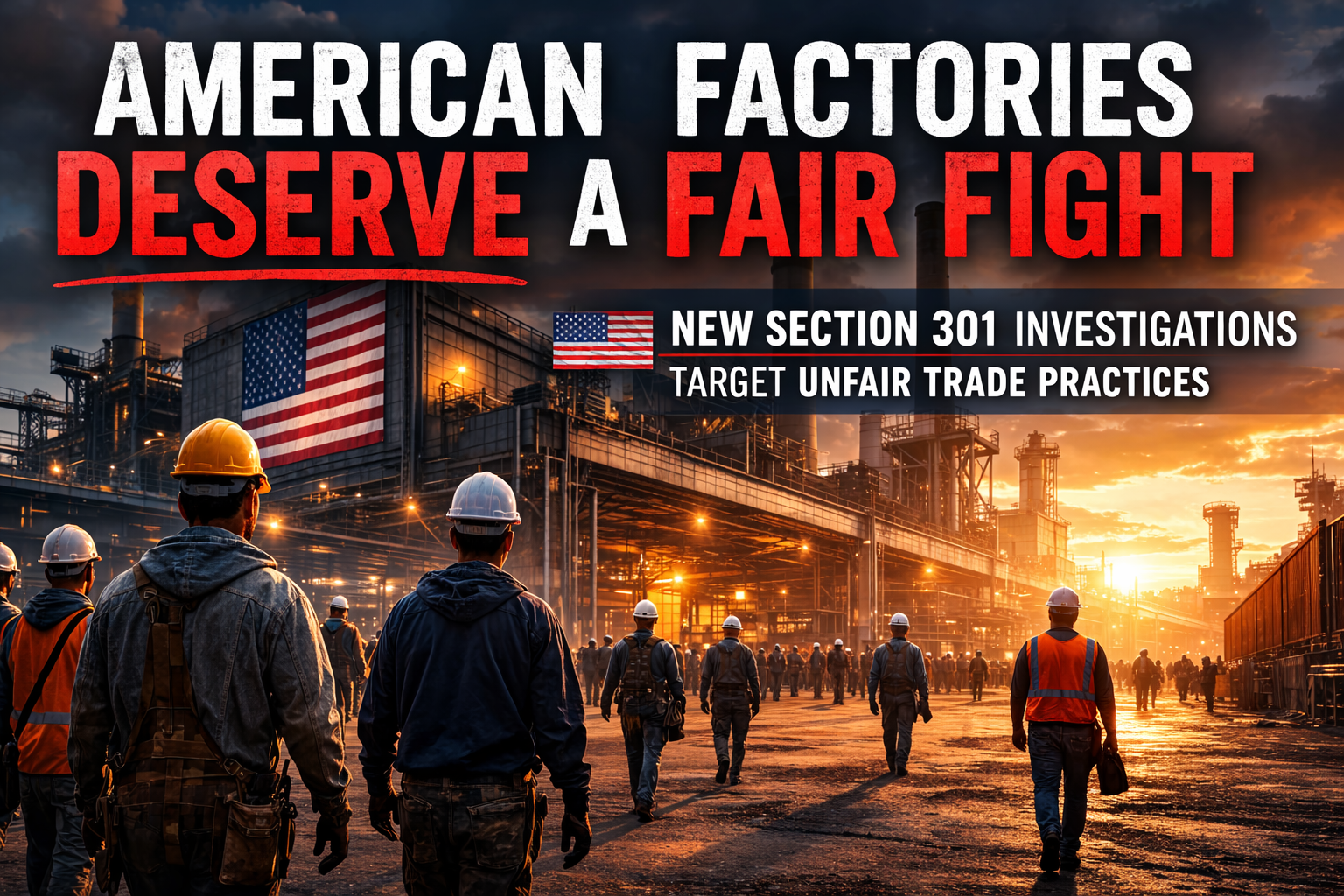
For decades, American manufacturers have faced intense global competition fueled not only by market forces but also by government-backed industrial policies overseas. Now, the Office of the United States Trade Representative has announced new Section 301 investigations into structural excess capacity and unfair trade practices that have undermined U.S. industries and cost American jobs.
These investigations target long-standing concerns that foreign governments have artificially expanded manufacturing capacity through subsidies, state ownership, and other interventions. When global markets become flooded with heavily subsidized goods, American factories struggle to compete on price even when they produce higher-quality products. The result has been factory closures, job losses, and a weakening of industrial communities across the country.
Why This Matters for American Workers
Manufacturing still supports millions of American jobs and strengthens local economies across the country. Protecting those industries is about more than economics — it’s about supply chains, national security, and the long-term strength of the American economy.
The workers affected by unfair trade practices are not just statistics. They are skilled tradespeople, engineers, machinists, and assembly line workers who have built their livelihoods in American factories. When those factories close or downsize, entire communities feel the impact — from local businesses that lose customers to schools that lose funding.
The Broader Economic Impact
The broader economic implications go far beyond any single industry. When domestic production capacity shrinks, the country becomes more dependent on foreign supply chains for critical goods. The disruptions seen during the pandemic highlighted how fragile those supply chains can be. Strengthening American manufacturing is not only an economic priority but also a national security issue, ensuring that the United States can produce essential products — from industrial components to advanced technologies — within its own borders.
What Consumers Can Do
Government action can help address unfair trade practices, but long-term success also depends on consumers. Every purchasing decision sends a signal to the marketplace. When shoppers choose products made in the United States, they support domestic factories, strengthen supply chains, and help sustain good-paying jobs. When American consumers prioritize domestic production, companies respond by investing more in U.S. manufacturing.
The investigation launched by the U.S. Trade Representative signals a renewed effort to defend American industry. But policy alone cannot rebuild the manufacturing base. The most powerful force may ultimately be the choices made by millions of consumers every day. By choosing American-made products whenever possible, shoppers can help strengthen the industries that employ their neighbors, sustain their communities, and secure the nation’s economic future.
Whenever possible, choose Made in USA.
| If you like what you see and think this post would be of interest to someone, please share |