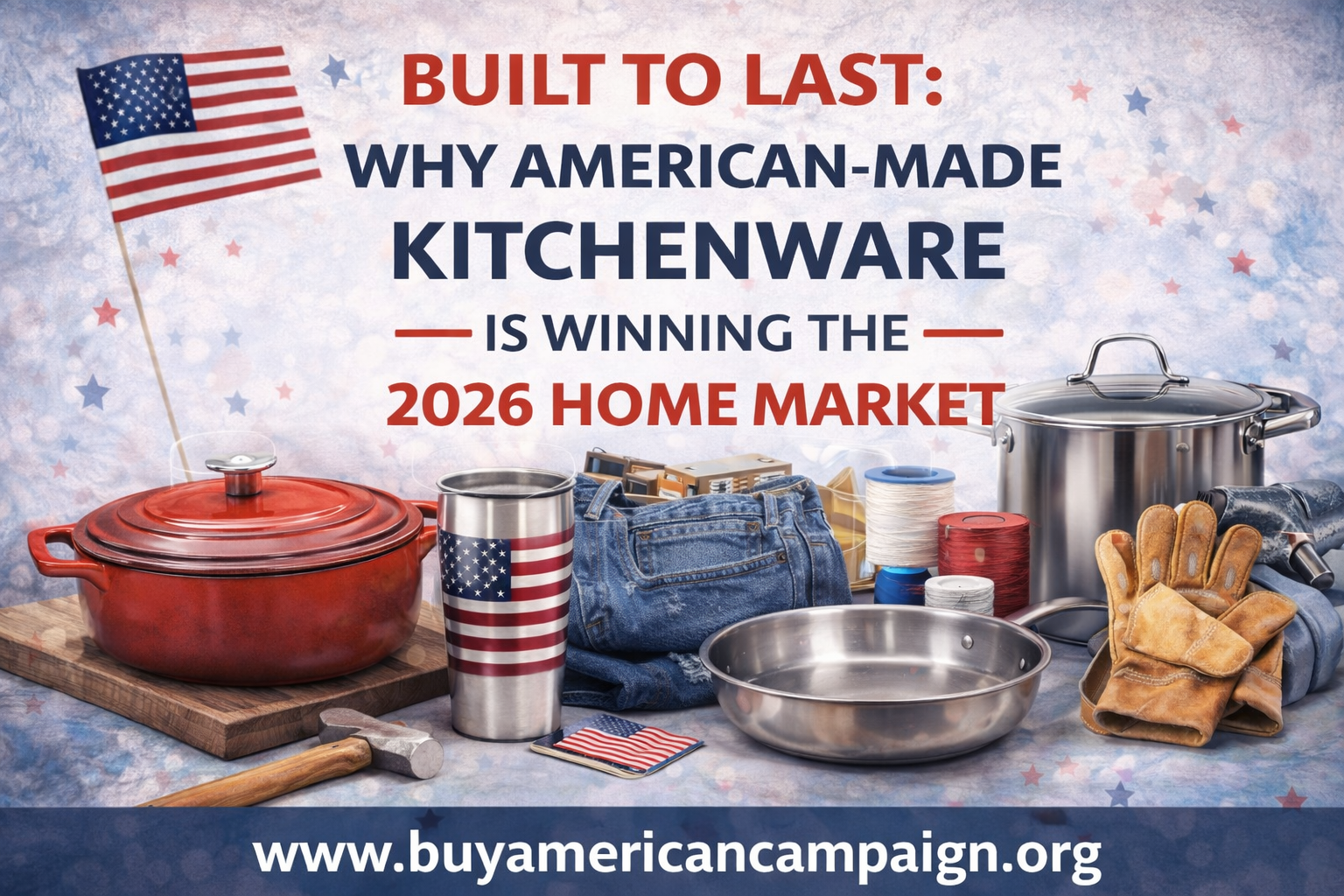
In an era of “decision fatigue” and endless online options, many homeowners are looking for something refreshingly simple: products that don’t need to be replaced every two years.
From Heritage Steel in Clarksville to legacy brands celebrating 80-year milestones, a quiet shift is underway in American kitchens. More consumers are prioritizing durability, craftsmanship, and domestic production over fast turnover and disposable pricing. In 2026, American-made kitchenware is gaining renewed momentum.
The 80-Year Standard: Quality You Can Trust
It takes a special kind of dedication to build a brand that lasts nearly a century.
One American-made kitchenware company is currently celebrating 80 years of domestic production — with every product made, manufactured, and packaged in the United States. That level of consistency doesn’t happen by accident. It reflects long-term investment in facilities, skilled labor, and manufacturing integrity.
When a product carries an unqualified “Made in USA” label backed by decades of history, it represents more than marketing. It signals:
-
Domestic production control
-
Accountability in materials sourcing
-
Workforce continuity
-
Long-term quality standards
In a marketplace crowded with imported alternatives, longevity itself has become a differentiator.

Redefining the Modern Kitchen
Brands such as Heritage Steel are helping redefine what it means to produce professional-grade tools for the home cook.
Domestic Integrity
Manufacturing in facilities like those in Clarksville keeps production local and ensures that economic impact stays within American communities. From machinists to packaging teams, domestic kitchenware supports skilled jobs across multiple layers of the supply chain.
Material Excellence
Many U.S. manufacturers emphasize American-sourced materials. Whether stainless steel or specialty alloys, tighter supply chain control can improve quality consistency and durability.
Cookware built to last doesn’t just reduce replacement frequency — it reduces waste and long-term cost.
Simplifying the Choice
Consumers today face overwhelming product variety. In that environment, a brand with 80 years of domestic manufacturing history simplifies decision-making.
Proven durability reduces guesswork.
Instead of comparing dozens of short-term alternatives, buyers increasingly look for brands with a demonstrated record of performance.
More Than Just a Purchase
Choosing American-made kitchenware — or American-made furniture from companies like Witmer Furniture — isn’t simply a transaction.
It’s an investment in:
-
Craftsmanship
-
Longevity
-
Domestic industry
-
Local economic ecosystems
Many domestic manufacturers operate on a “Made to Order, Not Made to Sit” philosophy, emphasizing purpose-driven production rather than mass inventory turnover. That approach aligns with a broader consumer shift toward intentional buying.
Why This Trend Is Growing in 2026
Several factors are contributing to renewed interest in American-made kitchenware:
-
Increased awareness of supply chain resilience
-
Desire for longer-lasting goods
-
Greater transparency around manufacturing origin
-
A growing appreciation for skilled domestic labor
While imported kitchenware remains widely available, the demand for durable, American-made alternatives is rising among homeowners who prioritize longevity over disposability.
Quality, Longevity, and Local Pride
In 2026, the trend is clear: quality and longevity are returning to the center of the American dinner table.
Products built to last offer more than performance — they offer stability in a fast-moving marketplace. When consumers choose American-made kitchenware, they support a manufacturing ecosystem rooted in craftsmanship, accountability, and long-term value.
Where products are made still matters.
And in today’s home market, durability is winning.
| If you like what you see and think this post would be of interest to someone, please share |