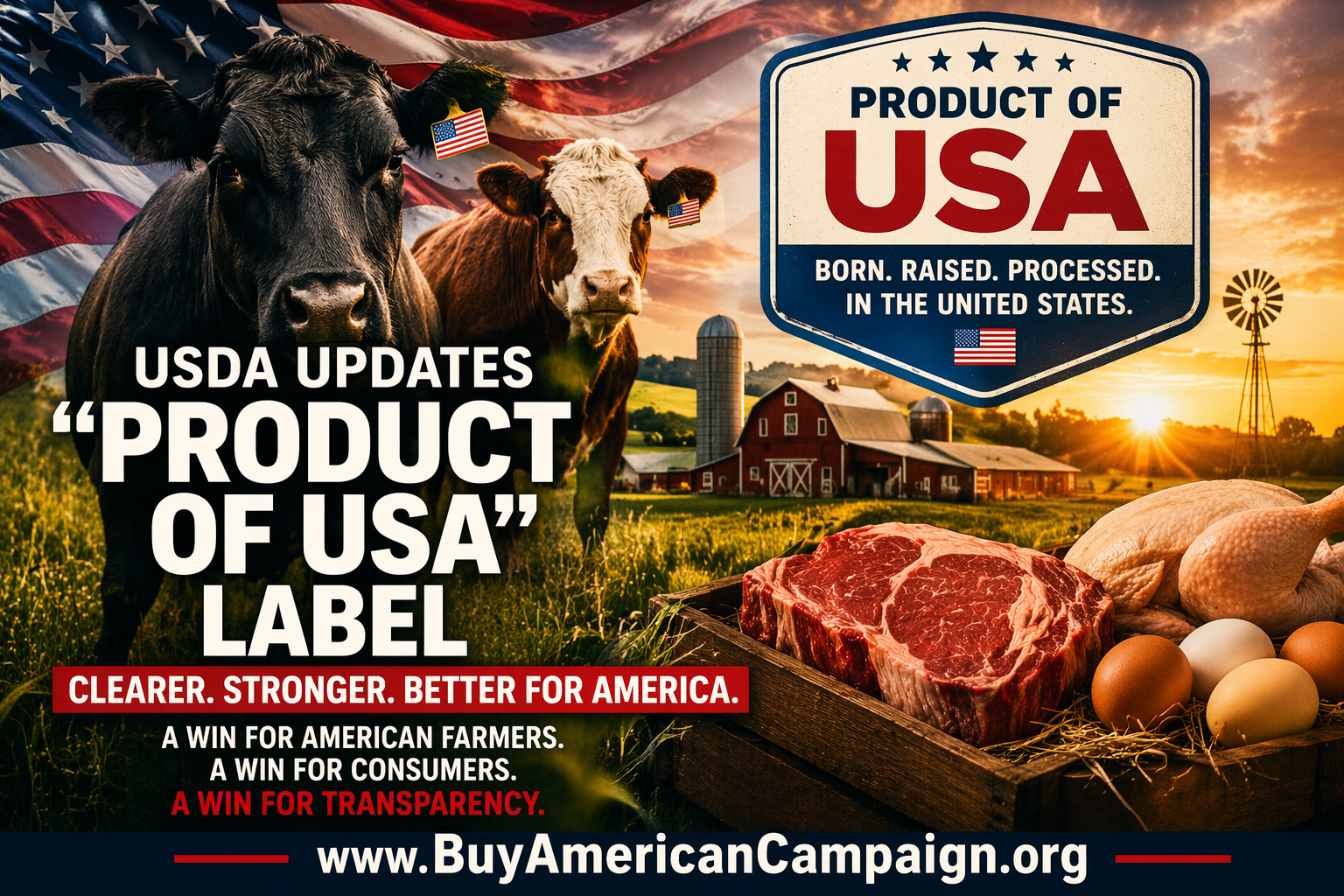
The United States Department of Agriculture has introduced a new voluntary “Product of USA” label for meat, poultry, and egg products — and it marks a significant shift in how food is labeled in this country.
For years, the “Product of USA” label has been widely criticized for being misleading. Under previous rules, meat could carry the label even if the animal was raised outside the United States, as long as the product was processed or packaged domestically. That created confusion for consumers and frustration for American farmers competing against imported products.
The new rule is designed to change that.
A Clearer Standard for “Product of USA”
Under the updated guidance from the USDA, companies can only use the “Product of USA” label if the animal was born, raised, slaughtered, and processed entirely within the United States. This creates a much stricter and more transparent definition of what it actually means for a product to be American.
For consumers, that means the label now carries real meaning. If you see “Product of USA” on meat, poultry, or eggs, it reflects the full lifecycle of production — not just the final step in a processing facility.
Why This Matters
This change addresses a long-standing problem. Many shoppers believed they were supporting American agriculture when they purchased products labeled “Product of USA,” only to learn that the animals may have been raised overseas. That disconnect undermined trust and made it harder for consumers to make informed choices.
For American farmers and ranchers, the issue went even deeper. Domestic producers operate under stricter standards, higher costs, and more regulatory oversight. Competing against imported products that could carry the same label created an uneven playing field.
The new labeling guidance helps correct that imbalance by giving American producers a clearer way to differentiate their products in the marketplace.
Still Voluntary — But More Meaningful
It is important to note that the “Product of USA” label remains voluntary. Companies are not required to use it, and many products will continue to be sold without it. However, for those that do choose to use the label, the new standard raises the bar significantly.
This creates an opportunity for brands that truly source and produce domestically to stand out. It also gives consumers a clearer signal when they want to support American agriculture and American jobs.
What This Means for the Buy American Movement
This change aligns directly with the goals of the Buy American movement. Transparency matters. Labels should reflect reality, not marketing loopholes. When consumers choose to buy American, they deserve to know that what they are buying was actually made — or in this case, raised — here.
The updated “Product of USA” definition moves the market in that direction. It reinforces the idea that where something is made — or in this case, raised — matters.
The Bigger Picture
This is not just about labeling. It is about rebuilding trust between producers and consumers. It is about giving American farmers the recognition they have earned. And it is about making it easier for people to support domestic production when they choose to do so.
In a global marketplace where supply chains are increasingly complex, clarity becomes more valuable. The new USDA guidance is a step toward that clarity.
The Bottom Line
The new “Product of USA” label is not a mandate, but it is a meaningful correction. It restores credibility to a label that had lost its impact and gives both producers and consumers a clearer understanding of what “American-made” really means in the food supply.
For anyone who wants to support American agriculture, this is a step in the right direction. And for the broader Buy American movement, it is a reminder that transparency and accountability are just as important as production itself.
Whenever possible, choose Made in USA.
| If you like what you see and think this post would be of interest to someone, please share |