Blog

  • New Crackdown on Fake ‘Made in USA’ Labels Is a Win for American Shoppers

    New Crackdown on Fake ‘Made in USA’ Labels Is a Win for American Shoppers

    New crackdown on fake Made in USA labels protects American shoppers and manufacturers

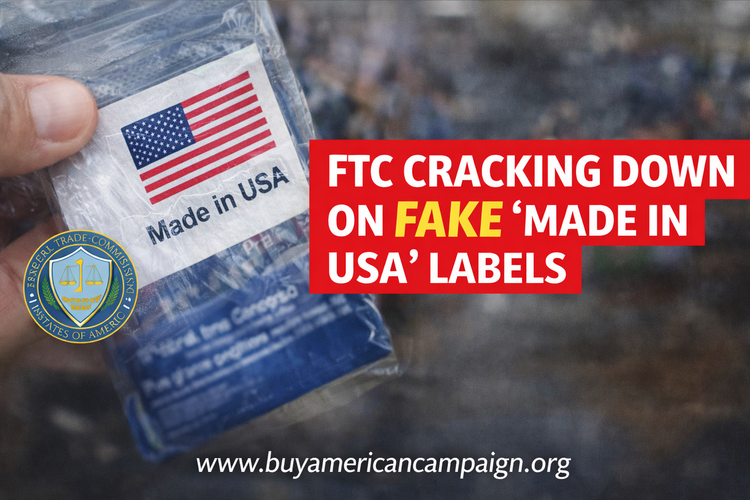
    If you’ve ever picked up a product labeled “Made in USA” and wondered whether it really was, you’re not alone. For years, some companies have slapped American-made claims on products that were largely manufactured overseas — misleading consumers and undercutting the honest businesses doing things the right way.

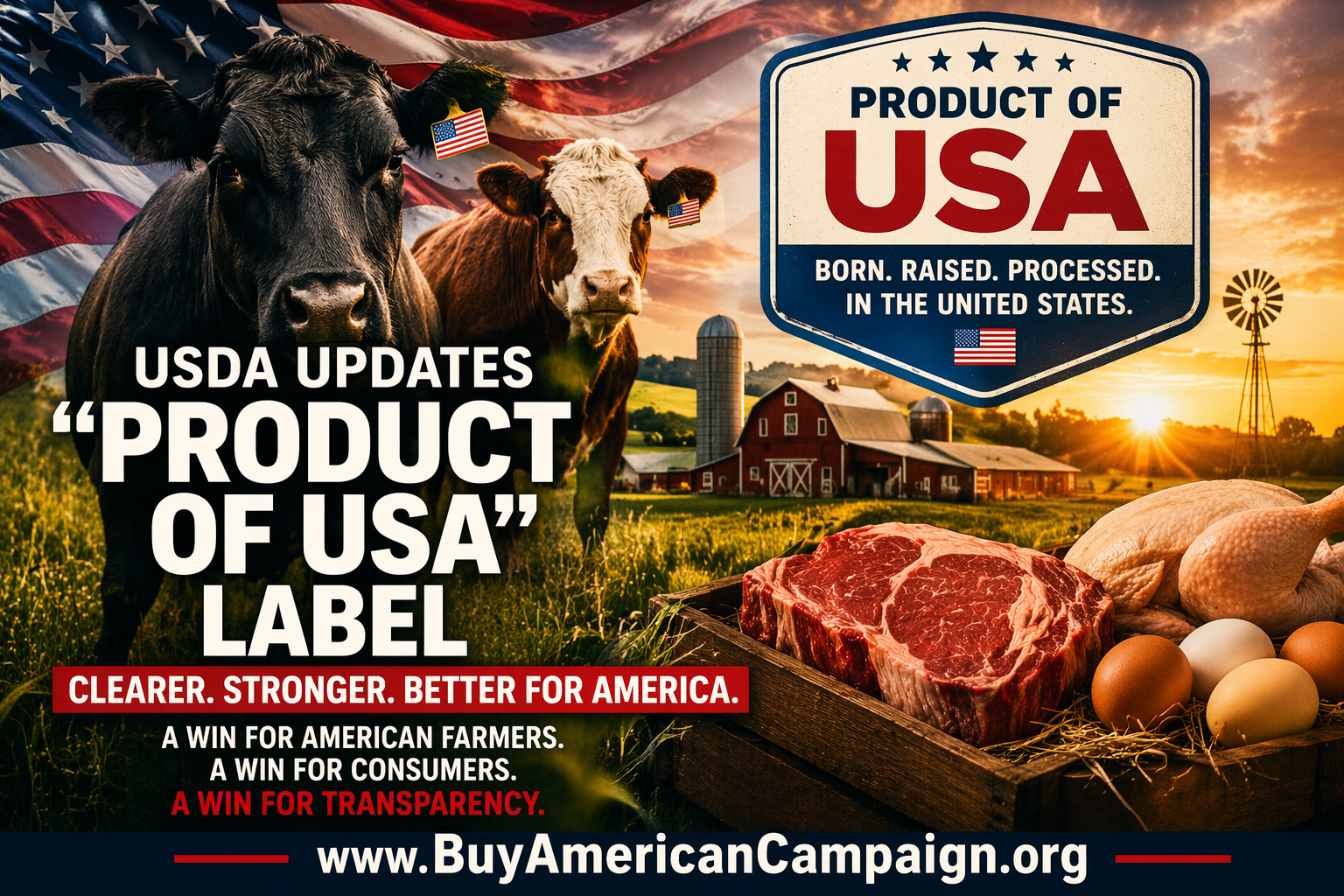
    That’s about to get harder to get away with. On March 13, Executive Order 14392 was signed into law, titled “Ensuring Truthful Advertising of Products Claiming to be Made in America.” The order directs federal agencies to increase enforcement of fraudulent origin claims and holds companies accountable when they misrepresent where their products are actually made.

    This matters because trust is the foundation of the Buy American movement. When shoppers choose American-made goods, they’re making a deliberate decision to support domestic jobs, local communities, and stronger supply chains. But that decision only works if the labels are honest. Every fake “Made in USA” tag is a broken promise — it takes money out of the pockets of real American manufacturers and puts it into the hands of companies willing to cut corners.

    Join the Buy American Movement

    The scope of the problem is bigger than most people realize. The FTC’s existing “Made in USA” rule requires that a product be “all or virtually all” made in the United States to carry that label. But enforcement has been inconsistent, and some companies — particularly online sellers — have exploited the gaps. Products assembled from mostly foreign components, or simply packaged domestically, have been marketed as American-made with little consequence. The new order aims to close those loopholes by directing multiple agencies to coordinate enforcement and increase scrutiny on companies making these claims.

    For American manufacturers who genuinely produce their goods here, this is welcome news. They’ve been competing on an uneven playing field against companies that undercut them on price by manufacturing overseas while falsely claiming domestic origins. Stronger enforcement levels that field and rewards companies that invest in American workers and facilities.

    Browse American-Made Products

    As consumers, we hold real power in this equation. Every purchase is a vote for the kind of economy we want. When you take a moment to verify that a product is truly made in America — checking labels, researching brands, and supporting companies with transparent supply chains — you’re not just buying a product. You’re investing in American jobs, American communities, and an economy built on honesty. The new enforcement push makes that easier, but our buying choices are what make it matter.

    If you like what you see and think this post would be of interest to someone, please share
  • U.S. Trade Deficit Falls 25% as Exports Reach Record High

    U.S. Trade Deficit Falls 25% as Exports Reach Record High

    American port workers loading cargo containers for export at sunrise

    In a surprising shift for global trade, the U.S. trade deficit in goods and services fell sharply to $54.5 billion in January, a 25 percent decline from the previous month. The improvement came as American exports surged to a record high while imports declined, signaling a potential shift in the balance of global commerce.

    The trade deficit measures the difference between what the United States imports and what it exports. When the deficit shrinks, it means American businesses are selling more products and services abroad relative to what the country is buying from other nations. A stronger export environment can translate directly into higher production levels for American factories, farms, and energy producers.


    What Rising Exports Mean for American Workers

    For American workers, rising exports often mean more jobs and more economic activity at home. Industries ranging from agriculture to advanced manufacturing rely heavily on international markets. Farmers selling grain overseas, manufacturers shipping machinery abroad, and technology firms expanding into new markets all contribute to a stronger domestic economy.

    When exports grow, the ripple effects reach far beyond the companies making the sales. Suppliers, logistics providers, and service industries all benefit. Communities built around production — from rural farming towns to industrial cities — see increased demand for labor and investment.

    Join the Buy American Movement

    The Bigger Picture for American Industry

    While a single month of data does not establish a long-term trend, the January report is a positive signal for the direction of American trade. A sustained improvement in the trade balance would indicate that the United States is becoming more competitive globally — producing more goods and services that the rest of the world wants to buy.

    Reducing the trade deficit also has broader implications for national economic health. A smaller deficit means fewer dollars flowing out of the country and more economic activity staying within U.S. borders. Over time, this can support higher wages, stronger communities, and greater investment in domestic production capacity.

    Browse American-Made Products

    How Consumers Can Help Keep the Momentum

    Trade policy and international agreements play a role in shaping the balance of imports and exports, but consumer choices matter just as much. Every time a shopper chooses a product made in the United States, they contribute to the demand for American-made goods. That demand drives production, creates jobs, and strengthens the very industries that power the nation’s export economy.

    The January trade numbers are encouraging, but sustaining progress will take continued effort — from policymakers, businesses, and everyday consumers alike. By choosing American-made products whenever possible, shoppers can help build on this momentum and support the workers, farmers, and manufacturers who keep the American economy moving forward.

    Whenever possible, choose Made in USA.

    If you like what you see and think this post would be of interest to someone, please share
  • From Ireland to America: How Irish Immigrants Helped Build American Industry

    From Ireland to America: How Irish Immigrants Helped Build American Industry

    Buy American This St. Patrick's Day - Supporting American Workers

    Every year on March 17th, millions of Americans celebrate St. Patrick’s Day. Parades, green clothing, and Irish music have become part of the tradition.

    But behind the celebrations is a deeper story — one connected directly to the development of American industry and manufacturing.

    Irish immigrants played a major role in helping build the United States into the industrial powerhouse it became in the 19th and 20th centuries.

    And that legacy still matters today.

    The Irish Who Helped Build America

    Beginning in the mid-1800s, waves of Irish immigrants arrived in the United States, many fleeing the Great Famine.

    While they often faced difficult conditions and discrimination, they quickly became a critical part of the American workforce.

    Irish laborers helped build:

    • Railroads that connected the country
    • Canals and ports that expanded trade
    • Steel mills and factories that fueled industrial growth
    • Cities and infrastructure across the country

    Many of the industrial centers that defined American manufacturing — from Boston to Pittsburgh to Chicago — were built in part by Irish workers and Irish-American families.

    From Laborers to Business Builders

    Over time, Irish Americans didn’t just work in industry — they helped lead it.

    Irish-American entrepreneurs, engineers, and skilled tradespeople became part of the backbone of American manufacturing and construction.

    Their work helped establish industries that defined the American economy for generations:

    • Steel production
    • Shipbuilding
    • Construction
    • Transportation infrastructure

    These industries helped transform the United States into one of the world’s leading manufacturing nations.

    Join the Buy American Movement

    The Spirit of Work, Craft, and Community

    St. Patrick’s Day is often about celebration, but it’s also a reminder of the values that built the country:

    • Hard work
    • Craftsmanship
    • Community
    • Opportunity

    Those same values still define American manufacturing today.

    Across the country, millions of workers continue to build, produce, and manufacture the goods that keep the American economy strong.

    Supporting American Manufacturing Today

    One simple way to honor that legacy is by supporting the companies that continue to manufacture in the United States.

    When consumers choose products made in America, they help support:

    • 🇺🇸 American workers
    • 🇺🇸 Local communities
    • 🇺🇸 Domestic supply chains
    • 🇺🇸 The next generation of skilled trades

    Just like the immigrants who helped build American industry generations ago, today’s manufacturing workforce depends on strong demand and support.

    Browse American-Made Products

    A St. Patrick’s Day Reminder

    St. Patrick’s Day celebrates Irish heritage.

    But it also celebrates the contributions Irish immigrants made to building the United States.

    From railroads to factories to modern industry, their work helped shape the American economy.

    So as you celebrate today — wear some green, enjoy the festivities, and remember the generations of workers who helped build America.

    And when possible, support the businesses that continue that tradition.

    Because building things still matters.

    If you like what you see and think this post would be of interest to someone, please share
  • Best American-Made Work Boots in 2026 (Brands That Still Manufacture in the USA)

    American-made work boots - Red Wing, Thorogood, Danner

    Most “American-made” work boots aren’t actually made in the USA anymore.

    Over the years, many well-known brands have shifted production overseas — while still marketing themselves as heritage American companies. If you’re trying to buy boots that truly support U.S. manufacturing, it takes a little more research.

    The good news: a handful of brands are still producing high-quality work boots right here in the United States — using American labor, materials, and craftsmanship.

    In this guide, we’ll break down the best American-made work boots you can actually buy in 2026 — and what to look for before you choose.

    If you’re looking for more American-made brands across every category, check out our full guide here:
    👉 American-Made Companies You Can Actually Buy From →

    🏆 Best American-Made Work Boots (Top Picks)

    1. Red Wing Heritage / Work Line (Made in USA)

    Best for: Long-term durability and heavy-duty use

    Red Wing is one of the most recognized American boot manufacturers still producing select models in the USA. Known for premium leather and rugged construction, these boots are built to last for years — not months.

    Why it stands out:

    • Full-grain leather sourced and crafted in the USA
    • Goodyear welt construction for long-term durability
    • Proven track record across trades and industries

    👉 Check Price on Amazon →

    2. Thorogood Work Boots (Made in USA)

    Best for: Comfort right out of the box

    Thorogood boots are a favorite among tradespeople who want immediate comfort without a long break-in period. Their American Heritage line is union-made in Wisconsin.

    Why it stands out:

    • Comfortable wedge sole design
    • Union-made in the USA
    • Excellent balance of durability and flexibility

    👉 Check Price on Amazon →

    3. Danner (USA-Made Line Only)

    Best for: Lightweight performance and versatility

    Danner produces both imported and USA-made boots — so it’s important to choose carefully. Their Made in USA line (built in Portland, Oregon) offers a lighter, more flexible option without sacrificing quality.

    Why it stands out:

    • Made in USA models available (clearly labeled)
    • Lighter weight than traditional work boots
    • Strong reputation for craftsmanship

    👉 Check Price on Amazon →

    Join the Buy American Movement

    🧠 What to Look for in American-Made Work Boots

    Not all “American” brands manufacture in the United States — so here’s what actually matters:

    🇺🇸 True USA Manufacturing
    Look for boots that are made, not just assembled, in the United States.

    🧵 Construction Method
    Goodyear welt construction means a longer lifespan and the ability to be resoled. Stitch-down construction is equally strong and repairable.

    🥾 Materials
    Full-grain leather lasts significantly longer than split or corrected grain. Cheap materials always mean a shorter lifespan.

    ⚖️ Comfort vs. Durability
    Heavier boots generally last longer. Lighter boots offer more comfort with less break-in time. Know what matters most for your job.

    🔍 Quick Comparison

    Brand Best For Key Strength
    Red Wing Long-term durability Longevity
    Thorogood Out-of-box comfort Wearability
    Danner Lightweight performance Versatility

    Browse American-Made Products

    🔗 Looking for More American-Made Brands?

    If you want to go beyond work boots and support U.S. manufacturing across all categories:

    👉 Browse the full American-Made Companies list →

    🇺🇸 Final Thoughts

    Buying American-made work boots isn’t just about quality — it’s about where your money goes.

    Every purchase supports American workers, domestic manufacturing, and local economies. You don’t have to be perfect — but choosing better products when you can makes a real difference.

    📣 Take the Next Step

    If this matters to you:

    👉 Take the Buy American Pledge →
    👉 Join the Movement →

    If you like what you see and think this post would be of interest to someone, please share
  • U.S. Launches Section 301 Investigations as Unfair Trade Practices Continue to Damage American Manufacturing

    U.S. Launches Section 301 Investigations as Unfair Trade Practices Continue to Damage American Manufacturing

    American factory workers walking toward manufacturing facility at sunrise with American flag

    For decades, American manufacturers have faced intense global competition fueled not only by market forces but also by government-backed industrial policies overseas. Now, the Office of the United States Trade Representative has announced new Section 301 investigations into structural excess capacity and unfair trade practices that have undermined U.S. industries and cost American jobs.

    These investigations target long-standing concerns that foreign governments have artificially expanded manufacturing capacity through subsidies, state ownership, and other interventions. When global markets become flooded with heavily subsidized goods, American factories struggle to compete on price even when they produce higher-quality products. The result has been factory closures, job losses, and a weakening of industrial communities across the country.


    Why This Matters for American Workers

    Manufacturing still supports millions of American jobs and strengthens local economies across the country. Protecting those industries is about more than economics — it’s about supply chains, national security, and the long-term strength of the American economy.

    The workers affected by unfair trade practices are not just statistics. They are skilled tradespeople, engineers, machinists, and assembly line workers who have built their livelihoods in American factories. When those factories close or downsize, entire communities feel the impact — from local businesses that lose customers to schools that lose funding.

    Join the Buy American Movement

    The Broader Economic Impact

    The broader economic implications go far beyond any single industry. When domestic production capacity shrinks, the country becomes more dependent on foreign supply chains for critical goods. The disruptions seen during the pandemic highlighted how fragile those supply chains can be. Strengthening American manufacturing is not only an economic priority but also a national security issue, ensuring that the United States can produce essential products — from industrial components to advanced technologies — within its own borders.

    Browse American-Made Products

    What Consumers Can Do

    Government action can help address unfair trade practices, but long-term success also depends on consumers. Every purchasing decision sends a signal to the marketplace. When shoppers choose products made in the United States, they support domestic factories, strengthen supply chains, and help sustain good-paying jobs. When American consumers prioritize domestic production, companies respond by investing more in U.S. manufacturing.

    The investigation launched by the U.S. Trade Representative signals a renewed effort to defend American industry. But policy alone cannot rebuild the manufacturing base. The most powerful force may ultimately be the choices made by millions of consumers every day. By choosing American-made products whenever possible, shoppers can help strengthen the industries that employ their neighbors, sustain their communities, and secure the nation’s economic future.

    Whenever possible, choose Made in USA.

    If you like what you see and think this post would be of interest to someone, please share
  • New Executive Order Targets Fraudulent “Made in America” Claims

    New Executive Order Targets Fraudulent “Made in America” Claims

    The phrase “Made in America” carries powerful meaning for many consumers. It represents domestic jobs, local communities, and companies that invest in U.S. manufacturing.

    But in today’s global marketplace, that label can sometimes be misleading.

    On March 13, 2026, President Donald J. Trump signed a new Executive Order aimed at strengthening enforcement against companies that falsely advertise products as American-made.

    The goal: ensure that when consumers see “Made in America,” the claim is accurate and trustworthy.


    Why Accurate Labeling Matters

    Many Americans actively seek out products made in the United States.

    Studies have repeatedly shown that a large majority of consumers prefer to support domestic manufacturing when possible.

    But the growth of online marketplaces and global supply chains has made it easier for some sellers to blur the line between assembled in America and manufactured in America.

    When foreign-made products are marketed as American-made, it creates two problems:

    • Consumers are misled
    • U.S. manufacturers face unfair competition

    Companies that invest in American workers, facilities, and supply chains depend on the credibility of the “Made in USA” label.

    If that label is misused, the value of genuine American manufacturing is diluted.

    Join the Buy American Movement

    What the Executive Order Does

    The new Executive Order focuses on three key areas.

    Stronger FTC Enforcement

    The order directs the Federal Trade Commission (FTC) to prioritize enforcement actions against companies that falsely claim their products are made in America.

    This includes misleading marketing language and origin claims that violate existing labeling laws.


    Clearer Country-of-Origin Guidance

    Federal agencies responsible for labeling oversight are directed to work together to develop clearer guidance and potential regulations encouraging accurate country-of-origin labeling.

    The goal is to help consumers easily identify where products are actually made.


    Verifying Federal Procurement Claims

    The order also requires agencies overseeing federal procurement to review and verify American-origin claims for products sold to the U.S. government.

    Products found to be misrepresented may be removed from government contracts and referred for legal action under the False Claims Act.


    Protecting the Value of American Manufacturing

    For businesses that genuinely manufacture in the United States, accurate labeling is essential.

    True American manufacturers invest in:

    🇺🇸 Domestic jobs
    🇺🇸 Local communities
    🇺🇸 U.S. supply chains
    🇺🇸 Long-term industrial capacity

    When the “Made in America” label is used correctly, it allows consumers to support those investments.

    When it is used improperly, it undermines the companies that are actually doing the work.

    Browse American-Made Products

    What This Means for Consumers

    For shoppers who care about supporting American manufacturing, the new order reinforces something important:

    Transparency matters.

    Before purchasing, consumers can:

    ✔ Look for clear country-of-origin labeling
    ✔ Research where products are manufactured
    ✔ Support companies that openly disclose their production processes

    Consumer awareness plays an important role in shaping markets.

    When demand for genuine American-made products increases, companies take notice.


    The Bigger Picture

    The Executive Order is part of a broader conversation about domestic manufacturing, supply chains, and economic resilience.

    Ensuring that “Made in America” claims are truthful helps protect both consumers and businesses that manufacture in the United States.

    Because when that label appears on a product, it should mean something.

    If you like what you see and think this post would be of interest to someone, please share
  • $380 Million and Growing: How Big Investment in U.S. Manufacturing Creates the Jobs America Needs

    Invest in American Jobs - Buy American

    AbbVie, one of America’s leading pharmaceutical manufacturers, has committed $380 million to expand its U.S. manufacturing facilities — adding production sites for neuroscience and obesity medicines entirely on American soil. It’s the kind of investment that creates skilled, well-paying jobs, strengthens domestic supply chains, and reduces American dependence on foreign pharmaceutical production. And it’s exactly the model that more industries need to follow.

    Large-scale manufacturing investment doesn’t just create jobs at the facility itself. Every dollar invested in a domestic factory generates additional economic activity throughout the surrounding region — in suppliers, contractors, service businesses, and local retailers. A new pharmaceutical plant doesn’t just hire chemists and production workers; it creates demand for local construction firms, equipment suppliers, utility providers, and the restaurants and shops that serve the workers who show up every day.

    Join the Buy American Movement

    A National Security Imperative

    The AbbVie investment also highlights a critical national security dimension of domestic manufacturing. During the COVID-19 pandemic, the United States discovered how vulnerable it was to disruptions in overseas pharmaceutical supply chains. Producing essential medicines on American soil — under U.S. quality standards and labor protections — is both an economic and a strategic imperative. Every domestic manufacturing investment reduces a vulnerability that foreign adversaries and global supply chain disruptions can exploit.

    Consumer Choices Drive Investment Decisions

    Consumers and investors send powerful signals that shape where companies choose to build. When Americans support brands that commit to domestic production, and when demand for American-made products remains strong, companies have a financial incentive to invest here rather than overseas. Public policy helps — but market signals drive decisions.

    Browse American-Made Products

    Support the Companies That Invest in America

    Support American manufacturing investment by choosing domestically produced goods whenever possible. Companies that build in America deserve your business — and your purchases are part of what makes that investment worthwhile.

  • From Field to Fabric: Why the Buying American Cotton Act Could Change How You Shop

    Support the Buying American Cotton Act

    America grows some of the finest cotton in the world — yet only a fraction of the clothing sold in the United States is made from U.S.-grown cotton. That’s the contradiction at the heart of a new legislative push gaining momentum in Washington. Senator Cindy Hyde-Smith has made the case for the Buying American Cotton Act, arguing that American consumers deserve to know whether the clothes they wear were made from domestically grown fiber — and that incentivizing U.S. cotton use could reshape a supply chain that has drifted far from American fields and mills.

    The stakes for American cotton farmers and textile workers are enormous. The U.S. is one of the world’s top cotton producers, yet foreign competitors have captured the market for cotton-based apparel sold to American consumers. This disconnect represents a massive lost opportunity — billions of dollars that could be flowing to American farms and mills instead flowing overseas. For communities in cotton-producing states like Texas, Georgia, Mississippi, and the Carolinas, restoring domestic cotton’s role in the apparel supply chain would mean real jobs and real income returning to rural America.

    Join the Buy American Movement

    A Supply Chain That Starts at Home

    The economic implications extend well beyond cotton fields. A domestic cotton-to-clothing supply chain — from farm to fiber to fabric to finished garment — would support jobs at every stage: farming, ginning, spinning, weaving, cutting, and sewing. It would reduce American dependence on foreign textile supply chains that proved fragile during pandemic-era disruptions. And it would give consumers who care about sustainability and ethical production a genuinely American option.

    Policy and Consumer Power Working Together

    The Buying American Cotton Act represents a policy lever — but consumer demand is the engine. When shoppers actively seek out clothing made from American cotton, they signal to retailers and manufacturers that this market exists and is worth serving. Labels matter. Supply chain transparency matters. And your purchasing choices matter.

    Browse American-Made Products

    From Field to Fabric — Your Choice Matters

    Support American cotton farmers and textile workers by looking for American-grown cotton in the clothing you buy. From field to fabric, every purchase is a vote for a supply chain that keeps Americans working.

  • 12,000 Reasons to Buy American: U.S. Factories Lost Jobs Last Month While Output Grew

    American Jobs at Risk - Factories Lost 12000 Jobs

    U.S. factories shed 12,000 jobs in February 2026, according to the Alliance for American Manufacturing — even as overall manufacturing activity expanded for the second consecutive month. The ISM Purchasing Managers’ Index came in at 52.4, signaling growth in output. But growth without jobs is a warning sign: American factories are producing more while employing fewer workers, a gap that tells a complicated story about the state of American manufacturing.

    Behind every job number is a person — a machinist, a line worker, a quality control technician — whose paycheck supports a family, a mortgage, a local small business. Manufacturing job losses don’t stay contained to factory floors. They ripple outward into communities, reducing local tax bases, closing neighborhood shops, and pushing skilled workers to seek opportunity elsewhere. Towns that lose manufacturing jobs rarely recover quickly, and the consequences can last a generation.

    Join the Buy American Movement

    A Dual Squeeze on American Industry

    The broader economic picture adds urgency to these numbers. Factory gate inflation surged to a near 3.5-year high in February, driven by tariff pressures on raw materials. At the same time, the Alliance for American Manufacturing is urging the Trump administration to strengthen enforcement of Section 232 steel and aluminum tariffs to ensure U.S. producers aren’t undercut by non-compliant imports. The combination of rising input costs and job losses puts pressure on an industry that remains critical to American economic security.

    Your Purchases Are Part of the Solution

    Consumer purchasing decisions are one of the most direct levers available to support American manufacturing workers. When Americans consistently choose products made in the USA, they create sustained market demand that supports factory employment. The math is straightforward: more demand for American-made goods means more workers on American production floors.

    Browse American-Made Products

    12,000 Reasons to Act Now

    The 12,000 workers who lost their factory jobs last month need more than policy — they need a market that values what they make. Every time you choose American-made, you are part of that market. Check the label, and buy American whenever you can.

  • Built to Last: Why American-Made Kitchenware Is Winning the 2026 Home Market

    Built to Last: Why American-Made Kitchenware Is Winning the 2026 Home Market

    In an era of “decision fatigue” and endless online options, many homeowners are looking for something refreshingly simple: products that don’t need to be replaced every two years.

    From Heritage Steel in Clarksville to legacy brands celebrating 80-year milestones, a quiet shift is underway in American kitchens. More consumers are prioritizing durability, craftsmanship, and domestic production over fast turnover and disposable pricing. In 2026, American-made kitchenware is gaining renewed momentum.


    The 80-Year Standard: Quality You Can Trust

    It takes a special kind of dedication to build a brand that lasts nearly a century.

    One American-made kitchenware company is currently celebrating 80 years of domestic production — with every product made, manufactured, and packaged in the United States. That level of consistency doesn’t happen by accident. It reflects long-term investment in facilities, skilled labor, and manufacturing integrity.

    When a product carries an unqualified “Made in USA” label backed by decades of history, it represents more than marketing. It signals:

    • Domestic production control

    • Accountability in materials sourcing

    • Workforce continuity

    • Long-term quality standards

    In a marketplace crowded with imported alternatives, longevity itself has become a differentiator.

    Join the Buy American Movement

    Redefining the Modern Kitchen

    Brands such as Heritage Steel are helping redefine what it means to produce professional-grade tools for the home cook.

    Domestic Integrity

    Manufacturing in facilities like those in Clarksville keeps production local and ensures that economic impact stays within American communities. From machinists to packaging teams, domestic kitchenware supports skilled jobs across multiple layers of the supply chain.

    Material Excellence

    Many U.S. manufacturers emphasize American-sourced materials. Whether stainless steel or specialty alloys, tighter supply chain control can improve quality consistency and durability.

    Cookware built to last doesn’t just reduce replacement frequency — it reduces waste and long-term cost.

    Simplifying the Choice

    Consumers today face overwhelming product variety. In that environment, a brand with 80 years of domestic manufacturing history simplifies decision-making.

    Proven durability reduces guesswork.

    Instead of comparing dozens of short-term alternatives, buyers increasingly look for brands with a demonstrated record of performance.

    Browse American-Made Products

    More Than Just a Purchase

    Choosing American-made kitchenware — or American-made furniture from companies like Witmer Furniture — isn’t simply a transaction.

    It’s an investment in:

    • Craftsmanship

    • Longevity

    • Domestic industry

    • Local economic ecosystems

    Many domestic manufacturers operate on a “Made to Order, Not Made to Sit” philosophy, emphasizing purpose-driven production rather than mass inventory turnover. That approach aligns with a broader consumer shift toward intentional buying.


    Why This Trend Is Growing in 2026

    Several factors are contributing to renewed interest in American-made kitchenware:

    1. Increased awareness of supply chain resilience

    2. Desire for longer-lasting goods

    3. Greater transparency around manufacturing origin

    4. A growing appreciation for skilled domestic labor

    While imported kitchenware remains widely available, the demand for durable, American-made alternatives is rising among homeowners who prioritize longevity over disposability.


    Quality, Longevity, and Local Pride

    In 2026, the trend is clear: quality and longevity are returning to the center of the American dinner table.

    Products built to last offer more than performance — they offer stability in a fast-moving marketplace. When consumers choose American-made kitchenware, they support a manufacturing ecosystem rooted in craftsmanship, accountability, and long-term value.

    Where products are made still matters.

    And in today’s home market, durability is winning.

    If you like what you see and think this post would be of interest to someone, please share