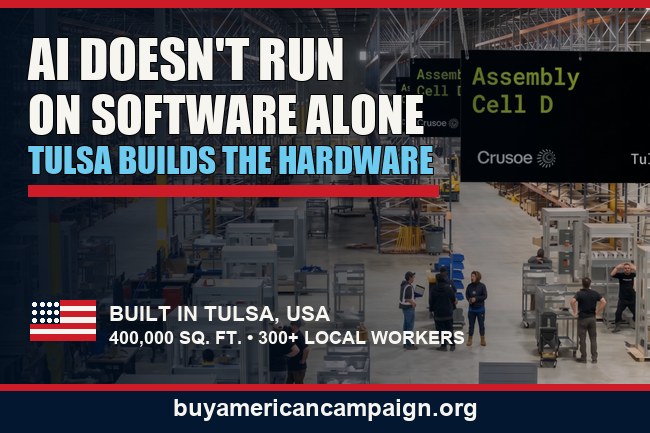
AI infrastructure manufacturing may sound like a contradiction because artificial intelligence feels like software, but it does not run in the air. Every model, search and automated task depends on physical buildings filled with servers, power equipment, cooling systems and miles of electrical connections. A new factory in Tulsa, Oklahoma, is a reminder that the AI economy is also a manufacturing story.
On September 14, Crusoe announced the opening of its second Tulsa manufacturing facility. The new operation adds 400,000 square feet and produces electrical equipment for high-density data centers, including medium-voltage switchgear, low-voltage switchboards, enclosures, industrial controls and custom copper busbar.
AI Infrastructure Manufacturing Is Physical Work
The phrase “AI infrastructure” can obscure the work behind it. Power has to be brought into a site, controlled, distributed and protected before computing equipment can operate. That takes fabricated metal, copper conductors, electrical assemblies, coatings, controls and people who can build and test them safely.
Crusoe says its Tulsa workforce includes engineers as well as workers in welding, powder coating, fabrication and electrical assembly. Those are practical industrial skills, not abstract technology jobs. They connect the growth of computing demand to factory floors and skilled trades in an American city.
Tulsa’s Manufacturing Footprint Has Grown Quickly
When Crusoe announced its first Tulsa manufacturing facility in 2024, the company described a $10 million investment in a 120,000-square-foot building and expected to create 100 jobs. The company now says more than 300 local craft workers are employed across its Tulsa facilities, while its nationwide manufacturing footprint has reached approximately one million square feet.
Those figures come from company and state announcements, so the most important test will be what the facilities continue to produce and how the workforce develops over time. Still, moving from an initial 100-job plan to a reported workforce of more than 300 shows how quickly demand for the physical side of data infrastructure has expanded.
The location matters, too. Tulsa has an established base of aerospace, energy and industrial employers, along with workers accustomed to demanding production environments. A growing electrical-equipment operation can draw on that experience while creating new paths for people entering the trades. The benefit is not limited to one payroll: sustained factory activity can also support nearby metal suppliers, maintenance contractors, transportation providers and training programs, provided that orders remain strong enough to keep the capacity in use.

Electricity Demand Has Become an Industrial Question
Whether people are enthusiastic about AI or skeptical of it, electricity demand from data centers is rising. The same grid must also support homes, hospitals, established factories, new industrial projects and a growing number of electric vehicles. Meeting that demand will require more generation, stronger transmission and distribution systems, and far more electrical equipment.
That makes domestic capacity strategically important. A country that expects rapid growth in electricity use should not assume every critical switchboard, transformer component or control system will always be available from somewhere else. Building more of the equipment here can shorten supply chains, strengthen technical knowledge and give American workers a larger role in the infrastructure boom.
One Tulsa Factory Is Already Feeding a Major Project
Crusoe reports that its Tulsa operation has delivered more than 2,500 switchboards for the Stargate data-center campus in Abilene, Texas. That is a concrete example of the connection between a nationally discussed technology project and the manufacturing work required to make it function.
The long-term outcome of any individual data-center project will depend on economics, customers and energy availability. But the equipment is real, the production work is real and the demand for reliable power distribution is not limited to AI. The same industrial capabilities can serve factories, utilities and other large facilities that need dependable electrical systems.

Growth Should Build Durable American Capability
A construction surge can create a temporary rush of orders. The larger opportunity is to turn that demand into durable American capability: trained workers, proven production systems, qualified suppliers and factories that can compete for the next generation of electrical infrastructure.
That requires customers to look beyond the lowest quoted price and consider lead times, reliability, domestic service and the value of keeping critical know-how close to home. It also requires manufacturers to be clear about what they build in America and which components still depend on overseas supply chains.
The Digital Future Needs American Factories
America cannot build a stronger digital economy with software alone. It needs the power equipment, metal fabrication, electrical assembly and skilled people that allow modern facilities to operate. Tulsa’s expanding manufacturing base shows what can happen when fast-growing infrastructure demand is connected to domestic production.
The next time a new AI project is announced, look past the computing chips and ask where the switchgear, enclosures and power-distribution equipment will be made. If this investment boom is going to reshape the economy, American factories and American workers should help build it.
Whenever possible, choose Made in USA.
| If you like what you see and think this post would be of interest to someone, please share |