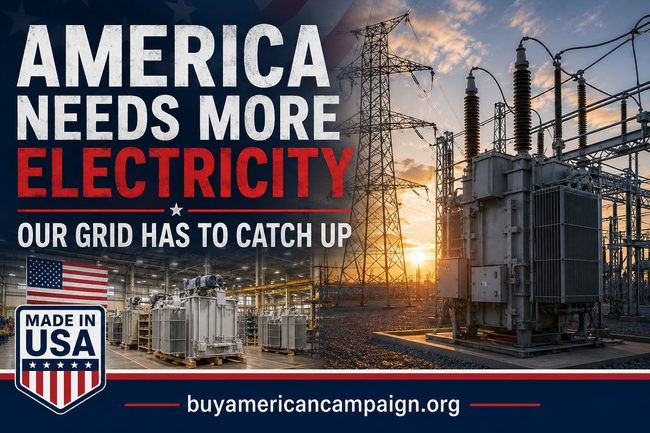
Whether someone welcomes electric vehicles and enormous data centers or wishes they would slow down, one fact is difficult to argue with: American life in 2026 requires more electricity. Homes are adding devices, factories are expanding, computing demand is climbing, and more parts of transportation and industry are connecting to the grid. American power grid investment is no longer a distant policy debate. It is basic preparation for the way the country already lives.
The problem is that demand is growing faster than some of the equipment needed to serve it. The Department of Energy says U.S. electricity load has risen close to 3% annually since 2023 after nearly two decades of relatively flat demand. At the same time, transformers, circuit breakers, power electronics, and substation components face limited domestic capacity, imported-material dependencies, and long production schedules.
The Transformer Wait Is Already Measured in Years
A transformer is not the glamorous part of a new factory, neighborhood, or data center, but none of those projects can operate without one. Transformers adjust voltage so electricity can travel across long distances and then safely reach the machinery, businesses, and homes that use it.
DOE reports that distribution-transformer lead times rose from three to six months in 2019 to 12 to 30 months in 2023, the latest complete data available. Its newer grid-supply-chain assessment says some critical equipment now takes two years or longer, while transformer prices have risen four to nine times in five years. Large specialized units can take even longer.
More Demand Is Coming From Every Direction
Data centers receive much of the attention because artificial-intelligence computing consumes tremendous amounts of power. Electric vehicles add another source of demand. But the story is broader than either one. Semiconductor plants, battery factories, hospitals, warehouses, housing developments, advanced manufacturing, and the reshoring of existing industries all need dependable connections.
That is why this should not become another argument in which Americans are told to choose one technology and blame another. Reliable electricity is shared infrastructure. A stronger grid serves the family charging a car, the machinist running a CNC mill, the farmer operating irrigation equipment, and the local hospital keeping critical systems online.

American Power Grid Investment Must Include American Factories
Building more transmission lines matters, but wires alone are not enough. The country also needs the physical equipment that controls, protects, and distributes power. Domestic manufacturers are investing in transformers, breakers, high-voltage cable, and related components, yet years-long queues show how much capacity still has to be added.
Manufacturing these products in the United States does more than shorten a shipping route. It preserves specialized engineering, electrical-steel processing, winding, testing, repair, and heavy-transport capabilities. It also reduces the risk that a foreign disruption leaves utilities competing for the same limited supply of essential equipment.
Standardization Can Help Factories Build Faster
Investment should not mean spending without reform. DOE has identified more than 80,000 distribution-transformer varieties used across the country. Utilities have legitimate local requirements, but excessive customization makes it harder for manufacturers to build common models efficiently, hold practical inventories, and move equipment quickly when emergencies strike.
Common configurations, a stronger refurbishment network, more domestic material capacity, and long-term purchasing commitments would give manufacturers the confidence to add machinery and train workers. Those changes are less dramatic than announcing a new power plant, but they can determine whether that plant—or the factory beside it—actually connects on schedule.

The Cost of Waiting Will Not Stay Hidden
When grid equipment costs more or arrives late, the consequences eventually reach households. Utilities pay more, projects stall, businesses delay hiring, and communities wait longer for housing and commercial development. Reliability also suffers when aging equipment must remain in service because replacements are unavailable.
America does not need to predict every future technology correctly to make a sound decision today. Electricity use is rising. The equipment supply chain is strained. The grid is aging. Those three realities make a compelling case for sustained investment regardless of anyone’s politics or preferences about EVs, data centers, or individual energy sources.
Build the Grid the Next Generation Will Need
The best time to expand transformer capacity and modernize the grid was before lead times stretched into years. The next-best time is now. America should invest in transmission, local distribution, maintenance, resilience, and the domestic factories that manufacture the hardware behind all of it.
More electricity demand is coming. We can meet it with an increasingly fragile patchwork, or we can build a stronger American grid with equipment made by American workers. The second choice requires patience and capital, but it also leaves the country more productive, more secure, and better prepared for whatever comes next.
Sources: U.S. Department of Energy, Strengthening America’s Grid Supply Chain; DOE Supply Chain and Market Analysis; and National Laboratory of the Rockies transformer analysis.
Whenever possible, choose Made in USA.
| If you like what you see and think this post would be of interest to someone, please share |