Tag: American Jobs

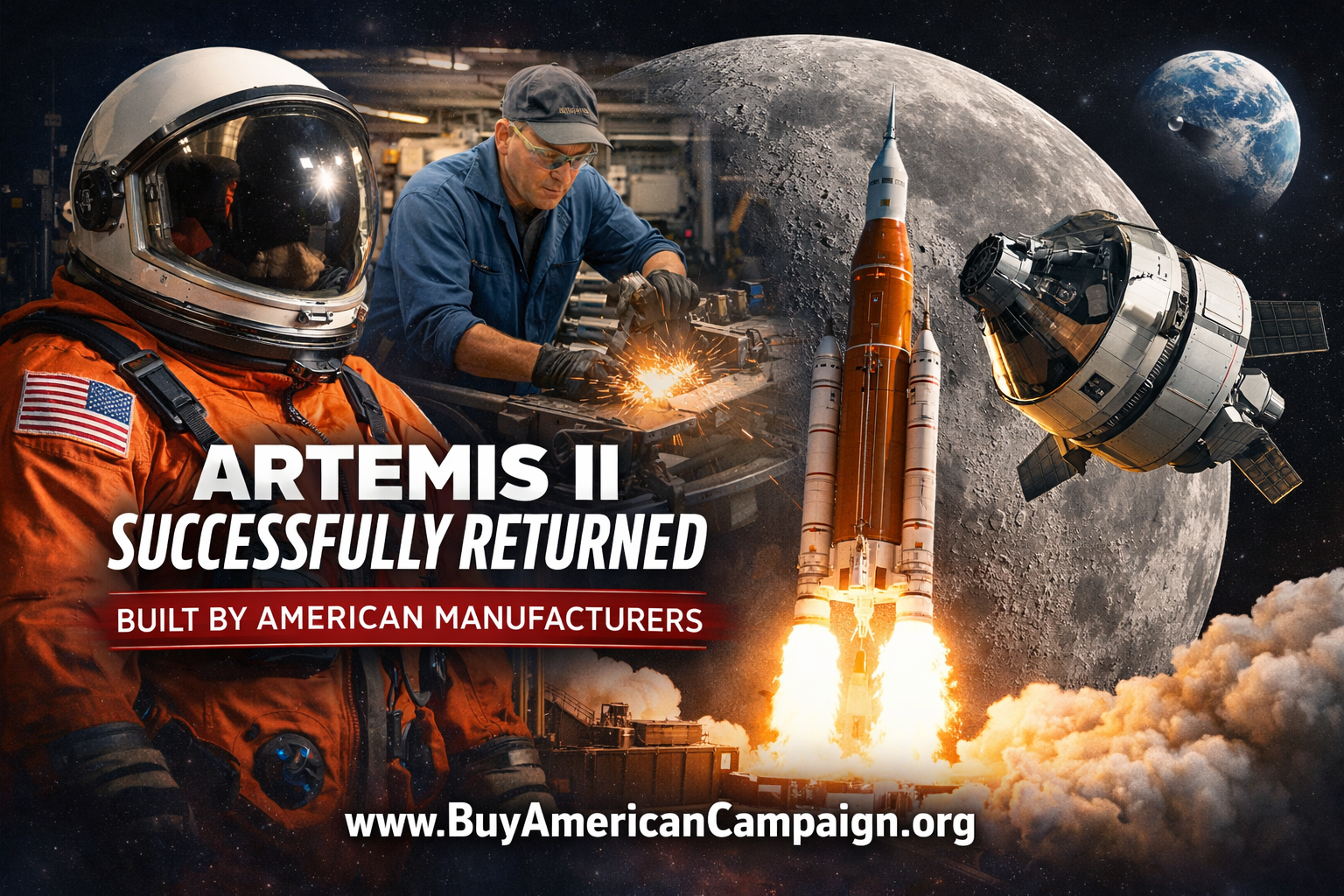
  • Artemis II Successfully Returned — Built by American Manufacturers Who Delivered

    Artemis II Successfully Returned — Built by American Manufacturers Who Delivered

    Artemis II Successfully Returned - Built by American Manufacturers

    After a 10-day, 695,081-mile journey around the Moon, Artemis II has successfully returned its crew safely to Earth. For the first time in more than 50 years, humans traveled beyond low Earth orbit and came back — proving that the United States not only still has the capability to reach deep space, but to execute a mission of this complexity from start to finish.

    The crew — Reid Wiseman, Victor Glover, Christina Koch, and Jeremy Hansen — completed a mission that demanded perfection from every system on board. And that is exactly what they got. Because behind Artemis II is a nationwide network of American manufacturers who built the components that made this mission possible — and ensured it worked when it mattered most.

    The Spacecraft: Built in Louisiana, Powered by a Nation

    The Orion spacecraft was built by Lockheed Martin at NASA’s Michoud Assembly Facility in New Orleans. But while Lockheed Martin assembled the spacecraft, Orion itself is the result of contributions from companies across the United States — each responsible for highly specialized systems that had to perform flawlessly in deep space.

    This was not a controlled test. This was a full mission under real conditions, and every piece of hardware had to work. The success of Artemis II confirms that it did.

    American-Made Aluminum From West Virginia

    At Constellium in Ravenswood, West Virginia, the highly trained men and women of United Steelworkers Local 5668 produced the Airware aluminum-lithium alloy used “tip to tail” across the entire Artemis II mission. The facility employs more than 1,100 people and is one of the world’s largest aluminum rolled products manufacturing sites, specializing in aerospace-grade materials.

    More than 20 years of research and development went into perfecting this material, which offers lower density, higher stiffness, thermal stability, corrosion resistance, and superior damage tolerance compared to traditional aerospace aluminum. From the rocket’s structure to the spacecraft’s hull, Constellium’s alloy was the foundation that held the entire mission together — and over 695,081 miles of deep space travel, it performed exactly as engineered.

    Life-Saving Engineering from Massachusetts

    In Worcester, Massachusetts, the David Clark Company produced one of the most critical elements of the mission: the Orion Crew Survival System spacesuits. These bright orange suits are far more than protective gear. They are fully integrated life-support systems designed to sustain astronauts for up to six days in the event of an emergency.

    Each suit includes built-in air supply, water, food provisions, and waste management — effectively functioning as a personal survival system in space. The company’s expertise in pressure suits dates back to 1941, including its role in developing suits for X-1 rocket plane test pilots who first broke the sound barrier. That legacy carried forward into Artemis II, where the suits performed exactly as designed.

    Browse American-Made Products

    Precision Controls from Illinois

    In Carpentersville, Illinois, OTTO Engineering manufactured 17 unique switch controls used throughout the Orion spacecraft. These switches are essential interfaces between the crew and the spacecraft’s systems, allowing astronauts to execute commands with precision in an environment where there is no room for error.

    Every interaction during the mission relied on these components functioning perfectly. And they did. As Tom Roeser of OTTO Engineering said, “It’s the American dream. You can, in a little town of Carpentersville 40 miles outside of Chicago, find enough capable talent to design and manufacture products of this complexity.” Artemis II proved that statement true.

    Advanced Materials That Protected the Crew

    Space is unforgiving, and the materials used in spacecraft must be able to withstand extreme threats. McDanel Advanced Materials manufactured every window pane for Orion, engineering them as multi-layered systems capable of protecting the crew from micrometeoroids traveling at high velocity. These windows are not simply for visibility — they are part of the spacecraft’s protective structure.

    At the same time, Elmet Technologies in Euclid, Ohio supplied high-performance materials essential to the spacecraft’s structural integrity and thermal resistance. These materials are engineered to perform under extreme heat, pressure, and radiation, ensuring that Orion could endure the conditions of deep space travel. Their performance during the mission validated years of research and development behind these advanced materials.

    Join the Buy American Movement

    Decades of Manufacturing Excellence in California

    In Sacramento, California, Tecma contributed thousands of components to Artemis II, continuing a legacy that spans 98 space programs. The company’s history includes manufacturing guillotine cutter assemblies for Apollo 11, and that same level of precision and reliability was brought forward into this mission.

    Artemis II is not an isolated achievement. It is the continuation of decades of American manufacturing experience, where companies like Tecma refine their capabilities over time and apply them to increasingly complex challenges. The success of this mission demonstrates that this expertise remains strong and relevant today.

    Inspiring the Next Generation

    For astronaut Christina Koch, Artemis II represents more than a successful mission. It is an opportunity to inspire the next generation of engineers, scientists, and skilled workers. As she emphasized, “The thing I love about the moon is that it’s not just a beacon for exploration and this platform of possibilities for incredible missions like this, but it has benefits. You have everything from innovation, technology development, not only for future missions going deeper into the solar system, but technologies as it comes back to Earth. You have inspiration. A whole generation of people starting this pipeline of STEM workers and manufacturers and operators that are excited to see what you can do when you work hard and come together as a team.”

    That inspiration is grounded in reality. This mission showed that the opportunities still exist — not just in space, but in the factories, labs, and manufacturing floors across the United States where these systems are built.

    The Bottom Line

    Artemis II did not just reach deep space. It returned safely. That outcome required every system, every material, and every component to perform exactly as designed under real-world conditions.

    From West Virginia to Massachusetts, from Illinois to California, American manufacturers delivered. Their work was tested in the harshest environment imaginable — and it held up.

    This mission is proof. Proof that American manufacturing is still capable of building the systems that push humanity forward. Proof that when it matters most, the United States can rely on its own industrial base to deliver results.

    Artemis II is now complete. The crew is home. And the companies that made it possible have once again demonstrated what American manufacturing can do.

    Whenever possible, choose Made in USA.

    If you like what you see and think this post would be of interest to someone, please share
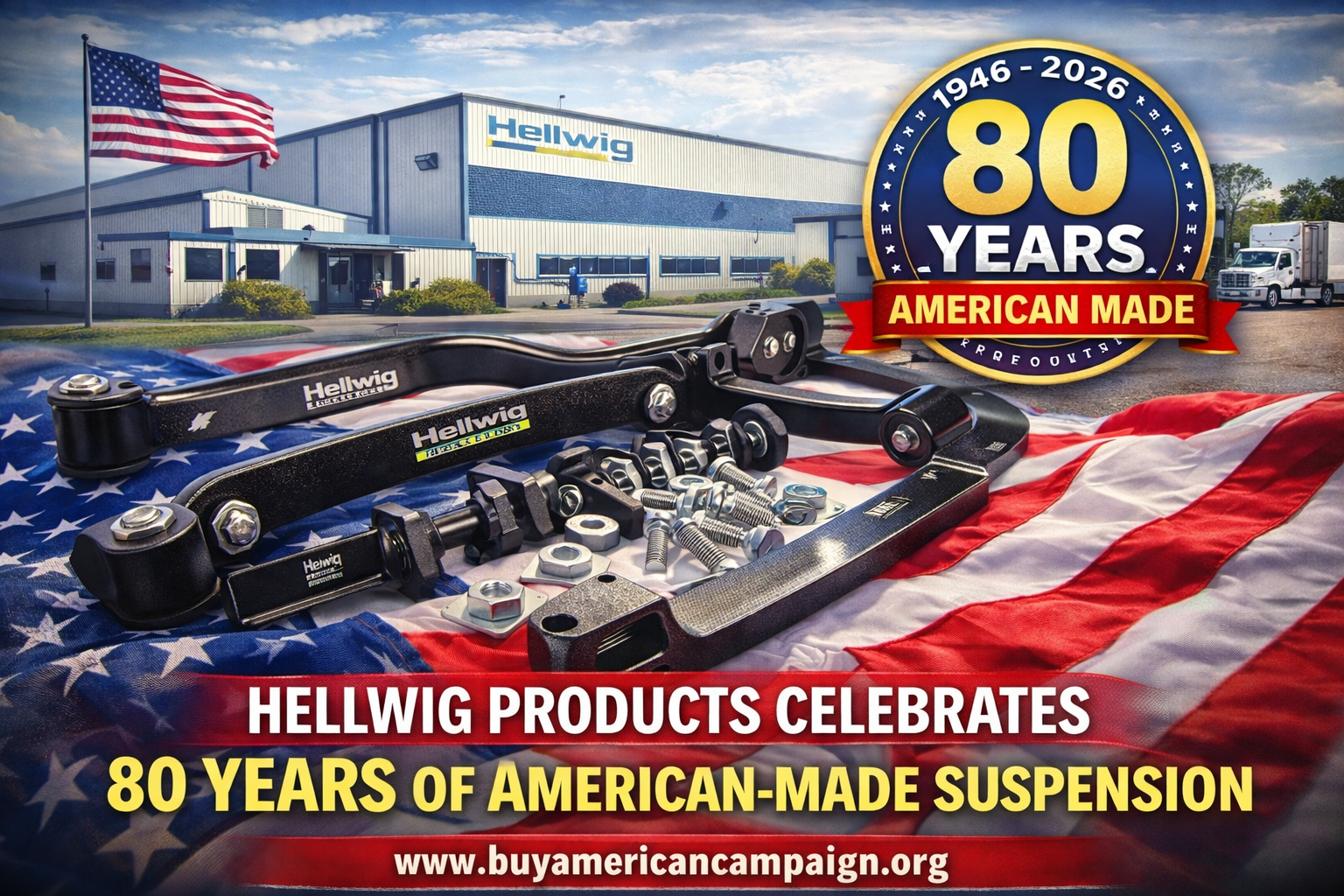
  • Hellwig Products Celebrates 80 Years of American-Made Suspension Excellence

    Hellwig Products Celebrates 80 Years of American-Made Suspension Excellence

    Hellwig Products 80 Years American-Made Suspension

    In an era where many manufacturing companies have moved production overseas, stories like this stand out for a different reason. Hellwig Products — a company that has been building suspension components in the United States for decades — is celebrating 80 years of American-made manufacturing.

    Founded in 1946, Hellwig Products began as a small operation focused on helping truck owners improve load stability and performance. What started as a practical solution for everyday drivers has grown into a well-respected name in the automotive suspension industry — all while keeping its manufacturing roots firmly planted in the United States.

    80 Years of American Manufacturing

    Reaching an 80-year milestone is no small feat in any industry, but especially in manufacturing. Over the past eight decades, the U.S. has seen major shifts — globalization, offshoring, supply chain disruptions, and rapid technological change.

    Through all of it, Hellwig has continued to produce its suspension products domestically. That consistency says a lot about the company’s approach. Rather than chasing short-term cost savings overseas, they’ve focused on maintaining control over quality, production, and engineering right here at home.

    It’s a reminder that American manufacturing doesn’t just survive — it can thrive when companies commit to long-term craftsmanship and innovation.

    Built for Performance, Made in the USA

    Hellwig Products is best known for its high-performance suspension components, including sway bars, helper springs, and load control systems. These products are designed to improve vehicle stability, handling, and safety — particularly for trucks, RVs, and heavy-duty applications.

    But what really sets the company apart is where those products are made. While many competitors have shifted production overseas, Hellwig continues to manufacture in the United States, giving them tighter control over materials, engineering standards, and final product quality.

    That commitment to domestic production also means supporting American jobs — from skilled manufacturing workers to engineers and logistics teams. It’s the kind of ecosystem that strengthens not just one company, but entire communities.

    Browse American-Made Products

    Why Longevity Like This Matters

    There’s something different about a company that’s been around for 80 years. It means they’ve adapted, evolved, and continued to deliver value across multiple generations of customers.

    In manufacturing, longevity often comes down to a few key things: quality, trust, and the ability to innovate without losing your core identity. Hellwig’s continued presence in the market suggests they’ve managed to balance all three.

    It also highlights an important point that often gets overlooked — American manufacturing isn’t just about new startups or policy changes. It’s also about legacy companies that have been quietly building, producing, and improving products for decades.

    A Different Kind of Competitive Advantage

    In today’s global economy, many companies compete primarily on price. That often leads to outsourcing production to lower-cost regions. But companies like Hellwig take a different approach.

    By keeping manufacturing in the U.S., they compete on quality, durability, and performance. Customers who choose their products aren’t just buying a component — they’re investing in reliability and long-term value.

    This kind of positioning matters more than ever. As supply chain disruptions have shown in recent years, relying heavily on overseas production can create vulnerabilities. Domestic manufacturing offers a level of stability and responsiveness that’s hard to replicate.

    Join the Buy American Movement

    What This Means for the Buy American Movement

    At Buy American Campaign, stories like this reinforce a simple idea: American manufacturing is still here — and it’s still capable of producing high-quality, competitive products.

    Hellwig’s 80-year milestone isn’t just a company achievement. It’s a reflection of what’s possible when businesses commit to building products in the United States, investing in their workforce, and maintaining high standards over the long term.

    For consumers, it’s also a reminder that where you spend your money matters. Supporting American-made companies helps sustain jobs, strengthen local economies, and encourage more businesses to keep production here at home.

    Looking Ahead

    As Hellwig Products celebrates 80 years, the question becomes: what’s next? If the past is any indication, the company will continue doing what it has always done — focusing on quality, innovation, and American manufacturing.

    In a time when the conversation around reshoring and domestic production is gaining momentum, companies like Hellwig serve as proof that building in America isn’t just possible — it’s sustainable.

    And that’s exactly the kind of story worth paying attention to.

    Whenever possible, choose Made in USA.

    If you like what you see and think this post would be of interest to someone, please share
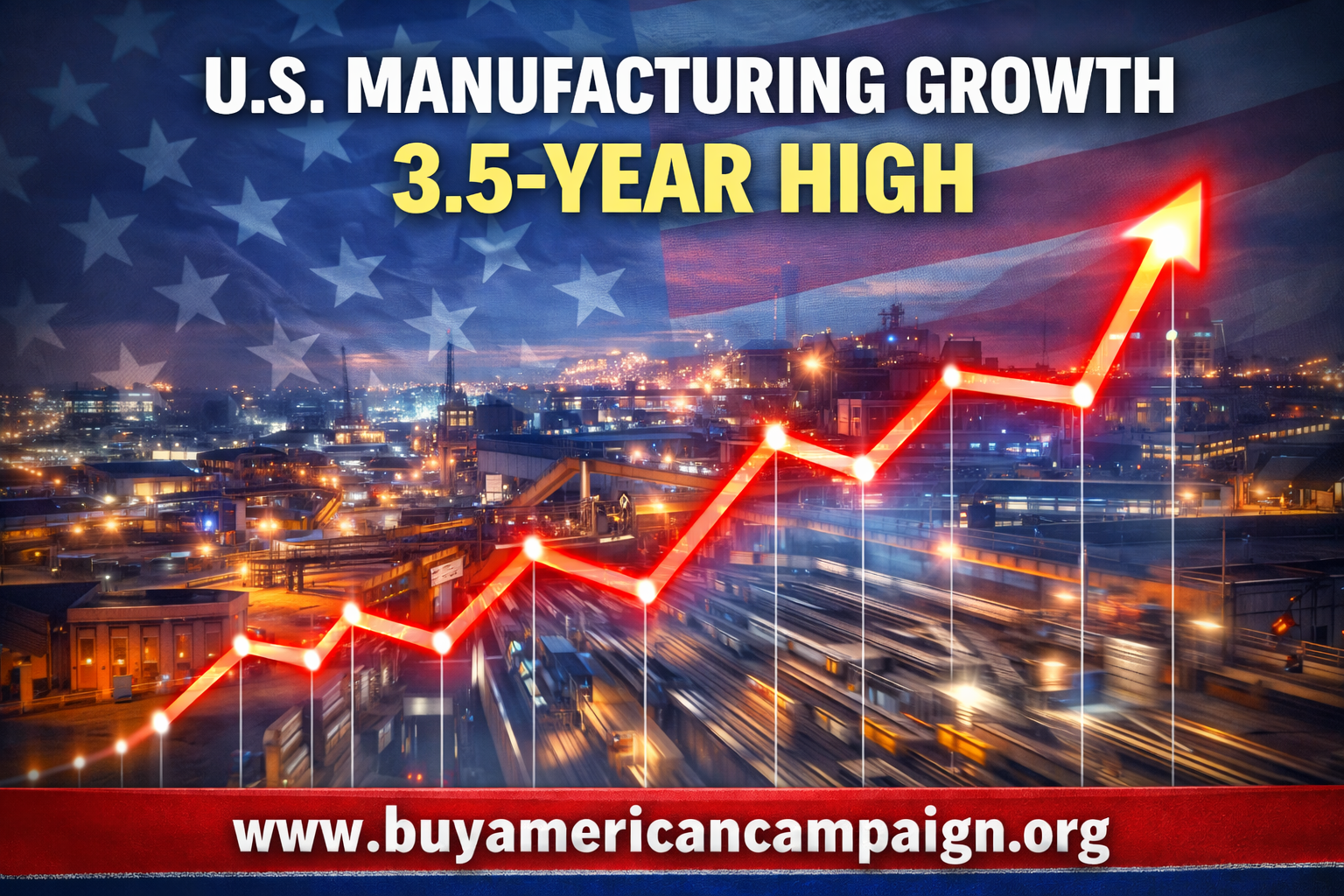
  • U.S. Manufacturing Growth Hits 3.5-Year High as Factory Activity Surges

    U.S. Manufacturing Growth Hits 3.5-Year High as Factory Activity Surges

    U.S. Manufacturing Growth 3.5-Year High

    For the first time in years, there’s a measurable shift happening in American industry — and the data is starting to back it up. U.S. manufacturing growth just hit a 3.5-year high, with the ISM Manufacturing PMI rising to 52.7% in March 2026. That’s the strongest reading since mid-2022 and a clear signal that factory activity across the country is picking up real momentum.

    Even more notable, this reading came in slightly above expectations. Economists had forecast a PMI closer to 52.5%, meaning the actual number not only shows expansion but also a modest upside surprise. In a sector that has faced years of uncertainty, that matters.

    And here’s the key point: any PMI reading above 50 indicates expansion. At 52.7, this isn’t just growth — it’s accelerating growth.

    What This Means for U.S. Manufacturing Growth

    The recent surge in U.S. manufacturing growth suggests that something deeper may be happening beneath the surface. For years, policymakers, businesses, and consumers have talked about reshoring — bringing production back to the United States after decades of offshoring. Now, we may be seeing early signs that those efforts are starting to gain traction.

    Factories are getting busier. Orders are increasing. Production lines that were once idle or underutilized are ramping back up. And while this doesn’t mean the U.S. has fully reversed decades of manufacturing decline, it does point to a shift in direction.

    In simple terms: more goods are being made in America today than just a year ago, and the pace of that production is increasing.

    A Strong Signal After Years of Uncertainty

    This data is especially important because it follows a long stretch of mixed or stagnant readings. The manufacturing sector has been navigating a complex environment — rising interest rates, supply chain disruptions, global instability, and shifting consumer demand.

    For much of the past few years, manufacturing growth has been uneven. Some months showed expansion, while others hinted at contraction. That inconsistency made it difficult to determine whether a true recovery was underway.

    Now, with the PMI hitting its highest level in 3.5 years, the picture is becoming clearer. This isn’t just a one-off bounce. It’s part of a broader trend of strengthening activity.

    Major outlets including Bloomberg, Reuters, MarketWatch, and Quartz all reported on the data — and the consensus is consistent: U.S. manufacturing is gaining momentum.

    Browse American-Made Products

    Reshoring and Domestic Investment Are Playing a Role

    One of the most interesting aspects of this story is what’s likely driving the improvement. Over the past few years, there’s been a growing push to bring production closer to home.

    Companies are rethinking their supply chains. Instead of relying heavily on overseas manufacturing, many are exploring domestic alternatives. This shift has been influenced by a combination of factors — geopolitical tensions, shipping disruptions, rising costs abroad, and a renewed focus on national resilience.

    At the same time, investment in American manufacturing has been increasing. Businesses are putting money into new facilities, upgrading equipment, and expanding production capacity. Government incentives and financing programs have also played a role in making these investments more viable.

    All of this contributes to the broader trend we’re seeing now: stronger U.S. manufacturing growth driven by a shift back toward domestic production.

    Not Without Challenges

    That said, the picture isn’t entirely smooth. While manufacturing activity is expanding, there are still real headwinds that could impact how sustainable this growth is.

    One of the biggest concerns right now is rising input costs. Manufacturers are facing higher prices for raw materials, components, and energy. These cost increases can squeeze margins and make it harder to maintain profitability, even as production levels rise.

    In addition, supplier delivery performance has deteriorated. Global tensions continue to disrupt supply chains, leading to delays and uncertainty. Even as companies try to localize production, many still depend on international inputs that can be affected by external factors.

    These challenges don’t erase the progress being made, but they do highlight the complexity of rebuilding a strong and resilient manufacturing base.

    Join the Buy American Movement

    Why This Matters for the Bigger Picture

    At Buy American Campaign, this is exactly the kind of signal we pay attention to. U.S. manufacturing growth isn’t just an economic statistic — it’s a reflection of where products are being made, where jobs are being created, and how resilient our supply chains really are.

    When manufacturing expands in the United States, the benefits tend to extend far beyond the factory floor. It means more job opportunities, stronger local economies, and increased demand for domestic suppliers and services.

    It also means consumers have more opportunities to support American-made products. Every purchase becomes part of a larger cycle — one that either strengthens domestic production or continues to push it overseas.

    The fact that American factories are now busier than they’ve been in years is a meaningful development. It suggests that the conversation around reshoring and buying American is starting to translate into real-world results.

    Momentum Is Building

    The March PMI reading doesn’t guarantee long-term success, but it does indicate that momentum is building. After years of volatility, the manufacturing sector appears to be moving in a more positive direction.

    The question now is whether that momentum can be sustained. Continued investment, stable supply chains, and manageable cost pressures will all play a role in determining what happens next.

    But for now, the takeaway is clear: U.S. manufacturing growth is real, and it’s accelerating. American factories are producing more, hiring more, and contributing more to the economy than they have in recent years.

    That’s not just good news for manufacturers. It’s good news for workers, communities, and anyone who believes in rebuilding America’s industrial strength.

    Whenever possible, choose Made in USA.

    If you like what you see and think this post would be of interest to someone, please share
  • Nordic Ware: The American Company Behind Iconic Bakeware Made in the USA

    Nordic Ware: The American Company Behind Iconic Bakeware Made in the USA

    American-made bakeware showcase

    If you’ve ever baked a cake in a Bundt pan, there’s a good chance you’ve already used a Nordic Ware product — even if you didn’t realize it.

    While many kitchen brands have moved production overseas, Nordic Ware is one of the few that still manufactures a significant portion of its products right here in the United States.

    🇺🇸 Is Nordic Ware Made in the USA?

    The short answer: many of their core products are still made in the USA — but not all.

    Nordic Ware manufactures a large percentage of its aluminum bakeware in Minnesota, including many of its most popular items. However, like most modern brands, some products are imported.

    That’s why it’s always important to check individual listings before you buy.

    Browse American-Made Products

    🏭 A Quick Look at the Company

    Nordic Ware was founded in 1946 and remains a family-owned company based in Minneapolis, Minnesota.

    They’re best known for creating the original Bundt pan — a product that became a staple in American kitchens and is still widely used today.

    Unlike many competitors, Nordic Ware has continued investing in U.S. manufacturing, producing many of its aluminum products domestically for decades.

    🍳 What Nordic Ware Makes

    Nordic Ware offers a wide range of kitchen products, including:

    • Bakeware (Bundt pans, sheet pans, muffin tins)
    • Cookware
    • Kitchen tools and accessories

    Their reputation is strongest in aluminum bakeware, which is where much of their U.S. production is focused.

    Join the Buy American Movement

    🔍 What’s Actually Made in the USA

    Many of Nordic Ware’s most popular items are still made domestically, including:

    • Cast aluminum Bundt pans
    • Natural aluminum baking sheets
    • Select specialty bakeware

    These products are manufactured in Minnesota and are known for durability, even heating, and long-term performance.

    That said, not every item in their catalog is made in the USA — so it’s always worth double-checking before purchasing.

    🛒 Popular Nordic Ware Products Made in the USA

    If you’re looking to support American manufacturing, here are a few well-known options to start with:

    • Classic Bundt Pan — the original design that made the brand famous
    • Natural Aluminum Baking Sheet — a staple for everyday baking
    • High-Sided Sheet Pans — ideal for roasting and baking

    👉 View Nordic Ware products on Amazon:
    https://amzn.to/4tA7cUR

    (Tip: check the product description to confirm country of origin before purchasing.)

    🇺🇸 Why It Matters

    When companies continue to manufacture in the United States, they’re supporting:

    • American jobs
    • Domestic supply chains
    • Higher production standards

    Nordic Ware is a good example of a company that has maintained a strong domestic presence while still competing in a global market.

    ✅ Final Takeaway

    Nordic Ware remains one of the few kitchen brands still producing a meaningful portion of its products in the United States.

    If you’re looking for reliable, American-made bakeware, it’s a brand worth paying attention to — just be sure to verify each product before you buy.

    Whenever possible, choose Made in USA.

    If you like what you see and think this post would be of interest to someone, please share
  • Made in America Loan Guarantee Expanded: SBA Boosts Support for U.S. Manufacturers

    Made in America Loan Guarantee Expanded: SBA Boosts Support for U.S. Manufacturers

    SBA Made in America Loan Guarantee

    There’s a lot of talk these days about bringing production back home, strengthening supply chains, and rebuilding America’s industrial base. This latest SBA move gives that conversation some real substance. The Made in America loan guarantee program is getting a major expansion, opening the door for more U.S. manufacturers and food supply chain businesses to access the capital they need to grow, modernize, and compete.

    Starting May 1, manufacturers across NAICS Sectors 31-33 will become eligible for this expanded support. For small businesses trying to invest in new equipment, improve facilities, build inventory, reduce dependence on foreign adversaries, or even grow through acquisitions, this could be a meaningful opportunity. The SBA is also broadening eligibility under its International Trade Loan program to include more food supply chain businesses, including agriculture, production, and logistics.

    Why the Made in America Loan Guarantee Matters

    This matters because financing is often one of the biggest barriers standing between a small manufacturer and its next stage of growth. A company may want to buy more advanced machinery, automate part of its process, expand into a larger facility, or bring a supplier relationship back into the United States. But those kinds of moves require capital, and capital can be hard to secure when lenders view manufacturing as expensive, complex, or risky.

    That’s where this change becomes important. The SBA increased the government guaranty on these loans to 90%, compared to the standard 75% for regular 7(a) loans. That higher guaranty gives lenders more confidence to say yes. For small businesses, that can mean access to financing that might not have been available otherwise.

    And when more American manufacturers can get funded, that doesn’t just help individual companies. It helps local workers, local suppliers, and local communities. It also helps rebuild production capacity here at home instead of continuing to send that capacity overseas.

    A Big Deal for Small Manufacturers

    One of the most important details in this announcement is who it’s really aimed at: small businesses. According to the SBA, small businesses make up 98% of all manufacturers in America. That’s a huge number, and it tells the real story of American manufacturing. It’s not just giant factories and major corporations. It’s also thousands of smaller operations across the country making parts, components, food products, industrial goods, packaging, tools, and more.

    These businesses are often deeply tied to their communities. They hire locally. They create stable jobs. They support regional supply chains. And when they grow, the impact tends to ripple outward. That’s one reason this expansion could matter well beyond the balance sheets of individual companies.

    The timing is notable too. Weekly wages in manufacturing surged 5.1% in February, a sign that the sector remains economically important and competitive. Manufacturing jobs have long been associated with strong wages, skill development, and long-term career pathways. Supporting domestic manufacturers is not just about nostalgia or patriotic branding. It’s about backing an industry that still plays a critical role in national prosperity.

    Browse American-Made Products

    What the Funds Can Be Used For

    The practical side of this program expansion is what makes it especially interesting. Eligible businesses can use funds for a range of growth and resilience-focused purposes, including:

    • Upgrading equipment
    • Modernizing facilities
    • Diversifying supply chains away from foreign adversaries
    • Building inventory
    • Expanding operations through acquisitions

    That list covers a lot of the real-world challenges American manufacturers are facing right now. Many businesses know they need to improve efficiency or modernize production, but the upfront cost can be a major obstacle. Others want to reduce exposure to overseas suppliers and political instability but need working capital to make that transition possible. In both cases, better financing access can make action possible instead of leaving those plans stuck on paper.

    The inclusion of food supply chain businesses is also worth watching. Agriculture, food production, processing, transportation, and logistics all play a major role in domestic resilience. Expanding support in this area recognizes that a strong American supply chain is not just about factories. It includes the systems that move goods from producer to processor to warehouse to shelf.

    Domestic Sourcing Gets a Boost

    Another notable piece of this broader push is the SBA’s launch of the Make Onshoring Great Again Portal, which connects businesses with more than 1 million domestic suppliers. That may not get as much attention as the financing change, but it could be just as valuable over time.

    One of the biggest reasons companies rely on foreign suppliers is simple: finding qualified domestic alternatives can be difficult, slow, and fragmented. A resource that helps businesses identify American supplier options could reduce that friction. When paired with financing support, it creates a more complete strategy. Businesses may be able to both find domestic suppliers and secure the funding needed to shift operations toward them.

    The SBA also says it has cut more than $100 billion in red tape. Whether that figure is interpreted broadly or narrowly, the message is clear: the agency wants to present this as a pro-growth, pro-production effort designed to remove obstacles rather than add new ones.

    Join the Buy American Movement

    More Than Policy Talk

    SBA Administrator Kelly Loeffler summed up the administration’s message this way: “Industrial dominance is essential to our national security and strength. Small businesses make up 98% of all manufacturers in America. This Administration is transforming America into a nation of builders once again, as part of an industrial comeback that is being led by small businesses.”

    That language is strong, but the underlying point is hard to ignore. Manufacturing capacity matters. Supply chains matter. The ability to produce goods domestically matters. And small businesses are central to all of it.

    At Buy American Campaign, that’s why stories like this stand out. It’s easy to talk about buying American in theory. But if the country is serious about supporting American-made goods, it also has to support the businesses that make them possible. That means access to capital, stronger supplier networks, and policies that help domestic manufacturers scale instead of struggle.

    This expansion of the Made in America loan guarantee won’t solve every challenge facing U.S. manufacturing. But it does move in the right direction. It gives small businesses more tools to invest, adapt, and grow here at home. And that’s the kind of step that can help turn the idea of an American manufacturing comeback into something more real.

    When more businesses can build in America, source in America, and hire in America, the benefits extend far beyond one loan program. That’s good for workers, good for communities, and good for the long-term strength of the country.

    Whenever possible, choose Made in USA.

    If you like what you see and think this post would be of interest to someone, please share
  • Why “Buy American” Is Slowing Housing — And Why That’s Also an Opportunity

    Why “Buy American” Is Slowing Housing — And Why That’s Also an Opportunity

    Building Americas Future - American Construction Workers

    The idea behind the Build America Buy America Act (BABA) is simple: if taxpayer dollars are funding a construction project, the materials should be made in the United States. Signed into law in 2021, the policy was designed to strengthen domestic manufacturing, support American workers, and reduce dependence on foreign supply chains.

    In theory, it’s exactly what the Buy American movement has been pushing for. In practice, however, the rollout has exposed a much bigger problem — one that is now directly impacting affordable housing across the country.

    The Problem: We Don’t Make Enough

    Under BABA, nearly everything used in federally funded housing projects must be sourced domestically. That includes HVAC systems, lighting components, ceiling fans, door hinges, and dozens of other common building materials.

    The problem? Many of these materials simply aren’t manufactured in the United States — at least not at the scale needed. Decades of offshoring have left major gaps in domestic production capacity. And those gaps are now showing up in real ways.

    When a developer can’t source a required material domestically, they have to apply for a waiver through the U.S. Department of Housing and Urban Development (HUD). That waiver process is where things break down.

    A Waiver System That Can’t Keep Up

    HUD’s waiver process currently takes six months or longer to approve. For a housing project that’s already on a tight timeline and tighter budget, a six-month delay can be devastating.

    Making it worse, HUD staffing has been cut significantly, which means fewer people are processing a growing number of waiver applications. Only a handful of projects have been approved so far, while hundreds sit in the queue.

    The result is exactly what you’d expect: projects are delayed, costs are climbing — often by hundreds of thousands of dollars — and much-needed housing isn’t getting built. All during a national housing crisis where supply is already struggling to meet demand.

    Browse American-Made Products

    What Went Wrong

    The core issue is timing. The Buy American requirements were put in place before anyone fully assessed whether the U.S. manufacturing base could actually support them. The policy assumed production capacity that doesn’t yet exist.

    That’s not an argument against buying American. It’s an argument for better planning. You can’t mandate domestic sourcing without first building the domestic supply to match. And right now, we’re feeling the consequences of that gap.

    The Opportunity Hiding Inside the Problem

    Here’s the part of this story that often gets overlooked: this isn’t just a problem. It’s also a massive opportunity.

    The demand for American-made construction materials is clearly there — the federal government is literally requiring it. That means there’s a strong, guaranteed market for any manufacturer willing to step in and fill the gap.

    That means new factories. New production lines. New jobs. New supply chains built right here in the United States. The infrastructure spending is already committed — the question is whether American manufacturers will rise to meet it.

    Join the Buy American Movement

    Rebuilding Takes Time

    The challenge is that rebuilding domestic manufacturing capacity doesn’t happen overnight. It requires investment, planning, and coordination between policy and industry. Factories don’t appear in six months just because a law says materials need to be domestic.

    But if done correctly, the long-term benefits are enormous. More stable pricing. Faster construction timelines. A stronger domestic supply chain. And communities that actually get the housing they need, built with materials made by American workers.

    Why This Matters for the Buy American Movement

    This is where the Buy American conversation moves beyond consumer choice. It becomes part of a larger economic strategy.

    Supporting American-made goods helps create the demand needed to justify expanding production. And as that production grows, the system becomes more resilient. It’s a cycle — but someone has to start it.

    Right now, we’re in the growing pains phase. The pressures are real. But those pressures are also signals — showing exactly where domestic production needs to expand. Every delayed project, every waiver request, every cost overrun is pointing directly at the manufacturing gaps that need to be filled.

    The good news? The demand is already there. Now it’s a matter of building the supply to match. And for American manufacturers, that’s not just an opportunity — it’s a call to action.

    Whenever possible, choose Made in USA.

    If you like what you see and think this post would be of interest to someone, please share
  • From a Garage to 51,000 Square Feet: The Montana Knife Company Story

    From a Garage to 51,000 Square Feet: The Montana Knife Company Story

    Montana Knife Company - American Made Knives

    This is what rebuilding American manufacturing actually looks like. Not a headline. Not a policy. Not a talking point. A guy in a garage, turning into a company with over 100 employees.

    Montana Knife Company (MKC) was founded in 2020 by Josh Smith — a former lineman who didn’t set out to “disrupt an industry,” but to build something real. Something durable. Something American-made. Something better. And it started exactly where you’d expect — in his garage.

    Built From the Ground Up

    In 2020, there was no massive operation. No big facility. No corporate backing. Just skill, demand, and a willingness to do the work.

    Josh Smith began making knives by hand — focusing on quality, performance, and craftsmanship. The kind of knives people actually use. The kind that don’t get thrown away or replaced every year.

    Word spread quickly. Because when you build something that’s actually good, people notice. Demand grew. Orders piled up. And what started as a small operation began to outgrow the garage.

    Scaling Without Leaving America

    Here’s where the story gets interesting. Most companies, when they hit that kind of growth, look overseas. Cheaper labor. Faster scaling. Higher margins.

    MKC didn’t do that. They doubled down on American manufacturing.

    Today, the company operates out of a 51,000-square-foot facility in Missoula, Montana — a major step up from where it started. That facility represents a $19 million investment into U.S.-based production. And more importantly? It supports 105 American jobs.

    That’s not theory. That’s not policy. That’s real impact.

    Browse American-Made Products

    Phase Three of Growth

    This isn’t just growth — it’s intentional growth. MKC is now in its third phase of expansion. Phase one was a garage startup. Phase two was rapid demand and scaling. Phase three is a full-scale manufacturing operation.

    That progression matters. Because one of the biggest misconceptions about American manufacturing is that it can just “come back” overnight. It can’t. It has to be rebuilt — step by step, company by company, facility by facility. This is exactly what that process looks like.

    Why This Story Matters

    It’s easy to look at this and say, “It’s just a knife company.” But it’s not. It’s a blueprint.

    Right now, one of the biggest issues facing the U.S. economy is a lack of domestic production capacity. We rely heavily on other countries to make the things we use every day — from tools to materials to basic goods.

    MKC is doing the opposite. They’re proving that you can build products in the United States, scale production domestically, create jobs locally, and still meet demand. That combination is rare — and it’s exactly what needs to happen across other industries.

    Join the Buy American Movement

    Built to Last

    There’s another piece to this that matters. These aren’t disposable products. MKC focuses on heirloom-quality knives — tools designed to last for years, even decades. That mindset is a big part of what’s been missing in modern manufacturing.

    When you build things to last, you reduce waste, increase value, create stronger customer loyalty, and reinforce the idea that quality still matters. That’s a very different approach from mass production.

    The Bigger Picture

    This story isn’t about one company. It’s about what’s possible.

    A former lineman starts making knives in his garage in 2020. A few years later, that same operation turns into a 51,000 sq ft facility, a $19 million investment, and 105 employees.

    That’s how manufacturing comes back. Not all at once. Not from the top down. But from people who decide to build something — and keep building.

    Montana Knife Company didn’t wait for perfect conditions. They created momentum. And if more companies follow that path, this isn’t just a success story — it’s the beginning of something much bigger.

    Whenever possible, choose Made in USA.

    If you like what you see and think this post would be of interest to someone, please share
  • The Statistics Game

    The Statistics Game

    american jobsWe’ve already touched on the idea that having more focused education in technical vocations and tailored degrees for manufacturing are the ways to save American jobs in the American manufacturing industry. Per the many employers of US manufacturing industries who say that finding American workers who are qualified for the positions is next to impossible, it’s hard to figure out why people are not going into the manufacturing industry at the same rate of their predecessors. Part of the reason for this wide gap between the need in manufacturing and the steady supply of qualified graduates is the effective marketing campaign that has been pushing vocational studies and bachelor degrees that lead to manufacturing professions into a less desirable category for degree-seeking individuals.

    Statistics to support the supposition that manufacturing professional degrees are needed are relatively hard to find since higher education, a multi-billion dollar industry in and off itself, has every incentive not to conduct or encourage any sort of polling process to find out how higher education stacks up to most vocational fields. They do, however, have many interesting infographics and graphs on how people with the broad term “bachelor’s degree” stacked up against people with “some college or associate degree.” Again, both of these terms are incredibly broad and would include every major field of study against college dropouts, associates degrees without a focus, as well as, those who hold degrees which are tailored to the manufacturing industry. Common sense will tell you that most college graduates have a higher rate of success in finding American jobs than those who have a high school degree and have not finished any other program of study.

    This logical assumption is somewhat misleading however, since these terms does not separate out those who are underemployed, employed in a field which was not their major field of study, for example you now need a bachelor’s degree to become management in most major retailers, and those who attained degrees which have no correlation between the job field industry and academic study, degrees such as philosophy, Latin studies, history, etc. Furthermore, since these statistics are essentially tailor-made to make bachelors degrees, regardless of field of study, more appealing to the masses due to lower unemployment rates, it’s no wonder that when a recession hits people flock to their local universities to seek degrees.

    In March, 2017, according to a Gallup poll, the underemployment rate for bachelor’s degree holding individuals was roughly 6.5%. This did not take into account the offset of the term “underemployed” due to the nearly astronomical amount of student debt incurred by bachelor’s degree holding individuals.

    Likewise, those holding associate’s degrees in vocational fields, technical fields, and other qualifying certificates for manufacturing employment were not separated out from the statistic concerning those in that degree range, making the number for that category at a 9.6%. Universities and colleges love using these types of statistical analysis to further their agenda: to increase enrollment rates in US manufacturing industries.

    [bctt tweet=”Ever wonder why statistics seem too good to be true? – American jobs” ]

    They put their comparisons onto billboards, in paid articles perpetuated in the media both online and on television, in large marketing campaigns that produce commercials, paid paper advertisements, school visits to high schools, and literature mailed directly to individual homes. All of these campaigns have the same message: enroll in our university or college and you will be successful in life.


    If you like what you see and think
    this post would be of interest to someone,
    please share


    To be frank, that is simply untrue.

    A bachelor’s degree in philosophy stacked up against a manufacturing certificate will show a higher payout and a lower debt for the certificate holder 99% of the time. A campaign for the re-education and rebranding of the US manufacturing industries is desperately needed if we are to encourage our young people into the manufacturing workforce. The question is always, who is going to pay for it?

    Until that complicated question finds a suitable answer, the first place starts at the most local level imaginable: with those young people in your life who are preparing to take the next step into adulthood. Educating them will at least start a conversation on the benefits of American manufacturing. If enough people have the conversation on a grassroots basis, it may lead to some interesting changes in the world of higher education where at least we can get some real answers when it comes to statistics regarding manufacturing employment.