Category: Campaign

  • Made in America Loan Guarantee Expanded: SBA Boosts Support for U.S. Manufacturers

    Made in America Loan Guarantee Expanded: SBA Boosts Support for U.S. Manufacturers

    SBA Made in America Loan Guarantee

    There’s a lot of talk these days about bringing production back home, strengthening supply chains, and rebuilding America’s industrial base. This latest SBA move gives that conversation some real substance. The Made in America loan guarantee program is getting a major expansion, opening the door for more U.S. manufacturers and food supply chain businesses to access the capital they need to grow, modernize, and compete.

    Starting May 1, manufacturers across NAICS Sectors 31-33 will become eligible for this expanded support. For small businesses trying to invest in new equipment, improve facilities, build inventory, reduce dependence on foreign adversaries, or even grow through acquisitions, this could be a meaningful opportunity. The SBA is also broadening eligibility under its International Trade Loan program to include more food supply chain businesses, including agriculture, production, and logistics.

    Why the Made in America Loan Guarantee Matters

    This matters because financing is often one of the biggest barriers standing between a small manufacturer and its next stage of growth. A company may want to buy more advanced machinery, automate part of its process, expand into a larger facility, or bring a supplier relationship back into the United States. But those kinds of moves require capital, and capital can be hard to secure when lenders view manufacturing as expensive, complex, or risky.

    That’s where this change becomes important. The SBA increased the government guaranty on these loans to 90%, compared to the standard 75% for regular 7(a) loans. That higher guaranty gives lenders more confidence to say yes. For small businesses, that can mean access to financing that might not have been available otherwise.

    And when more American manufacturers can get funded, that doesn’t just help individual companies. It helps local workers, local suppliers, and local communities. It also helps rebuild production capacity here at home instead of continuing to send that capacity overseas.

    A Big Deal for Small Manufacturers

    One of the most important details in this announcement is who it’s really aimed at: small businesses. According to the SBA, small businesses make up 98% of all manufacturers in America. That’s a huge number, and it tells the real story of American manufacturing. It’s not just giant factories and major corporations. It’s also thousands of smaller operations across the country making parts, components, food products, industrial goods, packaging, tools, and more.

    These businesses are often deeply tied to their communities. They hire locally. They create stable jobs. They support regional supply chains. And when they grow, the impact tends to ripple outward. That’s one reason this expansion could matter well beyond the balance sheets of individual companies.

    The timing is notable too. Weekly wages in manufacturing surged 5.1% in February, a sign that the sector remains economically important and competitive. Manufacturing jobs have long been associated with strong wages, skill development, and long-term career pathways. Supporting domestic manufacturers is not just about nostalgia or patriotic branding. It’s about backing an industry that still plays a critical role in national prosperity.

    Browse American-Made Products

    What the Funds Can Be Used For

    The practical side of this program expansion is what makes it especially interesting. Eligible businesses can use funds for a range of growth and resilience-focused purposes, including:

    • Upgrading equipment
    • Modernizing facilities
    • Diversifying supply chains away from foreign adversaries
    • Building inventory
    • Expanding operations through acquisitions

    That list covers a lot of the real-world challenges American manufacturers are facing right now. Many businesses know they need to improve efficiency or modernize production, but the upfront cost can be a major obstacle. Others want to reduce exposure to overseas suppliers and political instability but need working capital to make that transition possible. In both cases, better financing access can make action possible instead of leaving those plans stuck on paper.

    The inclusion of food supply chain businesses is also worth watching. Agriculture, food production, processing, transportation, and logistics all play a major role in domestic resilience. Expanding support in this area recognizes that a strong American supply chain is not just about factories. It includes the systems that move goods from producer to processor to warehouse to shelf.

    Domestic Sourcing Gets a Boost

    Another notable piece of this broader push is the SBA’s launch of the Make Onshoring Great Again Portal, which connects businesses with more than 1 million domestic suppliers. That may not get as much attention as the financing change, but it could be just as valuable over time.

    One of the biggest reasons companies rely on foreign suppliers is simple: finding qualified domestic alternatives can be difficult, slow, and fragmented. A resource that helps businesses identify American supplier options could reduce that friction. When paired with financing support, it creates a more complete strategy. Businesses may be able to both find domestic suppliers and secure the funding needed to shift operations toward them.

    The SBA also says it has cut more than $100 billion in red tape. Whether that figure is interpreted broadly or narrowly, the message is clear: the agency wants to present this as a pro-growth, pro-production effort designed to remove obstacles rather than add new ones.

    Join the Buy American Movement

    More Than Policy Talk

    SBA Administrator Kelly Loeffler summed up the administration’s message this way: “Industrial dominance is essential to our national security and strength. Small businesses make up 98% of all manufacturers in America. This Administration is transforming America into a nation of builders once again, as part of an industrial comeback that is being led by small businesses.”

    That language is strong, but the underlying point is hard to ignore. Manufacturing capacity matters. Supply chains matter. The ability to produce goods domestically matters. And small businesses are central to all of it.

    At Buy American Campaign, that’s why stories like this stand out. It’s easy to talk about buying American in theory. But if the country is serious about supporting American-made goods, it also has to support the businesses that make them possible. That means access to capital, stronger supplier networks, and policies that help domestic manufacturers scale instead of struggle.

    This expansion of the Made in America loan guarantee won’t solve every challenge facing U.S. manufacturing. But it does move in the right direction. It gives small businesses more tools to invest, adapt, and grow here at home. And that’s the kind of step that can help turn the idea of an American manufacturing comeback into something more real.

    When more businesses can build in America, source in America, and hire in America, the benefits extend far beyond one loan program. That’s good for workers, good for communities, and good for the long-term strength of the country.

    Whenever possible, choose Made in USA.

    If you like what you see and think this post would be of interest to someone, please share
  • Why β€œBuy American” Is Slowing Housing β€” And Why That’s Also an Opportunity

    Why β€œBuy American” Is Slowing Housing β€” And Why That’s Also an Opportunity

    Building Americas Future - American Construction Workers

    The idea behind the Build America Buy America Act (BABA) is simple: if taxpayer dollars are funding a construction project, the materials should be made in the United States. Signed into law in 2021, the policy was designed to strengthen domestic manufacturing, support American workers, and reduce dependence on foreign supply chains.

    In theory, it’s exactly what the Buy American movement has been pushing for. In practice, however, the rollout has exposed a much bigger problem β€” one that is now directly impacting affordable housing across the country.

    The Problem: We Don’t Make Enough

    Under BABA, nearly everything used in federally funded housing projects must be sourced domestically. That includes HVAC systems, lighting components, ceiling fans, door hinges, and dozens of other common building materials.

    The problem? Many of these materials simply aren’t manufactured in the United States β€” at least not at the scale needed. Decades of offshoring have left major gaps in domestic production capacity. And those gaps are now showing up in real ways.

    When a developer can’t source a required material domestically, they have to apply for a waiver through the U.S. Department of Housing and Urban Development (HUD). That waiver process is where things break down.

    A Waiver System That Can’t Keep Up

    HUD’s waiver process currently takes six months or longer to approve. For a housing project that’s already on a tight timeline and tighter budget, a six-month delay can be devastating.

    Making it worse, HUD staffing has been cut significantly, which means fewer people are processing a growing number of waiver applications. Only a handful of projects have been approved so far, while hundreds sit in the queue.

    The result is exactly what you’d expect: projects are delayed, costs are climbing β€” often by hundreds of thousands of dollars β€” and much-needed housing isn’t getting built. All during a national housing crisis where supply is already struggling to meet demand.

    Browse American-Made Products

    What Went Wrong

    The core issue is timing. The Buy American requirements were put in place before anyone fully assessed whether the U.S. manufacturing base could actually support them. The policy assumed production capacity that doesn’t yet exist.

    That’s not an argument against buying American. It’s an argument for better planning. You can’t mandate domestic sourcing without first building the domestic supply to match. And right now, we’re feeling the consequences of that gap.

    The Opportunity Hiding Inside the Problem

    Here’s the part of this story that often gets overlooked: this isn’t just a problem. It’s also a massive opportunity.

    The demand for American-made construction materials is clearly there β€” the federal government is literally requiring it. That means there’s a strong, guaranteed market for any manufacturer willing to step in and fill the gap.

    That means new factories. New production lines. New jobs. New supply chains built right here in the United States. The infrastructure spending is already committed β€” the question is whether American manufacturers will rise to meet it.

    Join the Buy American Movement

    Rebuilding Takes Time

    The challenge is that rebuilding domestic manufacturing capacity doesn’t happen overnight. It requires investment, planning, and coordination between policy and industry. Factories don’t appear in six months just because a law says materials need to be domestic.

    But if done correctly, the long-term benefits are enormous. More stable pricing. Faster construction timelines. A stronger domestic supply chain. And communities that actually get the housing they need, built with materials made by American workers.

    Why This Matters for the Buy American Movement

    This is where the Buy American conversation moves beyond consumer choice. It becomes part of a larger economic strategy.

    Supporting American-made goods helps create the demand needed to justify expanding production. And as that production grows, the system becomes more resilient. It’s a cycle β€” but someone has to start it.

    Right now, we’re in the growing pains phase. The pressures are real. But those pressures are also signals β€” showing exactly where domestic production needs to expand. Every delayed project, every waiver request, every cost overrun is pointing directly at the manufacturing gaps that need to be filled.

    The good news? The demand is already there. Now it’s a matter of building the supply to match. And for American manufacturers, that’s not just an opportunity β€” it’s a call to action.

    Whenever possible, choose Made in USA.

    If you like what you see and think this post would be of interest to someone, please share
  • From a Garage to 51,000 Square Feet: The Montana Knife Company Story

    From a Garage to 51,000 Square Feet: The Montana Knife Company Story

    Montana Knife Company - American Made Knives

    This is what rebuilding American manufacturing actually looks like. Not a headline. Not a policy. Not a talking point. A guy in a garage, turning into a company with over 100 employees.

    Montana Knife Company (MKC) was founded in 2020 by Josh Smith β€” a former lineman who didn’t set out to β€œdisrupt an industry,” but to build something real. Something durable. Something American-made. Something better. And it started exactly where you’d expect β€” in his garage.

    Built From the Ground Up

    In 2020, there was no massive operation. No big facility. No corporate backing. Just skill, demand, and a willingness to do the work.

    Josh Smith began making knives by hand β€” focusing on quality, performance, and craftsmanship. The kind of knives people actually use. The kind that don’t get thrown away or replaced every year.

    Word spread quickly. Because when you build something that’s actually good, people notice. Demand grew. Orders piled up. And what started as a small operation began to outgrow the garage.

    Scaling Without Leaving America

    Here’s where the story gets interesting. Most companies, when they hit that kind of growth, look overseas. Cheaper labor. Faster scaling. Higher margins.

    MKC didn’t do that. They doubled down on American manufacturing.

    Today, the company operates out of a 51,000-square-foot facility in Missoula, Montana β€” a major step up from where it started. That facility represents a $19 million investment into U.S.-based production. And more importantly? It supports 105 American jobs.

    That’s not theory. That’s not policy. That’s real impact.

    Browse American-Made Products

    Phase Three of Growth

    This isn’t just growth β€” it’s intentional growth. MKC is now in its third phase of expansion. Phase one was a garage startup. Phase two was rapid demand and scaling. Phase three is a full-scale manufacturing operation.

    That progression matters. Because one of the biggest misconceptions about American manufacturing is that it can just β€œcome back” overnight. It can’t. It has to be rebuilt β€” step by step, company by company, facility by facility. This is exactly what that process looks like.

    Why This Story Matters

    It’s easy to look at this and say, β€œIt’s just a knife company.” But it’s not. It’s a blueprint.

    Right now, one of the biggest issues facing the U.S. economy is a lack of domestic production capacity. We rely heavily on other countries to make the things we use every day β€” from tools to materials to basic goods.

    MKC is doing the opposite. They’re proving that you can build products in the United States, scale production domestically, create jobs locally, and still meet demand. That combination is rare β€” and it’s exactly what needs to happen across other industries.

    Join the Buy American Movement

    Built to Last

    There’s another piece to this that matters. These aren’t disposable products. MKC focuses on heirloom-quality knives β€” tools designed to last for years, even decades. That mindset is a big part of what’s been missing in modern manufacturing.

    When you build things to last, you reduce waste, increase value, create stronger customer loyalty, and reinforce the idea that quality still matters. That’s a very different approach from mass production.

    The Bigger Picture

    This story isn’t about one company. It’s about what’s possible.

    A former lineman starts making knives in his garage in 2020. A few years later, that same operation turns into a 51,000 sq ft facility, a $19 million investment, and 105 employees.

    That’s how manufacturing comes back. Not all at once. Not from the top down. But from people who decide to build something β€” and keep building.

    Montana Knife Company didn’t wait for perfect conditions. They created momentum. And if more companies follow that path, this isn’t just a success story β€” it’s the beginning of something much bigger.

    Whenever possible, choose Made in USA.

    If you like what you see and think this post would be of interest to someone, please share
  • Tires Made in USA (2026 Guide) β€” How to Check DOT Codes + Best Brands

    Tires Made in USA (2026 Guide) β€” How to Check DOT Codes + Best Brands

    How to Find Tires Made in USA - Complete 2026 Guide

    How to Find Tires Made in the USA

    Buying tires made in the USA isn’t as straightforward as most people expect. Unlike tools or cookware, where a product is clearly labeled, tires are often manufactured in multiple countries β€” even within the same brand and model line. That means if you want to buy American-made tires, you need to know how to verify them yourself. This guide breaks it down in simple terms so you can shop confidently β€” and we’ll show you where to find tires from brands that manufacture right here in America.

    Shop Tires Made in USA

    These brands all operate manufacturing plants in the United States. While not every model is made domestically, these are your best starting points for finding American-made tires. Always confirm using the DOT code on the sidewall (we explain how below).

    These brands manufacture in the USA β€” always confirm the specific tire’s origin using the DOT code method explained below.


    The Reality: Not All Tires From β€œAmerican Brands” Are Made in the USA

    Many well-known tire brands have deep American roots β€” but today, most operate globally. Companies like Goodyear, Michelin, and Bridgestone all manufacture tires in multiple countries. That means the same tire model may be made in the USA or made overseas, with no difference in the product listing. You cannot rely on brand name alone.

    How to Tell Where a Tire is Made (DOT Code Explained)

    DOT Code on tire sidewall illustration Every tire sold in the United States includes a DOT (Department of Transportation) code stamped on the sidewall. This code tells you where the tire was manufactured, when it was produced, and the manufacturer details.

    What to look for:

    The DOT code begins with DOT followed by a series of characters. The first 2–3 characters after β€œDOT” are the plant code β€” this identifies exactly which factory made the tire.

    Examples:

    • DOT M6 β†’ Made in Lawton, Oklahoma (Goodyear)
    • DOT UP β†’ Made in Findlay, Ohio (Cooper)

    Tire manufacturing in the USA Important Update (2025+): New regulations are introducing 3-character plant codes, replacing older 2-character formats. Both formats may exist during the transition period, so check for either.


    Tire Brands That Manufacture in the USA

    While you must verify each tire individually, these companies all operate manufacturing facilities in the United States: American-headquartered companies:

    • Goodyear Tire & Rubber Company β€” Headquartered in Akron, Ohio with multiple U.S. plants
    • Cooper Tire & Rubber Company β€” Now owned by Goodyear, plants in Ohio and Arkansas

    Global brands with U.S. plants:

    • Michelin β€” Multiple plants in South Carolina
    • Pirelli β€” Manufacturing in Georgia
    • Continental AG β€” Plants in multiple U.S. states
    • Bridgestone β€” Large presence in Tennessee and South Carolina
    • Yokohama Rubber Company β€” Manufacturing in Mississippi

    These brands produce many tires in the U.S. β€” but not all models are U.S.-made. Always check the DOT code.

    Are All Goodyear Tires Made in the USA?

    No β€” and this is one of the most common misconceptions. Goodyear is an American company headquartered in Akron, Ohio, and they operate several U.S. manufacturing plants. However, Goodyear also has factories in countries around the world, including China, Germany, Brazil, and others. That means when you buy a Goodyear tire, it could be made in the USA β€” or it could be made overseas. The only way to know for sure is to check the DOT code on the sidewall when the tire arrives. The same applies to Cooper (now owned by Goodyear) and every other major brand.


    Join the Buy American Movement

    Best Tires Made in USA (Buyer Guide)

    Here are popular tire categories from brands with U.S. manufacturing. Browse current options and pricing on Amazon:

    These brands manufacture in the USA β€” always confirm using the DOT code on the tire you receive.

    How to Find USA-Made Tires on Amazon

    You can browse tires online through retailers like Amazon β€” but here’s the key: online listings do NOT tell you where a specific tire was made.

    Smart buying strategy:

    1. Choose a brand with U.S. manufacturing (see our list above)
    2. Order the tire
    3. Check the DOT code when it arrives
    4. Confirm origin before installation

    Pro tip: When searching Amazon, search by brand name to browse current selections. This gives you more options and avoids dead links as inventory changes.


    U.S. Tire Manufacturing: Brand Comparison

    Brand Made in USA? U.S. Plant Locations Notes
    Goodyear Yes (some models) Ohio, Kansas, Virginia, Oklahoma Largest U.S.-based tire maker. Check DOT code.
    Cooper Yes (some models) Ohio, Arkansas Now owned by Goodyear. Strong U.S. heritage.
    Michelin Yes (some models) South Carolina (multiple plants) French HQ but major U.S. manufacturing.
    Bridgestone Yes (some models) Tennessee, South Carolina Japanese HQ. Large U.S. workforce.
    Continental Yes (some models) Multiple U.S. states German HQ with growing U.S. production.
    Pirelli Yes (some models) Georgia Italian HQ. U.S. plant in Rome, GA.
    Yokohama Yes (some models) Mississippi Japanese HQ. West Point, MS plant.

    Always check the DOT code β€” even trusted brands produce tires overseas.


    Quick Tip: Look for β€œMade in USA” Markings

    Some tires may also have β€œMade in USA” molded directly into the sidewall. But this is not always present β€” so the DOT code remains the most reliable method.

    Are U.S.-Made Tires Better?

    Most major manufacturers maintain consistent quality standards across all facilities. However, buying U.S.-made tires supports American manufacturing jobs, domestic supply chains, and local economies across the country. Browse American-Made Products

    FAQ: Tires Made in USA

    Q: How can I tell if a tire is made in the USA? Check the DOT code stamped on the sidewall. The first 2–3 characters after β€œDOT” identify the manufacturing plant. You can look up plant codes to confirm U.S. origin. Q: Are Goodyear tires made in America? Some are, some aren’t. Goodyear operates multiple U.S. plants but also manufactures overseas. The DOT code is the only way to confirm where a specific tire was made. Q: What is the DOT code on a tire? The DOT (Department of Transportation) code is a series of characters stamped on every tire’s sidewall. It identifies the manufacturing plant, tire size, and production date. The first 2–3 characters after β€œDOT” are the plant code. Q: Can I find out where a tire was made before buying it online? Unfortunately, no. Online retailers typically don’t list the manufacturing origin. You’ll need to check the DOT code when the tire arrives and before it’s installed. Q: Which tire brands have factories in the USA? Goodyear, Cooper, Michelin, Bridgestone, Continental, Pirelli, and Yokohama all operate manufacturing plants in the United States. However, not every model from these brands is made domestically. Q: Are USA-made tires higher quality? Major manufacturers maintain consistent quality standards across all their plants worldwide. The main benefit of buying U.S.-made tires is supporting American jobs and domestic manufacturing.


    Final Takeaway

    Brand alone does NOT determine where a tire is made. The DOT code is the only reliable way to verify origin.

    Many major brands manufacture both in the U.S. and overseas β€” so if you want to be sure, check the sidewall before you buy.

    Browse American-made products β†’

    View American-made companies β†’

    Read more guides β†’

    If you like what you see and think this post would be of interest to someone, please share

  • 98,000 Manufacturing Jobs Lost in 12 Months β€” Why Buying American Matters More Than Ever

    98,000 Manufacturing Jobs Lost in 12 Months β€” Why Buying American Matters More Than Ever

    American factory workers and the impact of 98,000 manufacturing jobs lost

    The numbers paint a stark picture. Over the past 12 months, the United States has lost approximately 98,000 manufacturing jobs according to Bureau of Labor Statistics data β€” continuing a troubling downward trend that has now stretched across three consecutive years of net losses in the sector.

    Most of those losses have hit the durable goods sector hardest. Companies that make cars, household appliances, electronics, machinery, and transportation equipment have shed workers at an alarming rate. These aren’t just statistics β€” they represent real families in real communities who depended on factory paychecks to pay their mortgages, feed their kids, and build a future.

    The causes are complex, but one factor stands out: rising input costs. Tariffs designed to protect American manufacturers have, in many cases, had the opposite effect. Industries downstream from steel and metals β€” the very companies that build things here β€” now face higher prices on the raw materials they need to stay competitive. When it costs more to make something in America, some companies respond by cutting workers or moving production offshore.

    Join the Buy American Movement

    Manufacturing productivity also took a hit, falling 2.5% in the fourth quarter of 2025. Supply chain disruptions and high interest rates have compounded the pressure on factories already operating on thin margins. For small and mid-sized manufacturers especially, every percentage point matters.

    But the story doesn’t have to end here. American manufacturing still employs roughly 12.7 million workers, and the sector remains a cornerstone of our economy. The path forward requires smart policy that actually helps domestic producers rather than inadvertently punishing them β€” paired with consumers who actively choose American-made products.

    Browse American-Made Products

    This is where the Buy American movement becomes more important than ever. When you choose a product made in the USA, you’re doing more than making a purchase β€” you’re casting a vote for American jobs, American communities, and an economy that builds things. The 98,000 jobs lost represent a challenge, but every American-made purchase is a step toward reversing that trend. Check the labels. Research the brands. Buy American.

  • New Crackdown on Fake ‘Made in USA’ Labels Is a Win for American Shoppers

    New Crackdown on Fake ‘Made in USA’ Labels Is a Win for American Shoppers

    New crackdown on fake Made in USA labels protects American shoppers and manufacturers

    If you’ve ever picked up a product labeled “Made in USA” and wondered whether it really was, you’re not alone. For years, some companies have slapped American-made claims on products that were largely manufactured overseas β€” misleading consumers and undercutting the honest businesses doing things the right way.

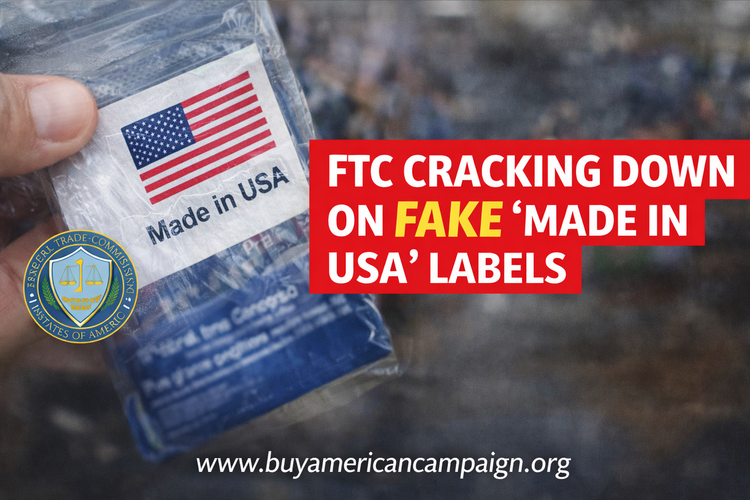
    That’s about to get harder to get away with. On March 13, Executive Order 14392 was signed into law, titled “Ensuring Truthful Advertising of Products Claiming to be Made in America.” The order directs federal agencies to increase enforcement of fraudulent origin claims and holds companies accountable when they misrepresent where their products are actually made.

    This matters because trust is the foundation of the Buy American movement. When shoppers choose American-made goods, they’re making a deliberate decision to support domestic jobs, local communities, and stronger supply chains. But that decision only works if the labels are honest. Every fake “Made in USA” tag is a broken promise β€” it takes money out of the pockets of real American manufacturers and puts it into the hands of companies willing to cut corners.

    Join the Buy American Movement

    The scope of the problem is bigger than most people realize. The FTC’s existing “Made in USA” rule requires that a product be “all or virtually all” made in the United States to carry that label. But enforcement has been inconsistent, and some companies β€” particularly online sellers β€” have exploited the gaps. Products assembled from mostly foreign components, or simply packaged domestically, have been marketed as American-made with little consequence. The new order aims to close those loopholes by directing multiple agencies to coordinate enforcement and increase scrutiny on companies making these claims.

    For American manufacturers who genuinely produce their goods here, this is welcome news. They’ve been competing on an uneven playing field against companies that undercut them on price by manufacturing overseas while falsely claiming domestic origins. Stronger enforcement levels that field and rewards companies that invest in American workers and facilities.

    Browse American-Made Products

    As consumers, we hold real power in this equation. Every purchase is a vote for the kind of economy we want. When you take a moment to verify that a product is truly made in America β€” checking labels, researching brands, and supporting companies with transparent supply chains β€” you’re not just buying a product. You’re investing in American jobs, American communities, and an economy built on honesty. The new enforcement push makes that easier, but our buying choices are what make it matter.

    If you like what you see and think this post would be of interest to someone, please share
  • U.S. Trade Deficit Falls 25% as Exports Reach Record High

    U.S. Trade Deficit Falls 25% as Exports Reach Record High

    American port workers loading cargo containers for export at sunrise

    In a surprising shift for global trade, the U.S. trade deficit in goods and services fell sharply to $54.5 billion in January, a 25 percent decline from the previous month. The improvement came as American exports surged to a record high while imports declined, signaling a potential shift in the balance of global commerce.

    The trade deficit measures the difference between what the United States imports and what it exports. When the deficit shrinks, it means American businesses are selling more products and services abroad relative to what the country is buying from other nations. A stronger export environment can translate directly into higher production levels for American factories, farms, and energy producers.


    What Rising Exports Mean for American Workers

    For American workers, rising exports often mean more jobs and more economic activity at home. Industries ranging from agriculture to advanced manufacturing rely heavily on international markets. Farmers selling grain overseas, manufacturers shipping machinery abroad, and technology firms expanding into new markets all contribute to a stronger domestic economy.

    When exports grow, the ripple effects reach far beyond the companies making the sales. Suppliers, logistics providers, and service industries all benefit. Communities built around production β€” from rural farming towns to industrial cities β€” see increased demand for labor and investment.

    Join the Buy American Movement

    The Bigger Picture for American Industry

    While a single month of data does not establish a long-term trend, the January report is a positive signal for the direction of American trade. A sustained improvement in the trade balance would indicate that the United States is becoming more competitive globally β€” producing more goods and services that the rest of the world wants to buy.

    Reducing the trade deficit also has broader implications for national economic health. A smaller deficit means fewer dollars flowing out of the country and more economic activity staying within U.S. borders. Over time, this can support higher wages, stronger communities, and greater investment in domestic production capacity.

    Browse American-Made Products

    How Consumers Can Help Keep the Momentum

    Trade policy and international agreements play a role in shaping the balance of imports and exports, but consumer choices matter just as much. Every time a shopper chooses a product made in the United States, they contribute to the demand for American-made goods. That demand drives production, creates jobs, and strengthens the very industries that power the nation’s export economy.

    The January trade numbers are encouraging, but sustaining progress will take continued effort β€” from policymakers, businesses, and everyday consumers alike. By choosing American-made products whenever possible, shoppers can help build on this momentum and support the workers, farmers, and manufacturers who keep the American economy moving forward.

    Whenever possible, choose Made in USA.

    If you like what you see and think this post would be of interest to someone, please share
  • From Ireland to America: How Irish Immigrants Helped Build American Industry

    From Ireland to America: How Irish Immigrants Helped Build American Industry

    Buy American This St. Patrick's Day - Supporting American Workers

    Every year on March 17th, millions of Americans celebrate St. Patrick’s Day. Parades, green clothing, and Irish music have become part of the tradition.

    But behind the celebrations is a deeper story β€” one connected directly to the development of American industry and manufacturing.

    Irish immigrants played a major role in helping build the United States into the industrial powerhouse it became in the 19th and 20th centuries.

    And that legacy still matters today.

    The Irish Who Helped Build America

    Beginning in the mid-1800s, waves of Irish immigrants arrived in the United States, many fleeing the Great Famine.

    While they often faced difficult conditions and discrimination, they quickly became a critical part of the American workforce.

    Irish laborers helped build:

    • Railroads that connected the country
    • Canals and ports that expanded trade
    • Steel mills and factories that fueled industrial growth
    • Cities and infrastructure across the country

    Many of the industrial centers that defined American manufacturing β€” from Boston to Pittsburgh to Chicago β€” were built in part by Irish workers and Irish-American families.

    From Laborers to Business Builders

    Over time, Irish Americans didn’t just work in industry β€” they helped lead it.

    Irish-American entrepreneurs, engineers, and skilled tradespeople became part of the backbone of American manufacturing and construction.

    Their work helped establish industries that defined the American economy for generations:

    • Steel production
    • Shipbuilding
    • Construction
    • Transportation infrastructure

    These industries helped transform the United States into one of the world’s leading manufacturing nations.

    Join the Buy American Movement

    The Spirit of Work, Craft, and Community

    St. Patrick’s Day is often about celebration, but it’s also a reminder of the values that built the country:

    • Hard work
    • Craftsmanship
    • Community
    • Opportunity

    Those same values still define American manufacturing today.

    Across the country, millions of workers continue to build, produce, and manufacture the goods that keep the American economy strong.

    Supporting American Manufacturing Today

    One simple way to honor that legacy is by supporting the companies that continue to manufacture in the United States.

    When consumers choose products made in America, they help support:

    • πŸ‡ΊπŸ‡Έ American workers
    • πŸ‡ΊπŸ‡Έ Local communities
    • πŸ‡ΊπŸ‡Έ Domestic supply chains
    • πŸ‡ΊπŸ‡Έ The next generation of skilled trades

    Just like the immigrants who helped build American industry generations ago, today’s manufacturing workforce depends on strong demand and support.

    Browse American-Made Products

    A St. Patrick’s Day Reminder

    St. Patrick’s Day celebrates Irish heritage.

    But it also celebrates the contributions Irish immigrants made to building the United States.

    From railroads to factories to modern industry, their work helped shape the American economy.

    So as you celebrate today β€” wear some green, enjoy the festivities, and remember the generations of workers who helped build America.

    And when possible, support the businesses that continue that tradition.

    Because building things still matters.

    If you like what you see and think this post would be of interest to someone, please share
  • Best American-Made Work Boots in 2026 (Brands That Still Manufacture in the USA)

    American-made work boots - Red Wing, Thorogood, Danner

    Most “American-made” work boots aren’t actually made in the USA anymore.

    Over the years, many well-known brands have shifted production overseas β€” while still marketing themselves as heritage American companies. If you’re trying to buy boots that truly support U.S. manufacturing, it takes a little more research.

    The good news: a handful of brands are still producing high-quality work boots right here in the United States β€” using American labor, materials, and craftsmanship.

    In this guide, we’ll break down the best American-made work boots you can actually buy in 2026 β€” and what to look for before you choose.

    If you’re looking for more American-made brands across every category, check out our full guide here:
    πŸ‘‰ American-Made Companies You Can Actually Buy From β†’

    πŸ† Best American-Made Work Boots (Top Picks)

    1. Red Wing Heritage / Work Line (Made in USA)

    Best for: Long-term durability and heavy-duty use

    Red Wing is one of the most recognized American boot manufacturers still producing select models in the USA. Known for premium leather and rugged construction, these boots are built to last for years β€” not months.

    Why it stands out:

    • Full-grain leather sourced and crafted in the USA
    • Goodyear welt construction for long-term durability
    • Proven track record across trades and industries

    πŸ‘‰ Check Price on Amazon β†’

    2. Thorogood Work Boots (Made in USA)

    Best for: Comfort right out of the box

    Thorogood boots are a favorite among tradespeople who want immediate comfort without a long break-in period. Their American Heritage line is union-made in Wisconsin.

    Why it stands out:

    • Comfortable wedge sole design
    • Union-made in the USA
    • Excellent balance of durability and flexibility

    πŸ‘‰ Check Price on Amazon β†’

    3. Danner (USA-Made Line Only)

    Best for: Lightweight performance and versatility

    Danner produces both imported and USA-made boots β€” so it’s important to choose carefully. Their Made in USA line (built in Portland, Oregon) offers a lighter, more flexible option without sacrificing quality.

    Why it stands out:

    • Made in USA models available (clearly labeled)
    • Lighter weight than traditional work boots
    • Strong reputation for craftsmanship

    πŸ‘‰ Check Price on Amazon β†’

    Join the Buy American Movement

    🧠 What to Look for in American-Made Work Boots

    Not all “American” brands manufacture in the United States β€” so here’s what actually matters:

    πŸ‡ΊπŸ‡Έ True USA Manufacturing
    Look for boots that are made, not just assembled, in the United States.

    🧡 Construction Method
    Goodyear welt construction means a longer lifespan and the ability to be resoled. Stitch-down construction is equally strong and repairable.

    πŸ₯Ύ Materials
    Full-grain leather lasts significantly longer than split or corrected grain. Cheap materials always mean a shorter lifespan.

    βš–οΈ Comfort vs. Durability
    Heavier boots generally last longer. Lighter boots offer more comfort with less break-in time. Know what matters most for your job.

    πŸ” Quick Comparison

    Brand Best For Key Strength
    Red Wing Long-term durability Longevity
    Thorogood Out-of-box comfort Wearability
    Danner Lightweight performance Versatility

    Browse American-Made Products

    πŸ”— Looking for More American-Made Brands?

    If you want to go beyond work boots and support U.S. manufacturing across all categories:

    πŸ‘‰ Browse the full American-Made Companies list β†’

    πŸ‡ΊπŸ‡Έ Final Thoughts

    Buying American-made work boots isn’t just about quality β€” it’s about where your money goes.

    Every purchase supports American workers, domestic manufacturing, and local economies. You don’t have to be perfect β€” but choosing better products when you can makes a real difference.

    πŸ“£ Take the Next Step

    If this matters to you:

    πŸ‘‰ Take the Buy American Pledge β†’
    πŸ‘‰ Join the Movement β†’

    If you like what you see and think this post would be of interest to someone, please share
  • U.S. Launches Section 301 Investigations as Unfair Trade Practices Continue to Damage American Manufacturing

    U.S. Launches Section 301 Investigations as Unfair Trade Practices Continue to Damage American Manufacturing

    American factory workers walking toward manufacturing facility at sunrise with American flag

    For decades, American manufacturers have faced intense global competition fueled not only by market forces but also by government-backed industrial policies overseas. Now, the Office of the United States Trade Representative has announced new Section 301 investigations into structural excess capacity and unfair trade practices that have undermined U.S. industries and cost American jobs.

    These investigations target long-standing concerns that foreign governments have artificially expanded manufacturing capacity through subsidies, state ownership, and other interventions. When global markets become flooded with heavily subsidized goods, American factories struggle to compete on price even when they produce higher-quality products. The result has been factory closures, job losses, and a weakening of industrial communities across the country.


    Why This Matters for American Workers

    Manufacturing still supports millions of American jobs and strengthens local economies across the country. Protecting those industries is about more than economics β€” it’s about supply chains, national security, and the long-term strength of the American economy.

    The workers affected by unfair trade practices are not just statistics. They are skilled tradespeople, engineers, machinists, and assembly line workers who have built their livelihoods in American factories. When those factories close or downsize, entire communities feel the impact β€” from local businesses that lose customers to schools that lose funding.

    Join the Buy American Movement

    The Broader Economic Impact

    The broader economic implications go far beyond any single industry. When domestic production capacity shrinks, the country becomes more dependent on foreign supply chains for critical goods. The disruptions seen during the pandemic highlighted how fragile those supply chains can be. Strengthening American manufacturing is not only an economic priority but also a national security issue, ensuring that the United States can produce essential products β€” from industrial components to advanced technologies β€” within its own borders.

    Browse American-Made Products

    What Consumers Can Do

    Government action can help address unfair trade practices, but long-term success also depends on consumers. Every purchasing decision sends a signal to the marketplace. When shoppers choose products made in the United States, they support domestic factories, strengthen supply chains, and help sustain good-paying jobs. When American consumers prioritize domestic production, companies respond by investing more in U.S. manufacturing.

    The investigation launched by the U.S. Trade Representative signals a renewed effort to defend American industry. But policy alone cannot rebuild the manufacturing base. The most powerful force may ultimately be the choices made by millions of consumers every day. By choosing American-made products whenever possible, shoppers can help strengthen the industries that employ their neighbors, sustain their communities, and secure the nation’s economic future.

    Whenever possible, choose Made in USA.

    If you like what you see and think this post would be of interest to someone, please share